
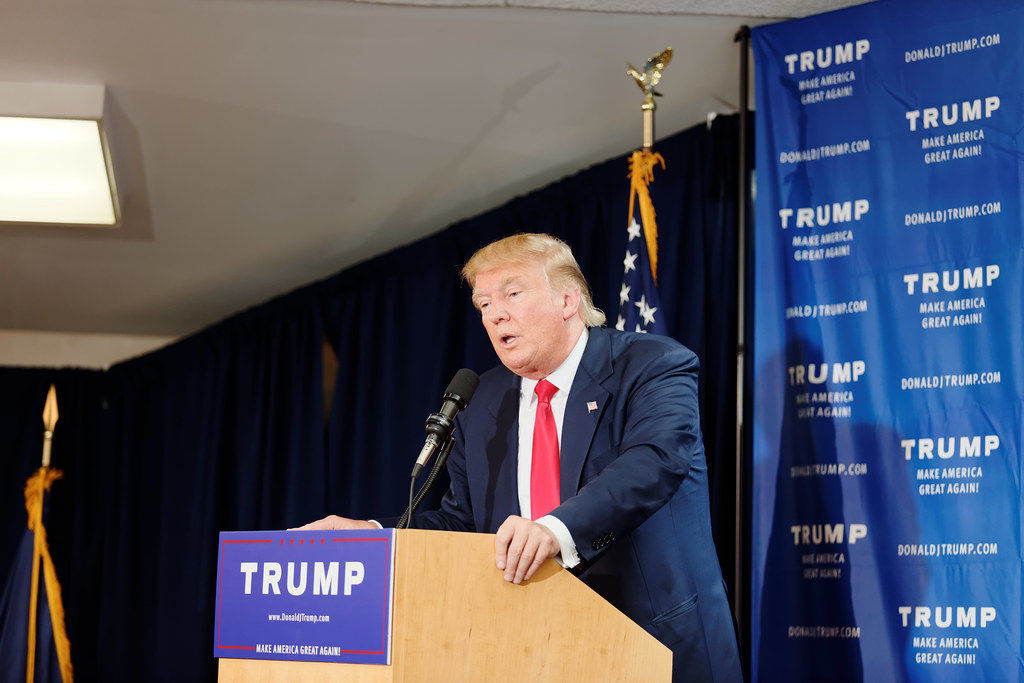
The latest line is easy to mock, but the political risk is bigger than a stray phrase. Trump has made verbal sharpness a test of fitness, and now that test is being turned back on him.
One garbled phrase can vanish in a crowded news cycle. This one is sticking because Donald Trump spent years teaching voters to treat verbal mistakes as evidence.
CNN reported Sunday that Trump referred to the “Islamic Republic of Japan” while discussing missiles, a line that quickly became shorthand for a broader question: when does a slip become a political liability?
The phrase that traveled
The reported remark was jarring on its face. Japan is not an Islamic republic. It is a constitutional monarchy with a parliamentary government. The phrase sounds much closer to the Islamic Republic of Iran, Iran’s official name.
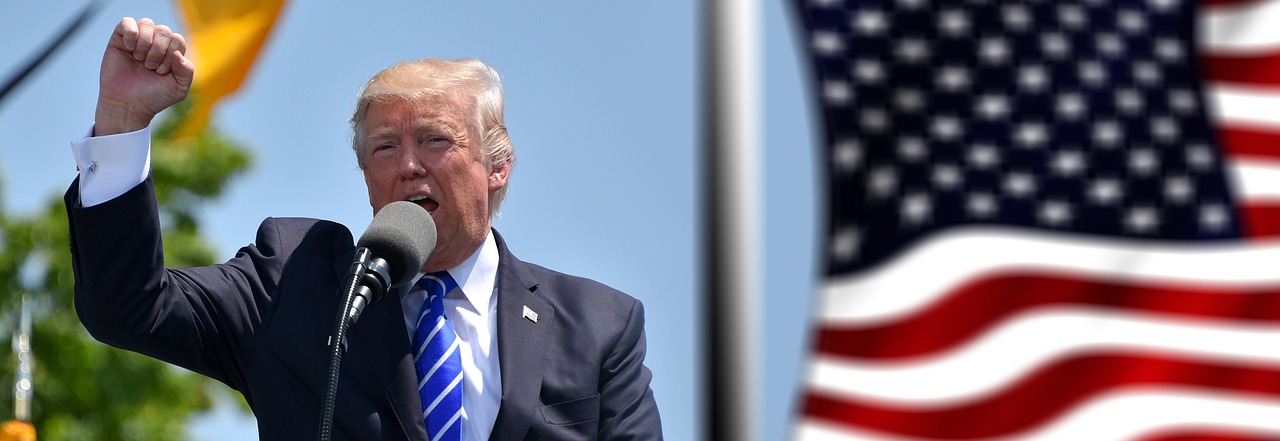
According to CNN, Trump said, “We had 111 missiles shot by the Islamic Republic of Japan.” The outlet framed the comment as part of a growing collection of Trump verbal flubs, not an isolated misstatement.
That distinction matters. Political gaffes happen to nearly everyone who speaks in public for a living. The reason this one moved is not only that it was odd. It also landed inside a debate Trump has fueled for years: who is sharp enough to lead, and who is not?
Why this slip stuck
Most verbal mistakes fade because audiences understand how public speaking works. Candidates repeat stories, jump between topics, read from notes, improvise and sometimes scramble names or places.
But some slips become sticky because they are easy to repeat. “Islamic Republic of Japan” is short, strange and instantly understandable. No explainer is needed to see why it sounds wrong.
It also carries foreign-policy weight. Mixing up countries, alliances or adversaries can look more consequential than mispronouncing a name at a rally. Voters may not follow every policy detail, but they understand that presidents are expected to be precise when talking about missiles and international conflicts.
That does not mean the phrase proves anything medical or cognitive. It means the politics of the phrase are unusually clean. Opponents can replay it. Supporters can dismiss it. Everyone can recognize it.
The standard Trump helped set
Trump has not been a neutral observer of other politicians’ verbal mistakes. CNN’s report noted that he has not been charitable about rivals’ gaffes, and that history is central to why his own errors receive attention.
For years, Trump and his allies treated President Joe Biden’s stumbles as central evidence in a broader argument about age and capacity. They clipped confused phrasing, mocked pauses and turned misstatements into campaign content.
That strategy worked because it made verbal sharpness feel like a simple test. Voters did not need to parse policy papers. They could watch a moment and make a judgment.
The risk for Trump is that the same test can be applied to him. Once a politician argues that verbal precision is a proxy for fitness, every garbled phrase becomes more than a blooper. It becomes a receipt.
Gaffes are not diagnoses
There is a line between political scrutiny and amateur medicine. A verbal slip, even a bizarre one, is not a diagnosis. Public records, physician assessments and sustained behavior matter far more than a single quote.
That caution applies to Trump, Biden and every other public figure. People misspeak for ordinary reasons: fatigue, distraction, repetition, pressure, poor notes or a sentence that outruns the speaker’s thoughts.
The more honest question is not whether one phrase proves decline. It does not. The question is whether voters see a pattern that affects their confidence.
That is where the political damage can build. A single error may be brushed off. A sequence of them can create a narrative, especially when the politician has insisted that such errors reveal something fundamental about an opponent.
The campaign risk is repetition
The immediate danger for Trump is not that one phrase changes a vote on its own. It is that the phrase becomes part of a highlight reel.
Modern campaigns are built for repetition. A clip gets posted, clipped again, paired with earlier moments and pushed into feeds where context is thinner and emotion travels faster than nuance.
That environment rewards the simplest interpretation. For critics, the Japan line becomes evidence that Trump is slipping. For supporters, it becomes another example of media overreach. For persuadable voters, it may simply add to a vague unease about age, stamina and command of facts.
That last group matters most. Highly committed voters already know how they feel about Trump. The political fight is over people who are not watching every speech but do absorb recurring impressions.
What comes next
Trump can survive verbal flubs. He has survived many controversies that would have ended other political careers, and his supporters often read criticism of his speech as proof that media outlets are hunting for any possible mistake.
Still, the issue is unlikely to disappear if the clips keep coming. The more Trump uses gaffes as a weapon against others, the more incentive opponents have to turn his own words into a mirror.
The practical test is simple: does the “Islamic Republic of Japan” line remain a one-day joke, or does it become part of a broader, repeated argument about whether Trump is as sharp as he claims?
For now, the phrase is politically potent because it is both absurd and familiar. It is not just a mistake. It is a mistake inside a standard Trump helped make unavoidable.




Leave a Reply