
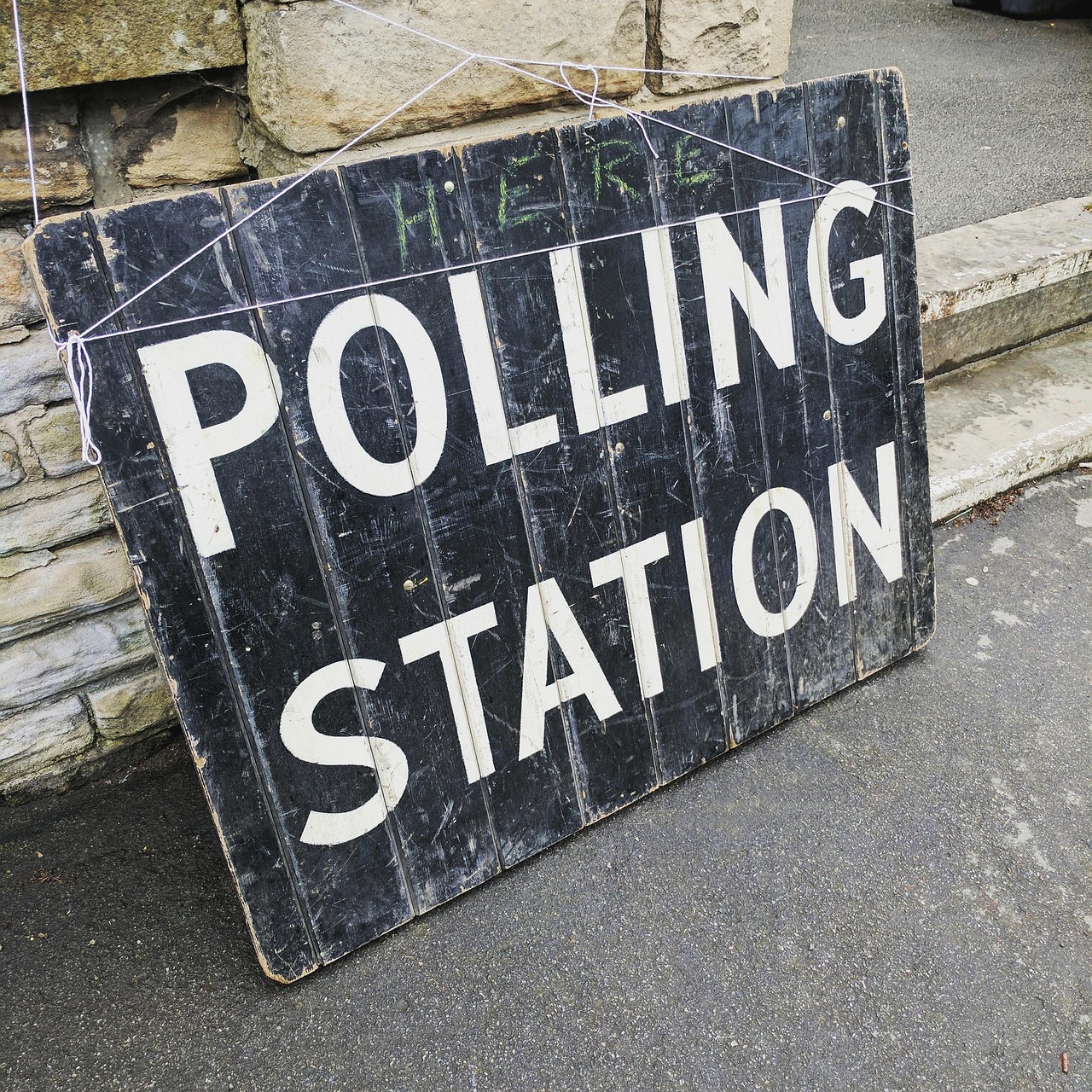
The move may not change how November’s elections are run, but it puts a little-known federal agency at the center of a bigger battle over who controls voting rules.
President Donald Trump has removed two Democratic members of a bipartisan federal election agency that had resisted one of his major voting demands: requiring proof of U.S. citizenship before people can register to vote.
The action, confirmed by the White House to The Associated Press, is unlikely to instantly rewrite how ballots are cast this November. But it raises a bigger question that will outlast one election cycle: how much power can a president exert over the machinery that supports state-run elections?
A small agency, bigger stakes
The agency at the center of the fight is the Election Assistance Commission, a federal body created by Congress after the 2000 election and the passage of the Help America Vote Act. It does not run elections. States do that.

But the commission still matters. It helps distribute federal grants to states, oversees testing and certification of voting systems, and maintains the national mail voter registration form used by many voters and election offices.
According to AP, Trump removed Thomas Hicks and Benjamin Hovland, the commission’s two Democratic members. Republican commissioner Christy McCormick had resigned, and former Republican commissioner Donald Palmer had already left earlier this year.
That leaves the commission facing uncertainty at a sensitive moment, with midterm elections months away and state and local officials preparing for voting system tests, registration deadlines and election security planning.
The White House cites election security
The White House defended the removals as part of Trump’s effort to secure elections. In a statement to AP, the administration said the president “reserves the right to remove individuals” who may not be aligned with “securing America’s elections and ensuring every legal vote is counted.”
The statement also invoked the Supreme Court’s recent Slaughter decision, which expanded presidential authority to remove members of independent agency boards without cause. That makes this more than a personnel dispute inside a relatively obscure agency.
It is an early test of how aggressively Trump will use that broader removal power across agencies that Congress designed to have some insulation from direct White House control.
The administration did not give a detailed, commissioner-by-commissioner explanation for the removals. But the Election Assistance Commission had previously declined to change the national voter registration form in the way Trump wanted.
The citizenship-form fight behind it
The core policy clash is over documentary proof of U.S. citizenship. Trump has pushed to require would-be voters to provide citizenship documents before registering.
The commission’s existing voter registration materials already state that it is illegal to falsely claim U.S. citizenship in order to vote. But the national form does not require applicants to attach citizenship documents.
Trump tried to force changes through a sweeping March 2025 executive order on elections, according to AP. A federal judge blocked the order, ruling that it exceeded presidential authority because the Constitution gives election administration authority to Congress and the states, not the president alone.
The administration has indicated it will appeal. That means the court fight over voter registration rules is still alive, even as Trump separately moves against the commission that resisted his preferred change.
States still run the elections
One reason the removals may not immediately alter November voting is simple: the federal government does not directly administer American elections. State and local officials set up polling places, maintain voter rolls, process registrations and count ballots under state and federal law.
David Becker, a former Justice Department attorney who runs the Center for Election Innovation and Research, argued that the commission shake-up would not change how elections are run. AP reported that Becker wrote on BlueSky that it “doesn’t really change anything” about states’ ability to run secure and accessible elections.
Still, the agency’s work is not meaningless. The EAC supports the election system in less visible ways, including:
- Distributing federal election grants to states and local offices
- Maintaining the national mail voter registration form
- Overseeing voluntary voting system testing and certification
- Providing guidance and support to election officials
If seats remain vacant, questions could grow about whether the commission can approve new grants or fully carry out certain oversight functions.
Democrats call it politicization
Democrats with election oversight roles in Congress accused Trump of trying to weaken an independent guardrail. Sen. Alex Padilla of California and Rep. Joe Morelle of New York said in a statement reported by AP that the removals were part of a plan to “politicize our elections.”
Padilla is the top Democrat on the Senate Rules Committee. Morelle is the top Democrat on the House Administration Committee. Both panels have roles in election oversight.
Their criticism reflects a larger concern among Trump’s opponents: that the president is using election integrity language to concentrate control over voting rules after years of falsely claiming that his 2020 loss was caused by fraud.
Trump has continued to insist, without evidence, that the 2020 election was stolen. His administration has also launched an investigation into that election and, according to AP, recently threatened states that do not try to remove people federal officials believe are noncitizens from voter rolls.
What remains unclear now
The immediate question is whether Trump will nominate new commissioners. Under the Help America Vote Act, the four-member commission is supposed to include two Democrats and two Republicans, nominated by the president and confirmed by the Senate.
If Trump moves quickly, the confirmation process could become another fight over voting access, election security and presidential control. If he leaves the seats vacant, the agency could struggle to perform parts of its mission during a critical election year.
There is also the legal question. The White House is leaning on expanded removal power recognized by the Supreme Court, while critics argue Congress created independent bodies like the EAC to prevent exactly this kind of partisan pressure.
The practical takeaway is narrow but important: voters probably should not expect their local polling place rules to change overnight because of this move. The bigger story is about pressure on the institutions around elections — the forms, grants, testing systems and independent boards that usually operate outside the spotlight until something breaks.






Leave a Reply