
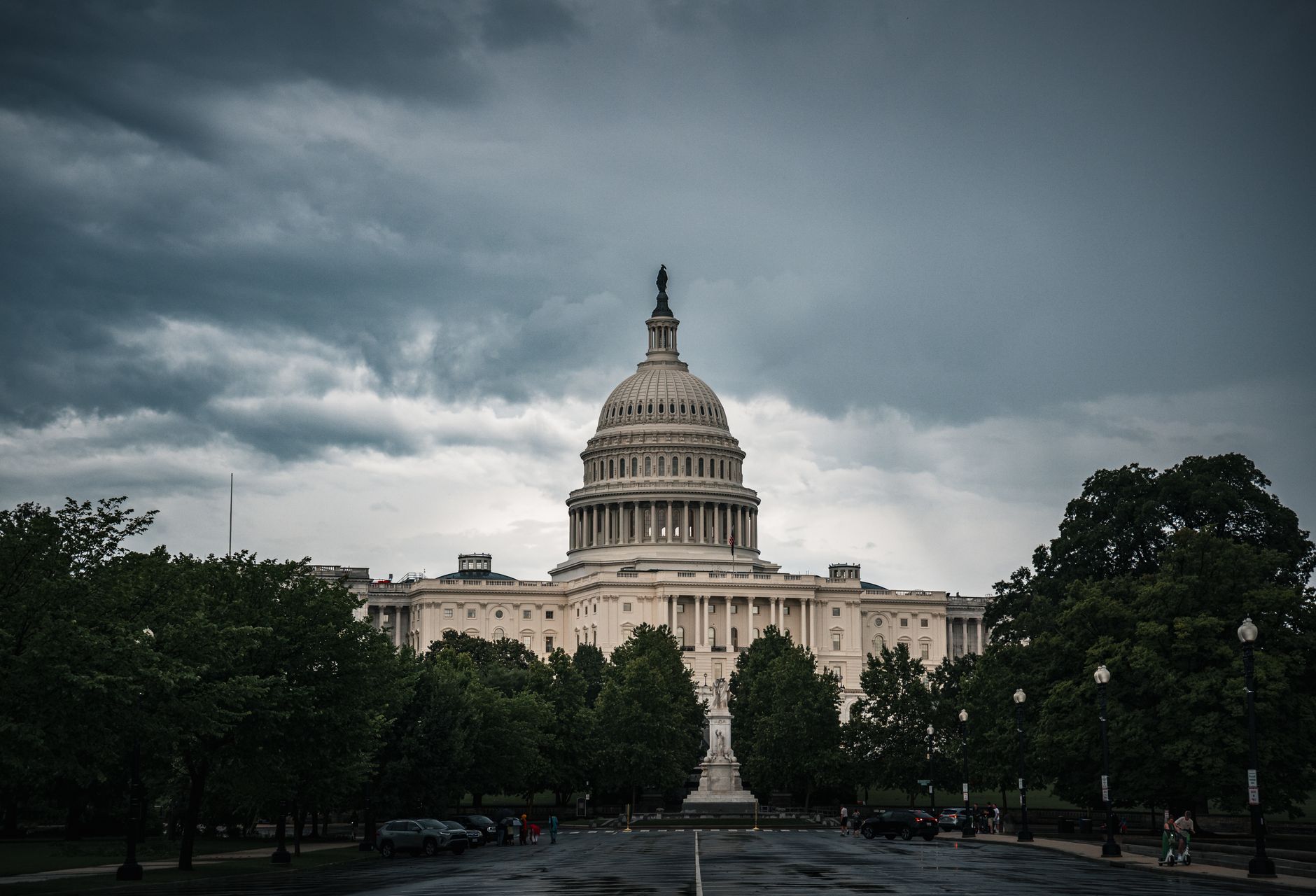
Winning the House can be about a wave. Winning the Senate in 2026 may require Democrats to thread several needles at once.
Democrats can have the better political environment and still fall short of the Senate. That is the tension now hanging over the party’s 2026 map.
A new wave of anxiety, reflected in reporting from The Hill, is less about whether Republicans are vulnerable nationally than whether Democrats have enough realistic targets to turn vulnerability into control.
The math is the problem
The core obstacle is simple and brutal: Democrats need a net gain of four Senate seats to win control, according to NPR’s overview of the 2026 Senate landscape. With President Trump in the White House, a Republican vice president would break ties, so a 50-50 Senate would not be enough for Democrats.

That means Democrats cannot merely have a decent night. They need a very specific kind of good night: flip multiple Republican-held seats, avoid losing their own competitive seats and probably win at least one race in difficult terrain.
Republicans, by contrast, can absorb some damage and still hold the chamber. NPR reported that Republicans acknowledge Democrats could pick up one to three seats in a rough environment, while Democrats argue a path to four exists. The difference between three and four is the difference between a scare and a majority.
A good year may not be enough
There are reasons Democrats are not panicking everywhere. CNN reported in June that Democrats had clear momentum in the 2026 midterm environment. NPR also described the national mood as difficult for Republicans, citing Trump’s weak approval numbers, an unpopular war in Iran and continued negative views of the economy.
That kind of backdrop usually helps the party out of power. It is one reason Democrats are widely seen as well positioned in the House, where the map is broader and dozens of districts can move together.
The Senate does not work that way. Only a third of seats are up, and the most important races are fixed in specific states. A national backlash can lift Democrats, but it cannot change the fact that some of the decisive contests are in places that still lean Republican.
North Carolina is the opener
North Carolina looks like the closest thing Democrats have to a first building block. NPR rated the open Republican-held seat there as the most likely to flip and cited the Cook Political Report’s Lean Democratic rating.
The retirement of Republican Sen. Thom Tillis created the opening. Democrats also landed a high-profile recruit in former Gov. Roy Cooper, who has already proved he can win statewide in a closely divided state.
That does not make the race easy. North Carolina has repeatedly tempted Democrats in federal races, only to disappoint them. Republican Michael Whatley, a former Trump Republican National Committee chairman, may benefit from the state’s underlying partisan lean if the national environment improves for the GOP by fall 2026.
For Democrats, North Carolina is not a luxury. It is close to mandatory. If that race slips away, the four-seat path becomes dramatically harder.
Maine and Ohio carry the risk
The next tier is where Democratic hopes get more complicated. NPR identified Maine and Ohio as toss-ups, but each comes with a very different kind of risk.
In Maine, Republican Sen. Susan Collins is seeking to survive again in a state that often votes Democratic at the presidential level. On paper, that makes her one of the most obvious GOP targets. In practice, Collins has built a long career on outrunning national partisan pressure.
The Democratic side also faces uncertainty after Gov. Janet Mills dropped out of the race, according to NPR. That left Graham Platner, described by NPR as a progressive upstart, in a stronger position. He may energize younger and more progressive voters, but he also gives Republicans a chance to define him before many general-election voters do.
Ohio presents a different challenge. Former Democratic Sen. Sherrod Brown is a major recruiting win, and NPR said his candidacy is a key reason the race against Republican Sen. John Husted is rated a toss-up. But Ohio has moved right in recent cycles, and winning there would require Democrats to reassemble a coalition that has become harder to sustain statewide.
Democrats still have to defend
The Senate math is not only about offense. Democrats also have to protect seats that Republicans see as winnable, and Michigan is the most obvious pressure point in the current landscape.
NPR listed Michigan’s open Democratic-held seat as a toss-up. Republicans are backing former Rep. Mike Rogers, who nearly won a 2024 Senate race in the state. Democrats argue the midterm environment should help them, but an open seat removes the advantages of incumbency.
The Democratic primary matters, too. A long, expensive or ideologically sharp primary could leave the nominee weakened before the general election begins. In a four-seat-gain scenario, even one defensive stumble can erase the value of a pickup elsewhere.
This is why Democratic nerves are rising even as the broader political climate looks favorable. Senate control is not decided by vibes. It is decided by whether individual candidates survive individual state electorates.
The map leaves little cushion
The Democratic path likely starts with North Carolina, then runs through Maine and Ohio, while holding Michigan. Even that combination may not be enough, depending on the full seat count and whether Democrats can find another target in tougher territory.
NPR noted that the path to a majority runs through Republican-leaning places, including Ohio and Alaska. That is the part of the map that makes Democratic optimism fragile. Once the party moves beyond its best targets, each additional opportunity requires a larger break from recent voting patterns.
Race ratings will shift. Fundraising, candidate quality, scandals, the economy, Trump’s approval and turnout among younger and less frequent voters could all reshape the map. A Senate campaign in July is not the same race voters see in October of an election year.
Still, the warning sign for Democrats is clear: they may be favored to gain ground, but gaining ground is not the same as gaining control. In the Senate, a narrow path can look open for months and still close fast if just one state moves the wrong way.










Leave a Reply