
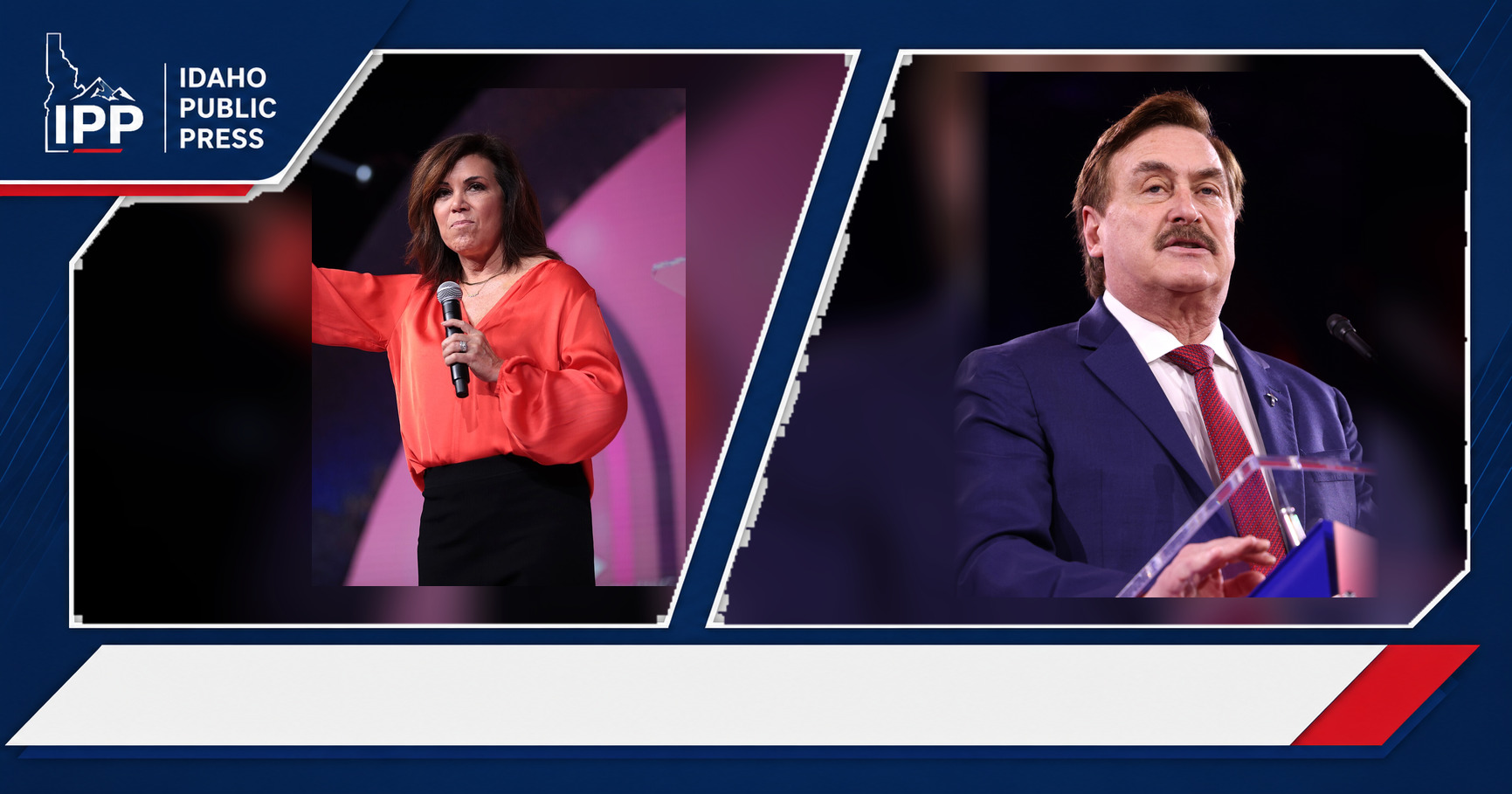
Tafoya’s victory gives Minnesota Republicans a Senate nominee with a national media profile. Lindell’s defeat closes another bid for office by one of the state’s most recognizable election-denial figures.
Michele Tafoya won the Republican Senate primary in Minnesota on Tuesday, August 11, 2026, with 52 percent of the vote, while Mike Lindell lost his Minnesota primary race. The split result puts Tafoya on the path to the general election and ends Lindell’s latest attempt to translate his national profile into a statewide victory.
Tafoya’s win in Minnesota gives Republicans a clear Senate nominee after a contest shaped by competing ideas about electability, party identity and the value of public prominence. Lindell’s loss offers a different reading of the same electorate: being widely known is not the same as building enough support to win a primary.
Tafoya clears the Senate field
NBC News projected Tafoya as the winner of Minnesota’s Republican Senate primary, reporting that she received 52 percent. That is a decisive outcome in a race where the central task was not simply attracting attention, but persuading Republican primary voters to settle on a candidate for the fall campaign.
Tafoya enters the next phase with an unusually recognizable background for a first-time federal nominee. She is best known to many voters for her work as a sports broadcaster, including years as a prominent NFL sideline reporter, and she later became more visible in conservative political media.
That profile can be an asset in a large state, where candidates must introduce themselves to voters well beyond party activists and major metropolitan areas. It can also invite scrutiny. A media career supplies instant name recognition, but a Senate contest demands a sustained case on policy, organization and statewide appeal.
The primary result means Tafoya now has the party’s formal nomination behind her. The broader test will be whether her coalition in a Republican primary can grow into one that reaches independents and voters who do not reliably support the GOP.
Lindell’s bid comes up short
Mike Lindell lost his primary race in Minnesota, according to the reported results. The MyPillow founder has been a conspicuous figure in national conservative politics for years, particularly through his false claims about the 2020 presidential election and his support for efforts challenging that result.
Lindell’s name recognition made his candidacy impossible to ignore. But primary campaigns are often decided by more practical questions: which candidate has a durable statewide organization, where endorsements land, whether donors and local officials unite behind a campaign, and whether voters see the candidate as a plausible November contender.
The available results establish the basic outcome, not every reason behind it. A loss does not reveal precisely which voters rejected a candidate, or whether concerns centered on ideology, campaign strategy, personal reputation or the particular office at stake.
Still, Lindell’s defeat limits his ability to claim a statewide electoral mandate in Minnesota. It also separates his standing as a national political personality from the preference expressed by Republican primary voters in this contest.
Two different tests of visibility
Tafoya and Lindell arrived at the primary with strong public profiles, but their visibility came from very different places. Tafoya’s was built first in mainstream sports television and later expanded into political commentary. Lindell’s grew from a consumer brand and then from his high-profile role in election conspiracy theories.
The results suggest that visibility alone did not settle either race. Tafoya converted hers into a Senate nomination. Lindell did not clear his own primary. That distinction matters because campaigns increasingly reward candidates who can command attention, but attention does not automatically provide a statewide electoral coalition.
There are competing interpretations of Tafoya’s win. Supporters can point to it as evidence that Republicans chose a candidate with broad communication skills and a profile that may travel beyond the party’s most committed voters. Critics may argue that the general election will test whether familiarity from television translates into confidence on the issues voters associate with the Senate.
Likewise, Lindell’s result can be read as a rejection of a candidate closely tied to election falsehoods, or more narrowly as a verdict on one campaign in one race. The primary alone cannot settle that broader debate. It does, however, provide a concrete measure of voter preference when ballots were counted.
The Senate race shifts to November
With the Republican primary decided, Minnesota’s Senate contest moves from an internal party fight to a statewide general-election campaign. The political challenge becomes more complicated: winning a nomination requires energizing a party base, while winning statewide requires assembling a larger and more varied electorate.
Minnesota has a record of close, expensive and nationally watched elections. Senate races can draw outside money, heavy advertising and intense attention to turnout in the Twin Cities, suburbs, regional centers and rural counties. Tafoya’s nomination ensures that Republican strategy will now be judged against that broader map.
The final contours of the fall matchup, campaign messages and spending picture will become clearer as the parties organize around their nominees. What is already clear is that Tafoya has moved from candidate to standard-bearer for Minnesota Republicans in the Senate contest.
For Lindell, the immediate electoral story is simpler: his primary campaign ended in defeat. Whether he remains active as a donor, media figure or political advocate is separate from the outcome voters delivered on August 11.
What the primary result does and does not decide
Primary elections settle nominations; they do not decide the general election. Tafoya’s 52 percent result establishes who Minnesota Republicans selected, but it does not predict how independents, Democratic voters or less frequent voters will respond in November.
The result also does not erase the differences within the Republican coalition. Tafoya’s victory and Lindell’s loss may influence arguments over which kinds of candidates are best positioned to compete statewide, yet parties rarely become uniform after a primary. Endorsements, fundraising networks and activist energy can all move in different directions.
For now, the headline is a straightforward one. Michele Tafoya won Minnesota’s Republican Senate primary. Mike Lindell lost his primary race. The next question is whether Tafoya can turn a clear intraparty win into a coalition broad enough for the statewide contest ahead.







Leave a Reply