
Leavitt’s departure ends a brief, high-profile tenure at the White House podium. President Donald Trump says she will remain part of his political orbit, but the administration has not named her replacement.
Karoline Leavitt is leaving her role as White House press secretary at the end of August, President Donald Trump announced on August 12. This live update on Leavitt leaving the White House explains what is confirmed about her departure, why she says she is stepping down and what the move means for the administration’s daily communications operation.
Leavitt, 28, said she is leaving to focus on her two young children and family. Trump said she will remain involved as one of his outside advisers, but neither he nor Leavitt identified who will become the next White House press secretary.
Leavitt plans to exit in August
Trump announced that Leavitt would depart the White House press secretary position at the end of the month. The announcement came through a Truth Social post, where he praised her work and said she would continue as a political ally outside the administration.
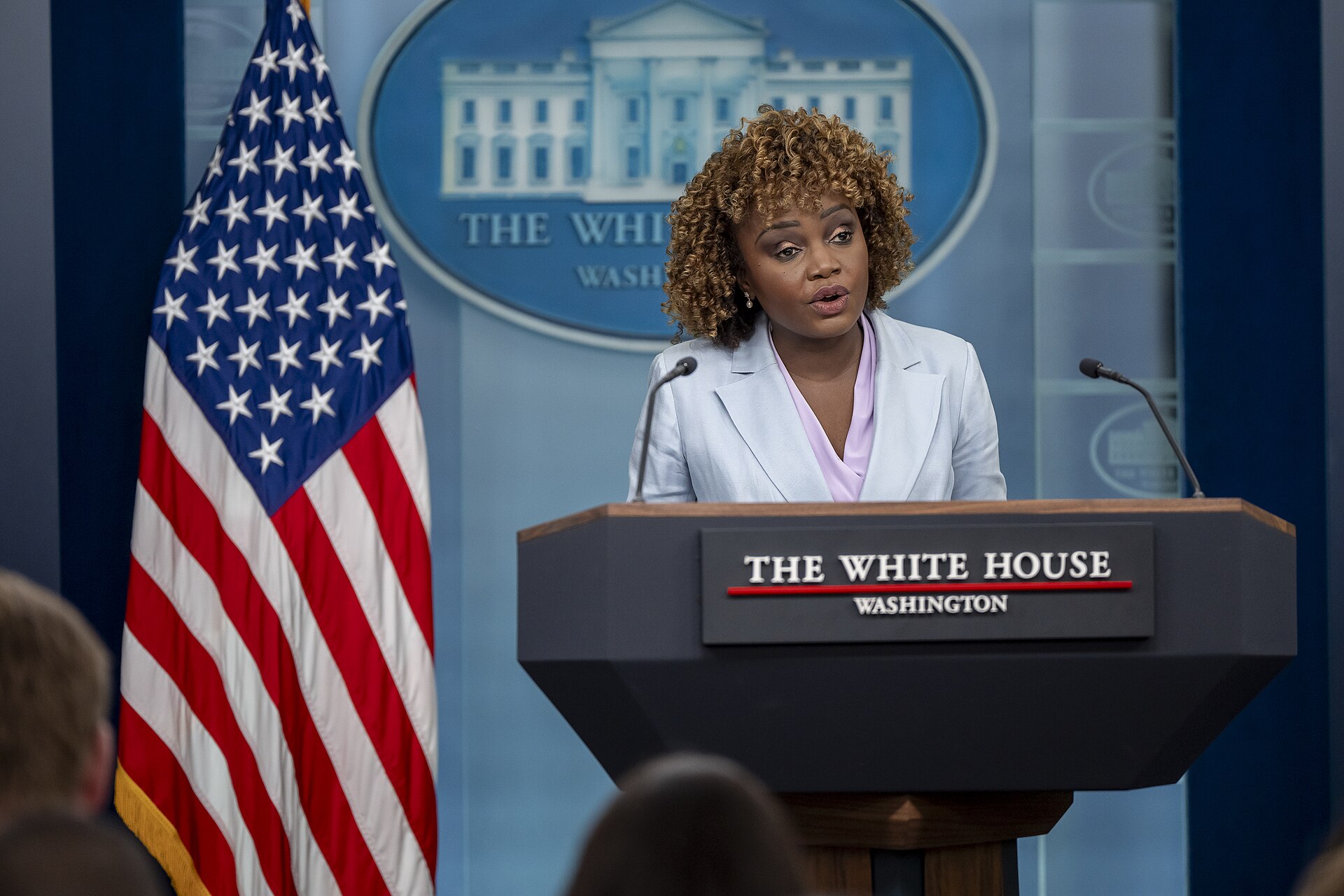
Leavitt confirmed the decision in a statement posted on X. She called serving as press secretary “the honor and adventure of a lifetime” and said the job’s constant demands no longer felt compatible with the time and attention she wants to give her children.
The key distinction is that Leavitt is not disappearing from Trump’s circle. Trump said she would be a top outside adviser and an influential Republican voice as his party looks toward the midterm elections.
Her family was central to the decision
Leavitt gave birth to her second child in May. NBC News reported that she became the first White House press secretary to have a child while serving in the position, a fact that underscored the unusual overlap between an around-the-clock public job and new parenthood.
In her statement, Leavitt framed the decision as personal rather than political. She said she did not believe she could be “the best mom” her children deserve while also providing the constant energy and attention the press secretary’s office requires.
That explanation does not eliminate the political significance of the move. A White House press secretary is one of the administration’s most visible officials, responsible for defending policy, setting the day’s message and responding to reporters when events move quickly.
Leavitt’s departure also brings a familiar tension into public view: senior government roles can demand relentless availability, while family decisions are often treated as deeply private. Her statement places both realities at the center of the transition.
A short but highly visible tenure
Leavitt has served as press secretary since the beginning of Trump’s second term. At 28, she was described by NBC News as the youngest person to hold the White House press secretary role.
Her White House experience predates this post. During Trump’s first administration, she worked as an assistant White House press secretary. She later served as national press secretary for Trump’s 2024 presidential campaign.
She also ran for Congress in New Hampshire in 2022, losing the House race to Democratic Rep. Chris Pappas. That sequence of roles made Leavitt a familiar figure to Trump’s political operation before she took the briefing-room podium.
Her recent schedule illustrated the pressure attached to the job. She returned from maternity leave on July 16 after initially expecting an April 24 briefing to be her final appearance before leave, according to NBC News.
The replacement question is immediate
The White House has not announced a successor. That leaves the administration with a practical decision that matters well beyond ceremonial staffing: who will deliver its daily message at one of the most scrutinized podiums in American politics?
The press secretary’s work includes formal briefings, television appearances, rapid responses to breaking news and coordination with the president’s broader communications team. The replacement will inherit not just a title, but a public-facing role shaped by every policy fight and unexpected event.
Trump’s description of Leavitt as an outside adviser suggests he values keeping her close. Still, an advisory role is different from standing at the James S. Brady Press Briefing Room podium, where officials face direct and often adversarial questioning from reporters.
Until a successor is named, it is unclear whether the White House will promote someone already in its communications operation, choose a campaign veteran or turn to another trusted Trump ally.
Why this departure carries weight
Press secretary transitions are routine in the sense that every administration eventually has them. They can nonetheless affect how quickly and consistently a White House communicates during a period when the president’s agenda, congressional politics and election planning are all competing for attention.
Supporters may see Leavitt’s new outside role as a way for Trump to retain an effective messenger while allowing her more flexibility. Others will focus on the disruption of replacing a high-profile spokesperson before the end of the month.
Both views can be true. The move preserves Leavitt’s connection to Trump while requiring the White House to find a new official who can handle the pace, visibility and pressure of the press secretary’s job.
For now, the confirmed outcome is straightforward: Leavitt will leave the White House role at the end of August, citing her family, and is expected to continue advising Trump from outside the administration. The unresolved part is who takes over and how the White House organizes its message after her exit.
What to watch before August ends
- A named successor: Neither Trump nor Leavitt announced one alongside the departure news.
- The timing of the handoff: The stated departure point is the end of August, though the White House has not detailed a transition schedule.
- Leavitt’s outside role: Trump has said she will be a top adviser, but the scope of that work has not been publicly outlined.
- The next briefing-room approach: The successor’s style and access to Trump could shape how the administration handles reporters in the months ahead.





Leave a Reply