

A claim about prices at the pump can sound simple, but national averages, local prices and selected time periods can produce very different comparisons. The key is separating a broad political message from what the available price data can actually establish.
Donald Trump made a claim about gas prices, saying they were lower than during the Biden administration. Trump’s gas price claim was fact-checked because the comparison is central to his broader argument about the economy, yet its accuracy depends on the period, location and benchmark used.
The short answer is that a comparison to some higher Biden-era prices can support Trump’s point, particularly the period when gasoline costs surged after Russia’s invasion of Ukraine. But the statement is incomplete if it suggests every driver paid more throughout Joe Biden’s presidency, or that one president alone determines the number on a station’s sign.
Trump’s claim is a comparison
The available reporting describes Trump saying that gasoline was not especially expensive “relatively speaking” and that it was lower than during the Biden years. That is not a claim about one fixed national price. It is a claim about how current prices stack up against a broad four-year period.
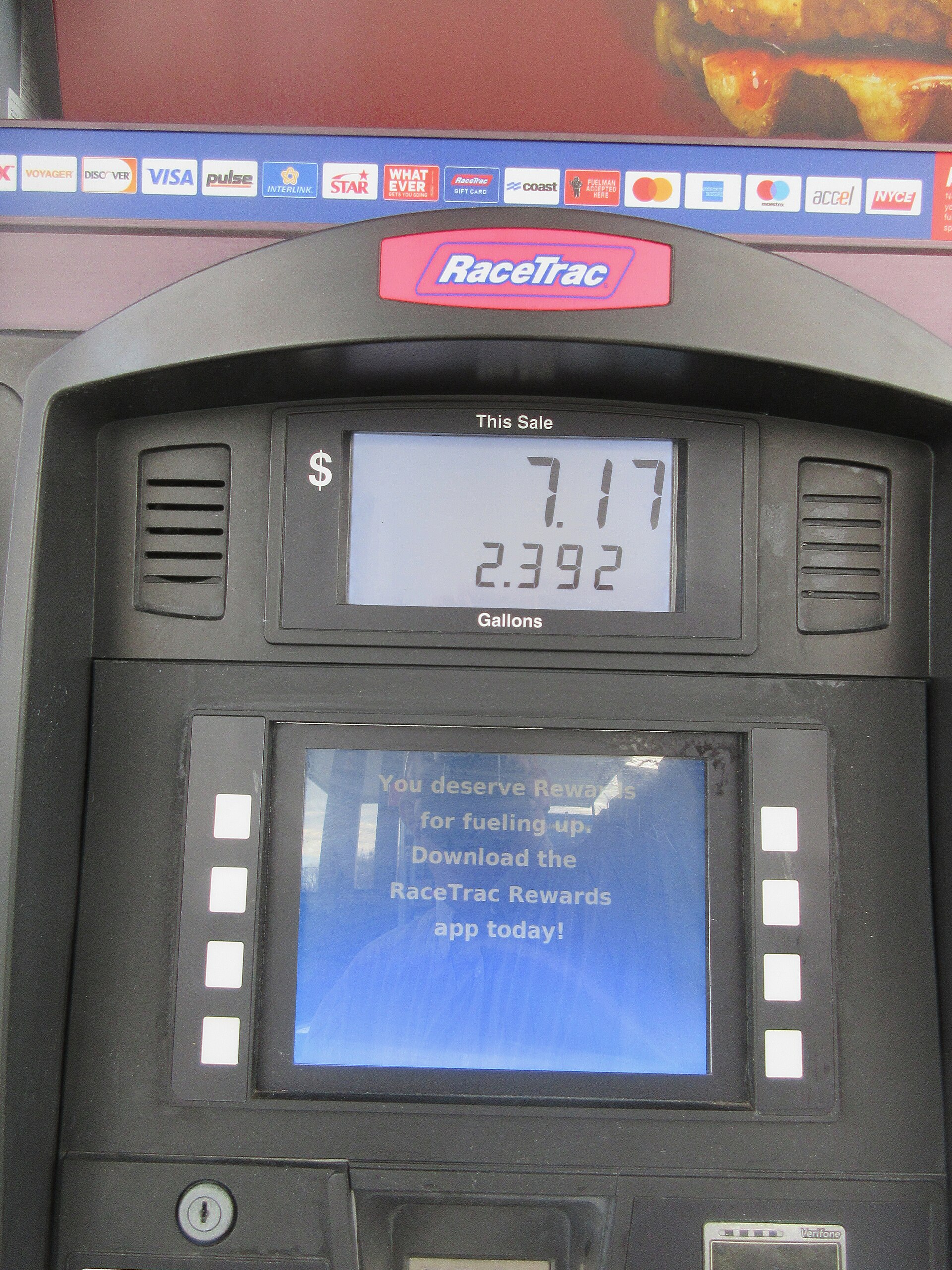
That distinction matters. Gasoline prices moved sharply during Biden’s term, reaching notably high levels in 2022 before falling from those peaks. A statement comparing a current price with the 2022 spike can produce a different result from one comparing it with prices at the beginning or end of Biden’s presidency.
In other words, the claim can be directionally supported against selected high-price moments, while still leaving out lower-price stretches that complicate a sweeping comparison.
Why the benchmark changes the answer
A useful fact check starts by asking what, exactly, is being compared. The U.S. Energy Information Administration tracks regular gasoline prices through a national weekly average, but that figure is not the same thing as the price seen by every motorist.
Drivers in California, for example, can face prices far above the national average because of taxes, environmental fuel requirements, distribution constraints and regional refinery issues. Prices in oil-producing states or areas with lower taxes may look very different.
There is also no single “Biden gas price.” The average changed week to week, reflecting crude-oil markets, refinery outages, seasonal demand and global events. A fair comparison should identify a specific start date, end date and price series rather than treat an entire administration as one number.
- National average: Useful for measuring the country overall, but not for describing every local market.
- Monthly or weekly average: Better than highlighting a single day, which may reflect a temporary move.
- Full-term comparison: More revealing than comparing today’s price only with an unusually high or unusually low point.
The 2022 surge is important context
Any discussion of Biden-era fuel costs has to account for the extraordinary run-up in 2022. Gasoline prices rose as global energy markets were disrupted following Russia’s full-scale invasion of Ukraine, with the effects felt well beyond the United States.
That episode gave Trump a real, memorable price peak to invoke. It also helps explain why many voters recall the Biden period as expensive at the pump even though prices did not remain at their high point for all four years.
But the same context limits the argument that White House policy alone explains the entire increase or subsequent decline. Oil is a globally traded commodity. A major war, production decisions by oil-exporting countries, refinery capacity and consumer demand can move U.S. gasoline prices rapidly, regardless of which party holds the presidency.
Presidents influence, but do not set, prices
Presidents can affect the energy landscape. Their decisions on leasing, permitting, environmental rules, sanctions, diplomacy and emergency reserves can shape expectations and, in some cases, supply conditions. Congress and state governments also influence costs through taxes and regulations.
Still, neither the president nor the Energy Department posts a daily retail gasoline price. The price paid by consumers generally reflects the cost of crude oil, refining, transportation, station operations, taxes and retailer margins.
That is why claims of sole credit or sole blame deserve skepticism. A president may be politically associated with a price trend, especially when households are feeling it, without being the single cause of that trend.
What the fact check can support
The fairest reading is that Trump’s statement has a limited factual basis: current prices can be lower than some of the elevated national averages seen during Biden’s term. The underlying comparison is not automatically false simply because it is political.
Its weakness is breadth. Saying prices are lower than “during Biden” compresses years of changing conditions into a single contrast. It does not specify whether the reference point is the 2022 high, Biden’s overall average, the price when Biden took office, the price when he left office or a driver’s local market.
CNN’s fact-check reporting on Trump’s remarks underscores that the wording matters. The relevant question is not whether gas was ever more expensive under Biden—it plainly was at certain points—but whether Trump’s phrasing gives a complete picture of the data and causes behind it.
What remains unclear for drivers
The claim does not resolve the question most consumers actually face: whether prices will rise or fall next month. That depends heavily on crude-oil markets, refinery operations, hurricane risks, seasonal travel demand and international supply disruptions.
For readers weighing political claims about the pump, the most dependable check is a dated national or state average from the Energy Information Administration or another transparent price tracker. Compare like with like: regular gasoline with regular gasoline, the same geography and clearly defined time periods.
Trump’s gas-price argument is strongest as a contrast with the Biden-era peak, not as a full account of prices across an entire administration. The fact check is less about finding one magic number than about recognizing how much a chosen baseline can change the story.










Leave a Reply