

The Lincoln Memorial Reflecting Pool became a test of whether a high-profile federal makeover could move faster than the evidence behind it. New disclosures about the pool’s installation problems have complicated President Donald Trump’s claims that vandalism was chiefly to blame.
Donald Trump pursued a rushed effort to repair the Reflecting Pool, and the Lincoln Memorial landmark soon became a costly example of what can go wrong when a high-visibility project moves before its technical problems are fully understood. The Reflecting Pool repair project was considered doomed from the start because the new coating failed, algae spread after the pool was refilled, and later government records pointed to flawed installation by the contractor.
The dispute matters beyond one Washington landmark. It has drawn in a no-bid federal contract, criminal accusations against visitors, and a sharp split between Trump’s insistence that vandals caused the damage and the Justice Department’s conclusion that it could not prove that claim.
A makeover became a breakdown
Trump had promoted a plan to coat the bottom of the Lincoln Memorial Reflecting Pool in what he described as “American flag blue” ahead of the nation’s 250th anniversary. The pool is one of the most recognizable settings in Washington, framed by the Lincoln Memorial on one end and the Washington Monument on the other.
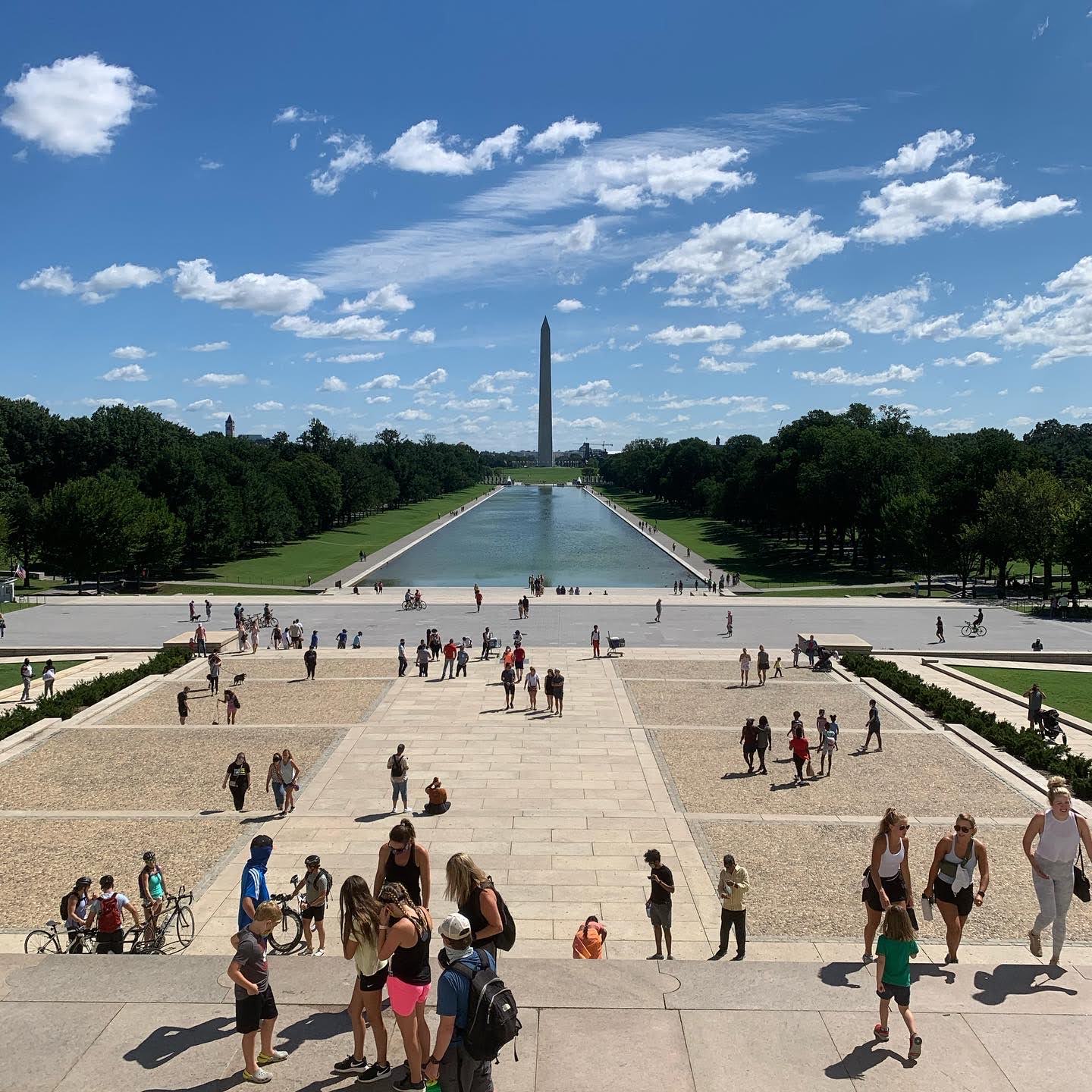
That visibility raised the stakes. A routine maintenance project at a federal site can be disruptive; a failed project at the Reflecting Pool becomes instantly political, highly photographed and difficult to explain away.
According to NBC News, the project encountered setbacks as its costs climbed beyond early estimates. Once the pool was refilled, the coating began coming up and algae flooded the water. Those failures created the central question: was the damaged surface the result of people interfering with it, or was the material itself improperly installed?
The subsequent record made that question far more consequential than a dispute over maintenance. Federal authorities initially treated portions of the damage as vandalism and brought charges against people connected to the pool.
The urgency shaped the contract
The New York Times reported that the administration characterized the repairs as too urgent to allow time to seek competing bids. Atlantic Industrial Coatings received the work through a no-bid contract.
Emergency procurement can be legal and sometimes necessary when public safety, essential operations or irreplaceable assets are at risk. But bypassing competition also puts more pressure on agencies to document why speed is necessary, why the selected contractor is qualified and how the work will be independently inspected.
Those safeguards are especially important with a specialized surface in a large outdoor pool. Waterproofing and protective coatings have to contend with water pressure, temperature swings, surface preparation, curing conditions and long-term exposure. A defect may not become obvious until water returns and the material is under stress.
There is not enough public information in the material available here to determine precisely which technical step failed or whether the contracting process itself caused the installation problems. The later findings do establish that the government obtained documents identifying flawed installation by Atlantic Industrial Coatings as the source of the June 2026 damage at issue.
Vandalism claims met new evidence
Trump repeatedly said vandals had cut long slits into the Reflecting Pool surface, at different times describing the alleged tools as a knife, box cutter or razor. He called the people responsible “thugs” and continued to argue publicly that vandalism, not contractor error, caused the major damage.
Then the Justice Department changed course. In a court filing reported by NBC News, the U.S. Attorney’s Office for the District of Columbia said additional Interior Department documents undermined the evidentiary basis for the indictment of former Olympic canoeist David “Davey” Hearn.
Prosecutors said the documents indicated that damage in June 2026 resulted from a flawed installation by the contractor. The filing said the government had not possessed Interior Department information pointing to an installation defect when it presented its initial case to a grand jury.
The department ultimately concluded it was difficult to attribute the widespread damage to vandalism, much less prove that conclusion beyond a reasonable doubt. It moved to dismiss Hearn’s case and at least one other misdemeanor case tied to the pool.
A dismissed case leaves consequences
Hearn had pleaded not guilty to a destruction-of-property charge alleging more than $1,000 in damage. He told NBC News that the pool appeared the same after he put his hands in the water as it had when he arrived.
His attorney, Steven Levin, said the case should never have been filed and called the government’s approach “ready, shoot, aim.” That is the harshest interpretation of the episode: authorities publicly embraced a vandalism narrative before the evidence from the agency responsible for the site had been fully reviewed.
Trump has taken the opposite view. In a Truth Social post after the dismissal, he said he disagreed “100%” with U.S. Attorney Jeanine Pirro’s decision and maintained that vandals caused the principal harm, while allowing there “may have been some contractor difficulty.”
Both positions can coexist only to a limited degree. A contractor defect does not rule out isolated damage or misconduct by visitors. But the Justice Department’s filing shows that federal prosecutors did not believe they could establish the broader vandalism theory required for the charges they brought.
Why the pool became political
The Reflecting Pool is not just a scenic basin. It is part of the National Mall’s civic landscape, a place associated with presidential ceremonies, mass demonstrations and Martin Luther King Jr.’s 1963 March on Washington.
That symbolism made the repair plan an unusually public test of federal stewardship. Supporters of fast action can argue that a deteriorating landmark deserves immediate attention and that government procurement can move too slowly. Critics can point to the coating failure, growing costs and dropped cases as evidence that speed was prioritized over verification.
The episode also illustrates a basic problem in public works: visual ambition does not substitute for a clear diagnosis. When a project begins with a dramatic aesthetic goal, any failure is judged not only as a technical mistake but as a failure of leadership and oversight.
The unanswered questions after dismissal
The dismissal of the criminal case resolved one issue: prosecutors no longer believed the available evidence could support their vandalism allegation against Hearn. It did not answer every question about the pool’s repair, the contractor’s work or the project’s final price.
Officials have not publicly laid out, in the material reviewed here, a complete technical account of how the coating was installed, when problems were detected, what inspections occurred or what corrective work will be required. Those details matter because they determine whether this was an isolated workmanship failure or a broader planning and oversight breakdown.
There is also the matter of accountability. If flawed installation caused the widespread damage, taxpayers and the public will want to know what contractual remedies are available, whether federal agencies are seeking them and how the government will prevent a repeat on another landmark project.
For now, the clearest lesson is that the Reflecting Pool’s problems cannot be understood solely through claims of vandalism. The evidence that emerged after charges were filed shifted attention back to the rushed repair itself—and to whether the effort had the planning, scrutiny and technical foundation it needed from the beginning.










Leave a Reply