
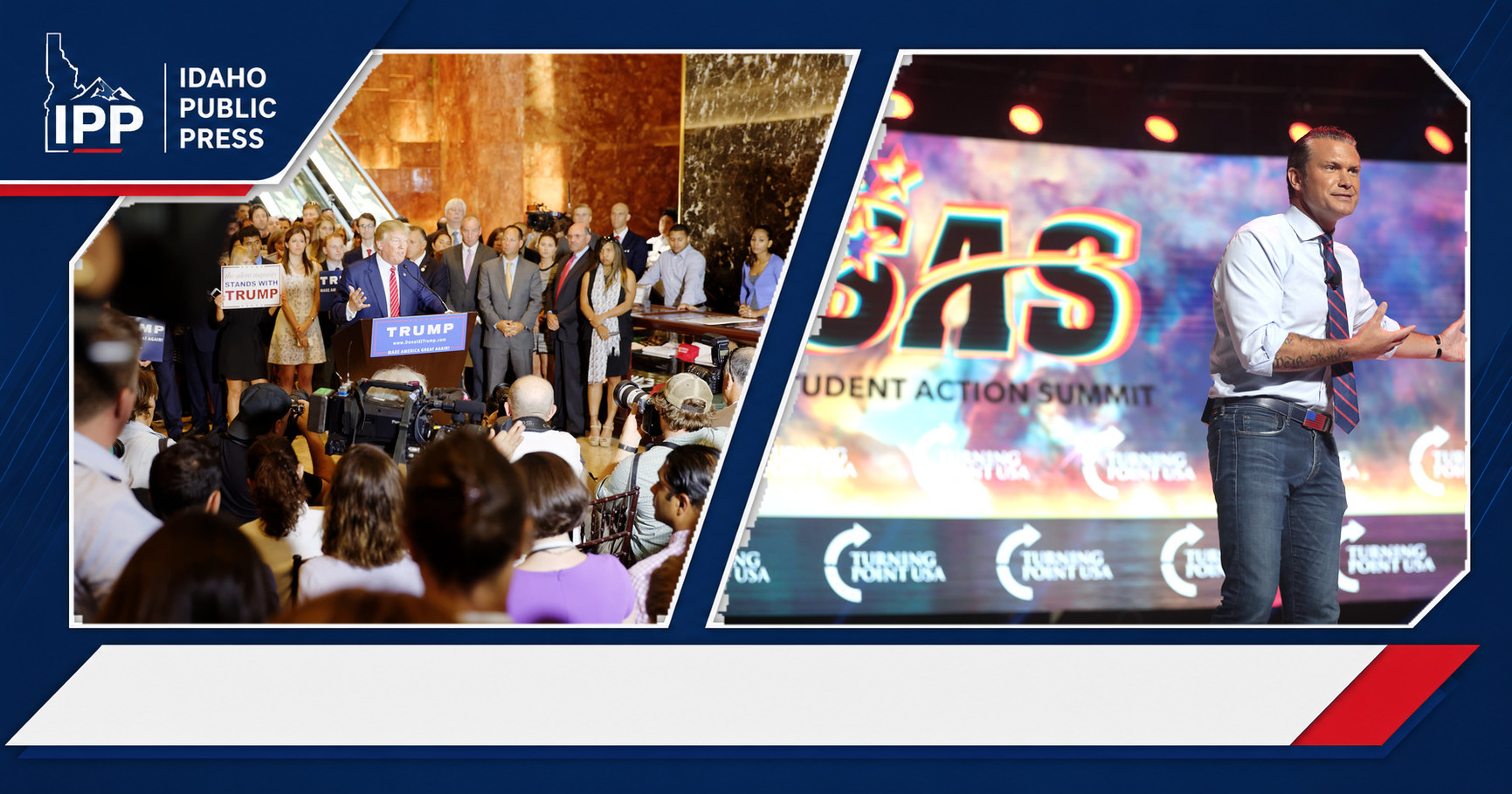
Hegseth still has Trump’s public backing, but concerns from Capitol Hill and weak public polling are adding pressure to his Pentagon leadership. The central dispute is not only over a reported confrontation, but over whether the military has enough munitions for a prolonged conflict.
Pete Hegseth is losing support among Republicans as criticism of the defense secretary’s management and the Iran war grows on Capitol Hill. Donald Trump reacted to a report about a feud involving Hegseth by flatly denying that he confronted him over munitions shortages, while insisting he still has confidence in his Pentagon chief.
The dispute matters because it puts Hegseth’s political standing, the administration’s account of military readiness and the strain of a six-month war in the same spotlight. Trump’s public support remains a major shield for Hegseth, but it does not erase concerns voiced by Republican senators or the questions raised by recent polling.
Trump rejects the confrontation account
The immediate controversy stems from a Washington Post report describing frustration inside the administration over shortages of long-range missiles and air-defense interceptors. The report said Trump pressed Hegseth at Camp David about why the president had not been fully informed about the depth of the problem.

According to the report, Hegseth blamed Deputy Defense Secretary Stephen Feinberg for the shortfalls and for failing to keep Trump updated. The account relied on people familiar with the exchange, and it has been forcefully disputed by the White House and Pentagon.
White House press secretary Karoline Leavitt, who said she was at Camp David, called the report “100% fake news” and said the encounter described “literally never happened.” Pentagon chief spokesman Sean Parnell also denied that Hegseth misled anyone about the U.S. munitions posture or blamed Feinberg.
Trump added his own rebuttal in a Truth Social post, saying the United States has “massive amounts” of munitions and is making and shipping more as needed. He described the reports as unfounded rumors and said he was extremely happy with Hegseth’s work.
Republican senators raise their concerns
Trump’s defense does not mean the criticism from within his party has disappeared. North Carolina Sen. Thom Tillis said Hegseth had “lost my confidence,” citing the forced retirement of senior military leaders and what Tillis characterized as excessive micromanagement at the Pentagon.
Maine Sen. Susan Collins, chair of the Senate Appropriations Committee, called the departures of senior military officials “deeply troubling.” West Virginia Sen. Shelley Moore Capito and Iowa Sen. Joni Ernst have also expressed concern about public patience with the unresolved conflict, according to the Newsweek report.
These are not identical complaints. Some focus on personnel decisions and Hegseth’s management style; others concern the direction and duration of the war. Together, though, they suggest that the defense secretary is facing a more difficult political environment than one defined solely by Democratic opposition.
Tillis had raised alarms earlier in the year when reports suggested that Gen. Chris Donahue, commander of U.S. Army Europe and Africa, could be sidelined in a Pentagon restructuring. Tillis argued then that Hegseth should rely on experienced military professionals rather than what he called “yes-men.”
The munitions question has larger stakes
The disagreement over what happened at Camp David is important, but the underlying munitions issue is bigger. The Newsweek report said U.S. forces have used major portions of key missile and interceptor stockpiles since the Iran war began on February 28.
It cited reporting that the U.S. fired more than 850 Tomahawk cruise missiles, more than 1,000 Patriot and Terminal High Altitude Area Defense interceptors, and more than 1,300 Army tactical ballistic missiles during the conflict’s first month. Those figures, if accurate, help explain why readiness has become a politically charged question.
Munitions are not simply a budgeting concern. They affect what military options a president has, how long the United States can sustain operations and how much capacity remains for other potential crises. A dispute over who knew what, and when, can therefore quickly become a dispute about command, planning and accountability.
Hegseth, Feinberg and Joint Chiefs Chairman Gen. Dan Caine have asked Congress for $67 billion to replenish stockpiles, according to the report. That request places Congress directly in the middle of a debate that already includes Republican skepticism about Pentagon leadership.
Polls show a weakening public position
Hegseth’s difficulties are not confined to the Senate. A Marquette Law School poll conducted July 22 through July 29 found him tied with Trump for the lowest net favorability among administration figures tested, at minus 22 points.
In that survey, 23% of U.S. adults viewed Hegseth favorably, while 45% viewed him unfavorably. Another 32% said they had not heard enough about him to form an opinion, an unusually large share for a Cabinet official who has led the Pentagon through months of war.
The poll does not establish that Republicans as a whole have abandoned Hegseth. In fact, Marquette had not released a newer Republican-only breakdown. Its May survey showed Hegseth with a plus-36 net favorability rating among Republicans, based on 55% favorable and 19% unfavorable.
Still, even in that earlier poll, he ranked last among the four Republican figures tested. The newer overall numbers, combined with criticism from named GOP senators, offer a clearer picture of pressure around Hegseth than either measure would alone.
Trump’s backing remains Hegseth’s protection
For now, the most consequential fact is that Trump has publicly stood by Hegseth. Presidential confidence can matter more than discontent from lawmakers when a Cabinet secretary’s future is being judged inside an administration.
Trump praised Hegseth’s handling of operations in Venezuela and Iran, as well as what he described as Pentagon improvements in recruitment and the rollback of diversity, equity and inclusion initiatives. Parnell said Hegseth “isn’t going anywhere” and will continue working with Feinberg.
Hegseth has survived earlier controversies, including the Signal chat breach widely called Signalgate, without losing Trump’s public support. That history makes a near-term departure look less likely than the latest speculation might suggest.
But public backing is not a complete answer to the concerns being aired. Republican lawmakers can shape defense budgets, oversee military policy and demand explanations from Pentagon officials. If the war drags on or shortages become more visible, the gap between Trump’s confidence and congressional unease could become harder to manage.
What remains unresolved
The administration and the Washington Post are presenting sharply conflicting versions of the alleged Camp David exchange. The public does not yet have independent evidence that resolves whether Trump confronted Hegseth, whether Feinberg was blamed or how much internal disagreement exists over the state of U.S. stockpiles.
There is also a distinction worth keeping clear: criticism from several prominent Republicans is not the same as proof that Hegseth has lost broad Republican support. The available polling shows a decline in his overall standing, while the most recent Republican-only numbers cited were from May.
The stronger takeaway is narrower and more consequential. Hegseth faces a test of credibility at a moment when military operations, weapons supplies and Pentagon personnel decisions are under intense scrutiny. Trump has chosen to defend him publicly; whether that is enough to stabilize his position will depend on what Congress learns and what the conflict demands next.





Leave a Reply