

The horror author’s latest political broadside is less about one insult than a larger fight over polls, perception and voter responsibility ahead of the midterms.
Stephen King is criticizing Donald Trump in strong terms, calling him a “narcissistic megalomaniac” and issuing a stern warning about Trump to voters: “be careful who you vote for.” King brands Donald Trump this way in a post on X aimed at Trump’s repeated claims that his poll numbers are “the best they have ever been.”
The clash matters now because public approval is already becoming a central fight ahead of the November midterm elections. Recent surveys cited by The New York Times, AP-NORC and Quinnipiac show Trump at low points, while Trump insists the numbers reported by major outlets are fake.
King’s warning was the point
The line getting the most attention is the insult. The more politically useful part of King’s post may be the warning that followed it.
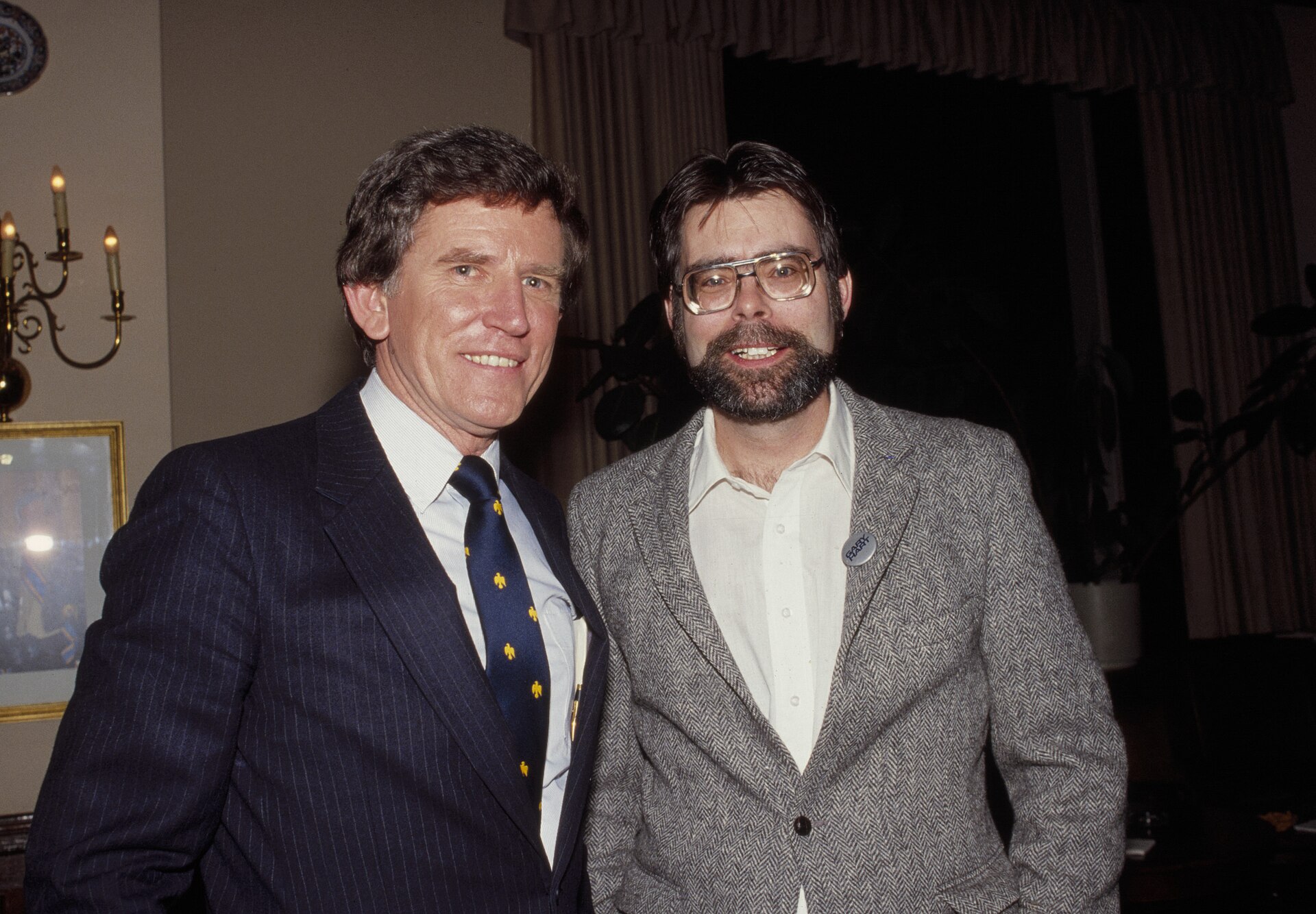
According to the Irish Star, King wrote on X on Wednesday, August 5, that Trump’s “numbers are in the basement,” then accused him of believing his poll numbers were the best they had ever been. King continued: “Next time, be careful who you vote for. Don’t do it casually. It does make a difference.”
That turns the post from a celebrity jab into a voter message. King was not only mocking Trump’s reading of the polls; he was arguing that elections have consequences and that voters should treat their choices as durable, not disposable.
The post had drawn more than 287,000 views, the Irish Star reported, giving King’s criticism the familiar life cycle of modern politics: a short social-media blast, a quoted insult, a broader argument folded underneath.
Trump’s claim set it off
King was responding to Trump’s own message on Truth Social, where Trump rejected unfavorable polling and claimed his “REAL Polling Numbers” were “the best they have ever been.” Trump also accused the “Fake News Media” and the “Radical Left” of promoting corrupt numbers.
Trump has made versions of that argument before. The Irish Star noted a similar Truth Social post from late June in which he wrote that his real poll numbers were the highest they had ever been.
That is a familiar Trump tactic: draw a sharp line between numbers he accepts and numbers he dismisses. Supporters often see that as a necessary challenge to hostile institutions. Critics see it as an attempt to replace measurable public opinion with personal assertion.
King’s post landed directly on that divide. His “narcissistic megalomaniac” phrase was an attack on Trump’s character, but the surrounding argument was about whether a leader can acknowledge political weakness when the data points that way.
Polls complicate Trump’s version
The polling picture described in the available reporting does not support Trump’s broad claim that his numbers are at their best ever. The New York Times reported that Trump’s numbers were at or near their lowest levels in several nonpartisan surveys and described him as the most unpopular second-term president at this point in a term in polling history going back to the 1940s.
Specific surveys cited in the Irish Star report showed a rough stretch for Trump. The New York Times polling cited there put his approval at 38 percent, with 59 percent disapproving. AP-NORC placed his approval at 33 percent at the end of July. Quinnipiac University put it at 32 percent, described as an all-time low in that pollster’s tracking.
Polls are not election results, and no single survey should be treated as destiny. Methodology, timing, sample composition and the wording of questions all matter. But when multiple pollsters show a similar direction, the trend becomes harder to wave away as one bad snapshot.
That is why the dispute has political weight. Trump is trying to define his standing as strong despite outside numbers. King is using those outside numbers as evidence that Trump is refusing to see what voters are saying.
Why King keeps entering politics
King’s political posts are not new. The author of “Carrie,” “The Shining” and other best-known horror novels has long used social media to criticize Trump and Republican politics, often in blunt, shareable language.
That gives him a different role from a pollster, strategist or elected Democrat. He is not producing data or running a campaign. He is translating political frustration into a cultural voice that his followers already recognize.
For people who agree with him, that can make the criticism feel clarifying. A famous writer says plainly what they believe institutions are saying too carefully. For Trump supporters, the same post can look like another example of celebrity contempt for their candidate and their votes.
Both reactions help explain why these moments travel so quickly. King’s stature brings attention, Trump’s name brings conflict, and the insult gives the internet a phrase to circulate. The harder question is whether it persuades anyone beyond the people already nodding along.
The risk in celebrity broadsides
There is a limit to what a celebrity attack can do. Calling a president or candidate a “narcissistic megalomaniac” may energize opponents, but it can also harden supporters who believe the criticism is personal, elitist or theatrical.
That does not mean King’s warning is irrelevant. It means the warning competes with the insult for attention. The sharp phrase gets clicks; the civic argument asks readers to slow down and think about consequences.
Trump’s side of the exchange also depends on a kind of performance. By saying his “real” numbers are excellent and unfavorable polls are corrupt, he gives supporters a reason to reject bad news before it can weaken morale.
That creates a political environment where facts, trust and identity are tangled together. A poll is not just a poll. It becomes a test of which institutions a voter believes and which public figures they think are telling the truth.
What remains unclear
The available reporting does not indicate that Trump responded directly to King’s latest post. Without that, the exchange is not a back-and-forth so much as two public figures speaking to their own audiences: Trump defending his popularity, King warning voters not to dismiss what he sees as the consequences of Trump’s leadership.
The next test will not be whether King’s post racks up more views. It will be whether the polling environment shifts as the midterms get closer, and whether voter concern about inflation, foreign conflict, gas prices or other issues changes the political map.
For now, King’s comment captures a larger fight in compressed form. Trump says the polls showing weakness are fake. King says the numbers are bad and the denial is dangerous. Voters are left to decide not only whose argument they prefer, but which evidence they trust.






Leave a Reply