
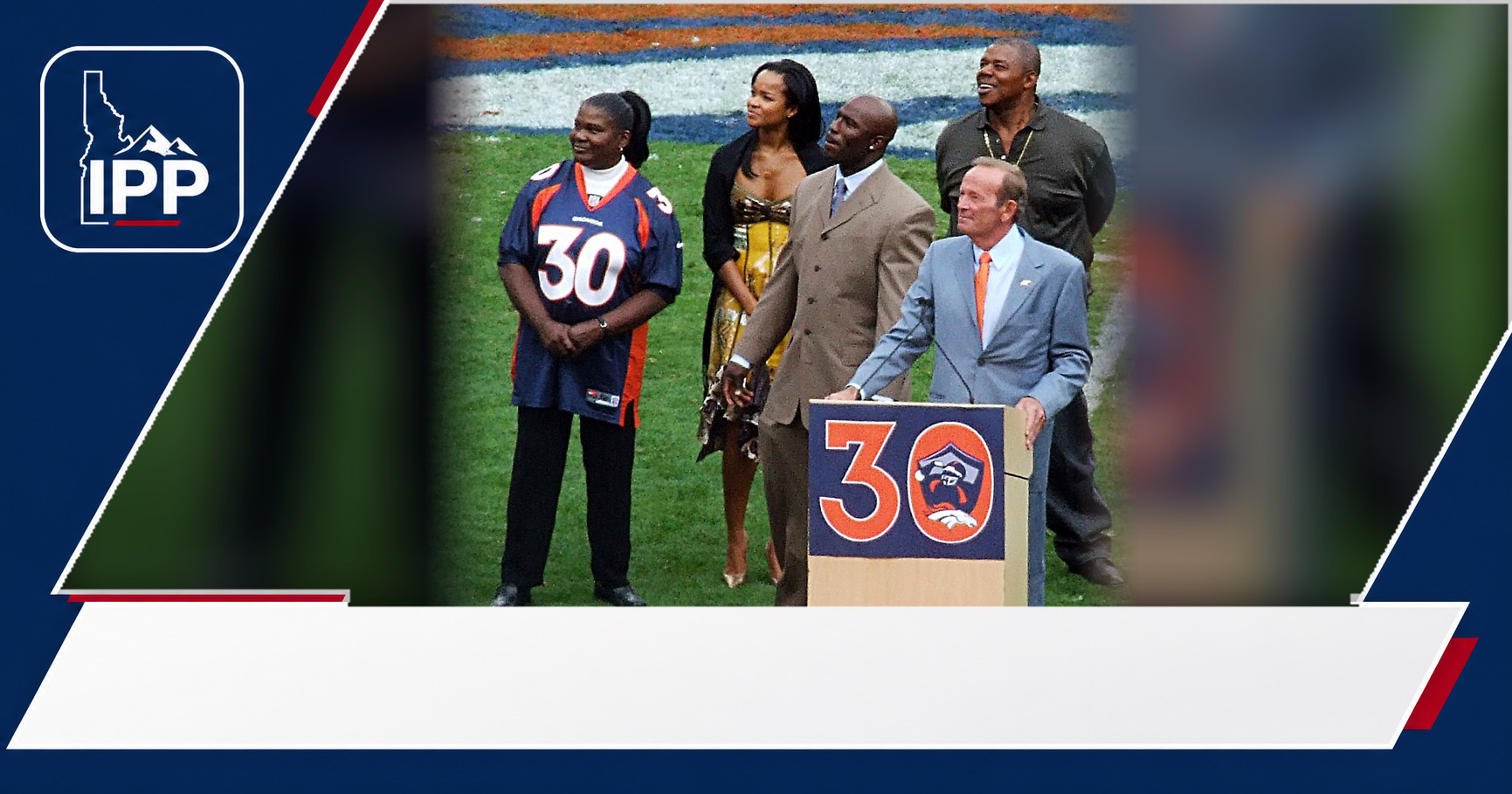
The Hall of Fame running back says his own mental health experience made Teva’s campaign feel personal. The partnership also shows why pharmaceutical companies increasingly want athletes as messengers, not just celebrities.
Terrell Davis is partnering with Teva Pharmaceuticals to raise health awareness for Tardive Dyskinesia, and the former Denver Broncos star is framing the message around a line he used with Fortune: “It is okay not to be okay.” The NFL legend Terrell Davis joins a growing roster of athletes working with big pharma on campaigns that mix personal storytelling, patient education and brand-adjacent marketing.
The campaign matters because Tardive Dyskinesia, or TD, can be hard for patients to recognize and slow to diagnose. It also matters because Teva makes Austedo, an approved treatment for TD, giving the awareness push both a public-health purpose and a clear business backdrop.
Davis puts TD in focus
Davis, a two-time Super Bowl champion and Pro Football Hall of Famer, is part of Teva’s campaign called “The Other TD.” The name plays on his initials while pointing attention to Tardive Dyskinesia, a neurological movement disorder associated with certain medications used to treat mental health conditions.
According to Fortune, the campaign directs people to educational resources and encourages those experiencing involuntary movements to speak with healthcare providers. That is the health-awareness side of the partnership: getting people to notice symptoms, connect them to a condition and seek professional evaluation.
Davis told Fortune that his involvement is personal, not abstract. He said he had been prescribed medication as part of mental health treatment, though not medication linked to TD, and that hearing from a woman living with the disorder made the issue feel close to home.
He described the thought this way: “That could have been me.”
The personal story is the pitch
Modern pharmaceutical awareness campaigns often depend on a careful emotional exchange. The athlete is not simply saying a product name. The athlete is telling a story that makes a difficult condition sound less remote, less embarrassing and easier to discuss.
Davis’s story follows that model. After football, he said he faced mental health challenges that cut against the image he had of himself as a physically and mentally strong athlete. “I played football. I’m a strong guy,” he told Fortune. “I thought I had strong mental fitness.”
That admission is central to the campaign’s credibility. Davis is not presented as a clinician. He is presented as someone who understands how hard it can be to seek help, especially for people trained to equate toughness with silence.
His line, “it is okay not to be okay,” fits the larger shift in sports culture. A generation ago, star athletes were far less likely to speak publicly about depression, anxiety, medication or neurological symptoms. Now, those conversations are part of mainstream sports messaging.
Why drugmakers want athletes
For pharmaceutical companies, athletes offer something traditional advertising often lacks: trust built before the campaign begins. Fans may know their careers, injuries, triumphs and public struggles. That familiarity can make a health message feel more human than a standard commercial urging patients to ask a doctor about a medication.
Fortune’s report places Davis alongside other athletes who have become prominent health messengers. Former NFL players Joe Barksdale and Brandon Marshall have spoken publicly about mental health; Marshall co-founded Project 375 after his diagnosis of borderline personality disorder. Outside football, Serena Williams has worked with Ro, a telehealth company whose GLP-1 patient base grew to more than 3 million users, according to Fortune.
The pattern is not hard to see. Athletes can translate a condition into a story. They can make a symptom less isolating. They can move audiences that might tune out a corporate explainer.
But that same power is why the partnerships deserve scrutiny. When a company sells or manufactures a treatment connected to the condition being discussed, the line between education and marketing becomes important.
The business behind awareness
Teva’s campaign is not just a public-service announcement floating separately from the company’s portfolio. Fortune reported that Teva manufactures Austedo, one of the leading prescription treatments approved for Tardive Dyskinesia, and that the drug is a significant revenue driver as the company faces generic competition on older medications.
That does not make the campaign illegitimate. Patients who spend months or years without a diagnosis may benefit from hearing that involuntary movements can be a medical issue worth discussing with a clinician. Fortune reported that a woman Davis met through the campaign, Lori, experienced involuntary movements for roughly two years before receiving a diagnosis and treatment.
Still, the commercial context changes how the message should be read. Awareness campaigns can expand understanding of underrecognized conditions, but they can also expand the market of people asking about treatments. Both things can be true at once.
Davis is compensated for the Teva partnership, according to Fortune. That disclosure matters because it helps readers separate the sincerity of his personal experience from the business arrangement around the campaign.
Where the message lands
The most useful part of Davis’s campaign may be its challenge to silence. TD involves involuntary movements, a category of symptom that can carry stigma or be dismissed as stress, aging or something a person should simply manage privately.
By putting a famous football name beside the condition, Teva and Davis are trying to make the abbreviation “TD” memorable. Davis told Fortune that if he can make TD synonymous with Tardive Dyskinesia, he sees that as a good outcome.
That goal is simple, but it sits inside a much bigger media shift. Health messaging is now spread through athletes, influencers, telehealth brands and condition-specific websites, not only through doctors’ offices and television ads. The upside is reach. The risk is that patient education can arrive wrapped in a sales funnel.
For readers, the practical takeaway is to treat these campaigns as starting points, not diagnoses. If a campaign makes a symptom feel familiar, the next step is a conversation with a qualified healthcare provider, not an assumption that one treatment or one company has the full answer.
What remains unclear
The Davis-Teva partnership shows how athlete credibility can help bring attention to a condition many people may not know by name. It also shows why pharmaceutical companies are investing in ambassadors whose stories feel more personal than a conventional ad.
What remains harder to measure is the balance of benefit and influence. Do these campaigns mainly help people get diagnosed earlier? Do they steer patients toward specific brands? How clearly do audiences understand when a moving personal story is also part of a paid marketing strategy?
Those questions are not unique to Davis or Teva. They are now part of the broader health-marketing ecosystem, especially as athletes become trusted voices on mental health, medication, chronic conditions and treatment access.
Davis’s message is resonant because it is plain: “It is okay not to be okay.” The next test is whether campaigns built around that kind of honesty can keep the same clarity about the business interests behind them.







Leave a Reply