
The exchange turned a journalism award into another flashpoint between Trump and the political press. CNN’s defense of Collins shows why the dinner’s jokes still carry real institutional weight.
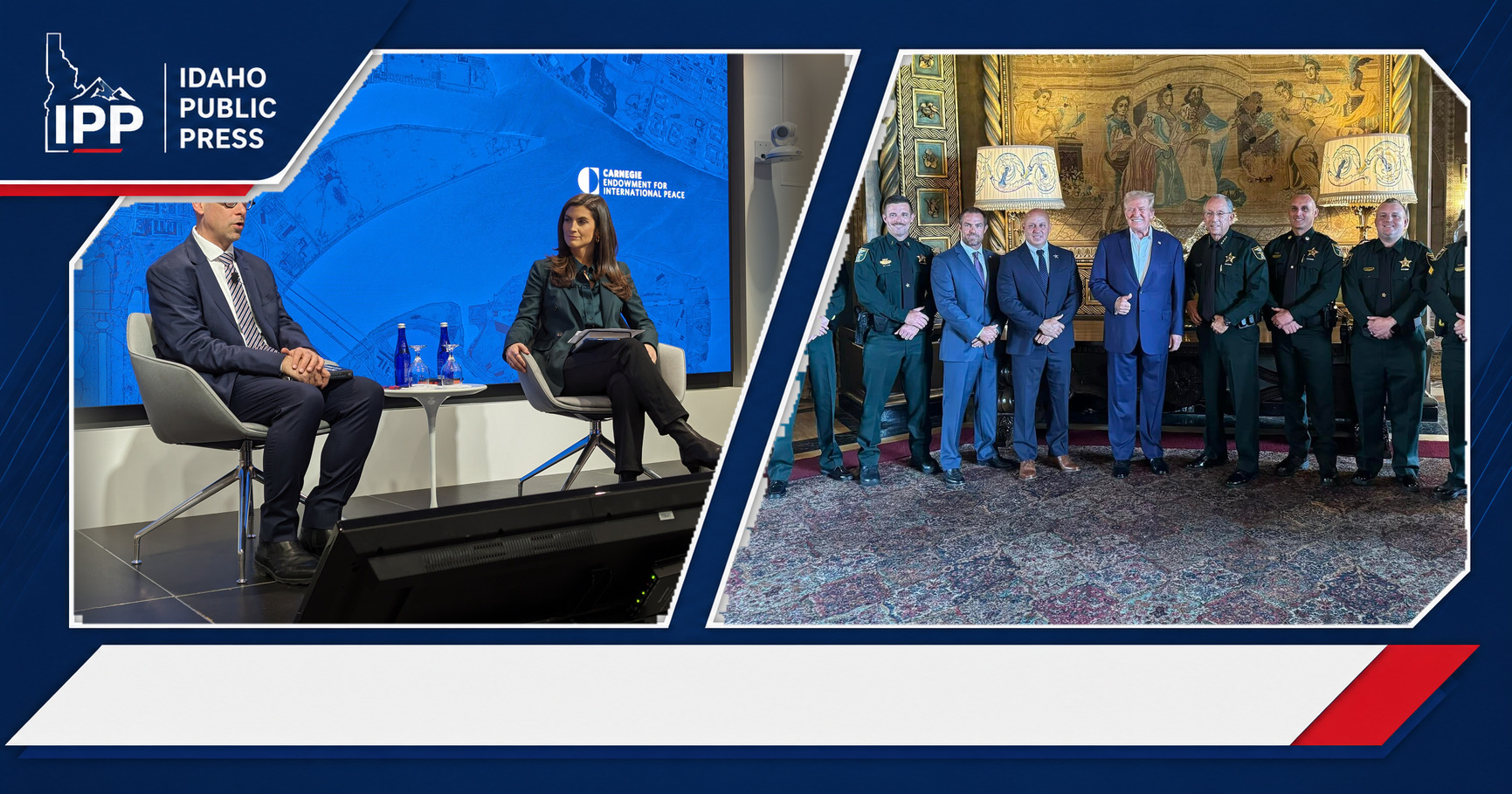
Kaitlan Collins responded after Donald Trump called her award fake at the White House Correspondents’ Dinner in Washington, D.C.; Trump insulted Collins during the Correspondents’ Dinner, and Collins reacted to Trump’s remarks as CNN defended the reporter and the White House Correspondents’ Association honor she received. The moment matters now because it put a sitting president’s familiar media attacks inside journalism’s most symbolic annual room.
NPR reported that Trump criticized Collins from the stage, said she should not have won, called her reporting "fake" and mocked her demeanor. The clearer documented response came from CNN leadership, which publicly stood by Collins and the integrity of its journalism.
Trump singled out Collins
Collins, CNN’s chief White House correspondent and anchor, had won the White House Correspondents’ Association award for Excellence in Presidential News Coverage Under Deadline Pressure in broadcast. NPR reported the award recognized her coverage of the 2025 Oval Office meeting between Trump and Ukrainian President Volodymyr Zelenskyy.
Trump did not treat the award as a neutral industry honor. During his speech, he criticized Collins directly, saying she should not have received it and calling her reporting "fake," according to NPR.
He also made the attack personal. NPR quoted Trump as saying, "I said Kaitlan, do you ever smile? Smile. You have a nice position. You are at CNN Fake News. You should be a happy person. So smile, Kaitlan, just smile."
That line landed differently depending on the listener. Supporters of Trump often see his media broadsides as part of his political persona. Press advocates heard something more pointed: a president using a formal platform to ridicule a named reporter who covers him.
CNN closed ranks
After the speech, CNN Worldwide Chairman and CEO Mark Thompson issued a statement defending the network’s journalists. NPR reported that Thompson said CNN stands by its journalists and by the "integrity and fair mindedness" of their reporting.
Thompson also framed the issue as constitutional, not merely reputational. "Honest, accurate journalism may sometimes irritate politicians, but our fight to report and present that reporting to the public without government interference is fully protected by the U.S. Constitution," he said, according to NPR.
That response matters because it shifts the story away from whether one joke was sharp or tasteless. CNN’s position was that the underlying work was legitimate, award-worthy and protected, even when it angered the president being covered.
What is less clear from the available source record is the full scope of Collins’ own public response beyond the reported characterization that she broke her silence. The independently documented response in NPR’s account is CNN’s institutional defense after Trump’s remarks.
The award was the target
The White House Correspondents’ Association awards are not celebrity trophies. They are peer-recognized journalism honors, often given for reporting under pressure, sustained accountability work or coverage of major public events.
Collins’ award category itself is revealing: presidential news coverage under deadline pressure. That is the kind of work that happens in confrontational settings, where a reporter’s questions, tone and persistence become part of the public record.
Trump’s attack on the award blurred two arguments. One was about CNN, a network he has long attacked as "fake news." The other was about the WHCA’s judgment in honoring reporting he disliked.
For journalists, that distinction is important. Political leaders are free to criticize stories they believe are wrong. But dismissing an award as illegitimate because it recognizes unfavorable coverage can look like an attempt to define accountability reporting as misconduct.
A dinner after a scare
This year’s dinner already carried unusual weight. NPR reported that Trump returned to the rescheduled White House Correspondents’ Association Dinner three months after the original April event was disrupted when a gunman fired shots in the lobby of the Washington Hilton.
Trump and attendees were evacuated from that earlier event, according to NPR. The rescheduled dinner was held at the Waldorf Astoria hotel in Washington, D.C., with about 700 guests and tighter security.
Outgoing WHCA president Weijia Jiang said the message was, "We are back," adding that the association would not be intimidated and would not let an act of violence have the final word.
That setting gave the night a serious undertone before Trump ever reached Collins’ name. The dinner was not just a media party; it was a restart after a threat to a room full of journalists, officials and guests.
The roast had sharper edges
Trump said he had planned a harsher speech for the original April event, telling the room that version was "going to be a doozy," NPR reported. He joked that he had intended to "rip people" before saying he would take a softer tone.
Even so, his remarks took aim at journalists, Democrats, comedians and some figures in his own orbit. NPR described the speech as hour-long and wide-ranging, with digs at familiar political targets and jokes about term limits.
He also criticized incoming WHCA president Jacqui Heinrich, a Fox News correspondent, calling her tough and "nasty" while also commenting on her appearance, according to NPR.
Defenders may argue that the dinner has long been built around uncomfortable jokes, mutual needling and political theater. Critics counter that there is a power imbalance when the president mocks reporters by name, especially reporters tasked with scrutinizing his administration.
Why this exchange sticks
The Collins episode stands out because it compressed years of conflict between Trump and the press into one ceremonial moment. A journalist received an award for covering the presidency; the president used the same room to say she did not deserve it.
It also showed how quickly a dinner joke can become an institutional statement. CNN did not respond as if this were only about one reporter’s feelings. It answered as if the credibility of its White House coverage was being challenged from the podium.
The unanswered questions are practical ones. Will Collins address the exchange in more detail on air or in another forum? Will the WHCA respond beyond the award itself? And will Trump’s public criticism of individual reporters become an even more routine feature of major media events?
For now, the verified record is clear on the central facts: Trump targeted Collins and her award at the White House Correspondents’ Dinner, NPR reported his comments, and CNN publicly backed its journalist. The larger fight is over whether political leaders can attack unfavorable coverage without weakening the public’s trust in the people assigned to check them.


Leave a Reply