
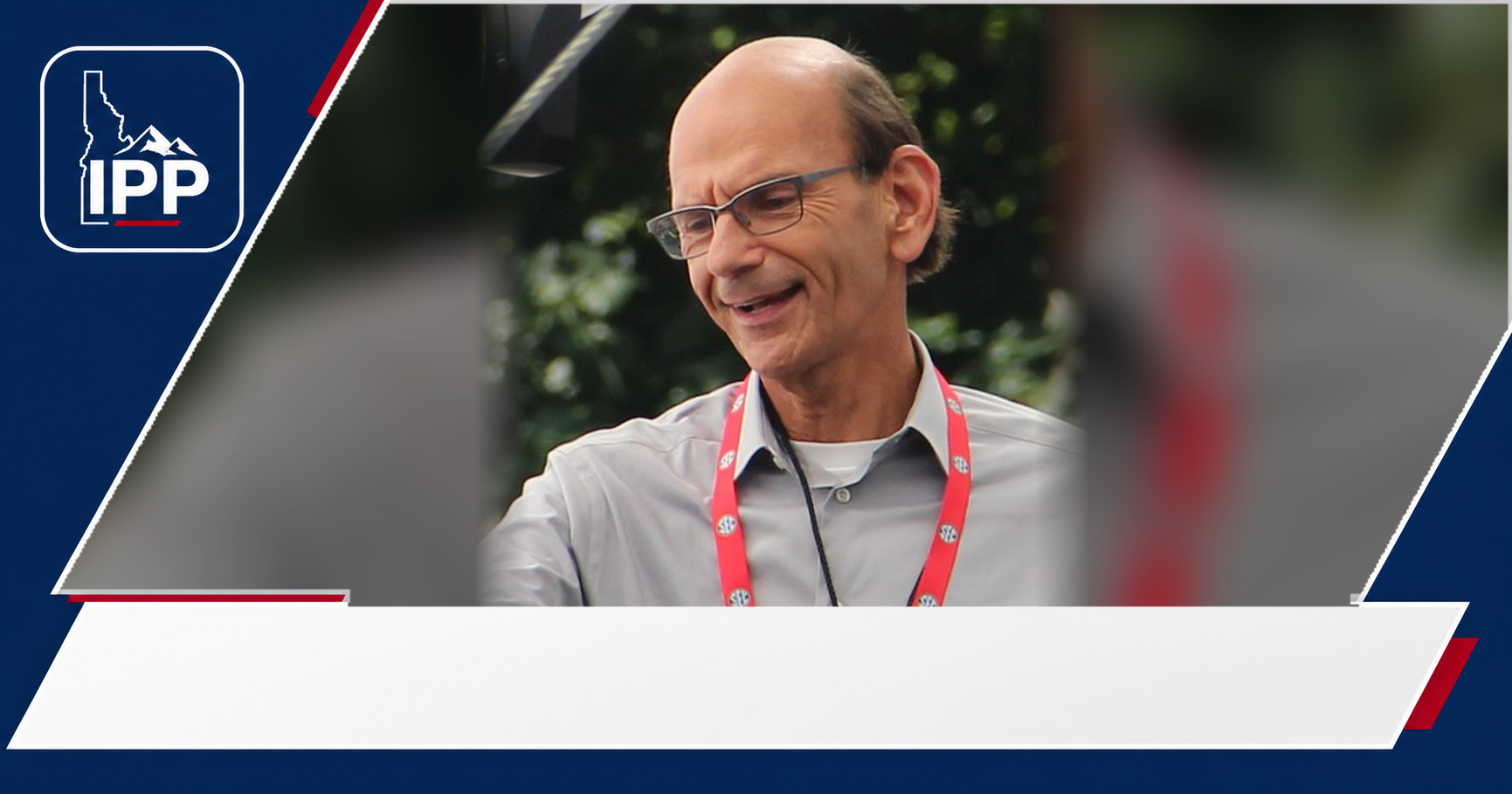
The comment connects three pressure points in the SEC: Alabama’s post-Saban era, Ole Miss’ transition from Lane Kiffin and Pete Golding’s fast-rising profile. It also shows how quickly one strong impression can become coaching-market chatter.
Paul Finebaum reacted to a surprising college football coaching prediction that he said he could not believe: an Alabama person told him Pete Golding could eventually replace Kalen DeBoer if DeBoer does not work out and Golding succeeds at Ole Miss. In the CFB-HQ On SI report, the “Paul Finebaum reveals” moment came from his appearance on The Next Round, where the ESPN commentator described the idea as wild but revealing.
The prediction involved a coach and coaching situation with real SEC connective tissue: Golding is now leading Ole Miss, previously worked under Nick Saban at Alabama, and is being watched closely after Lane Kiffin’s exit to LSU. That makes the chatter interesting. It does not make it close to happening.
A wild Alabama scenario surfaces
Finebaum’s anecdote landed because it hits one of the sport’s most sensitive jobs. Alabama is not just another destination on the coaching carousel. It is the program that Nick Saban turned into the modern measuring stick, and every post-Saban development is examined for signs of stability, slippage or succession planning.
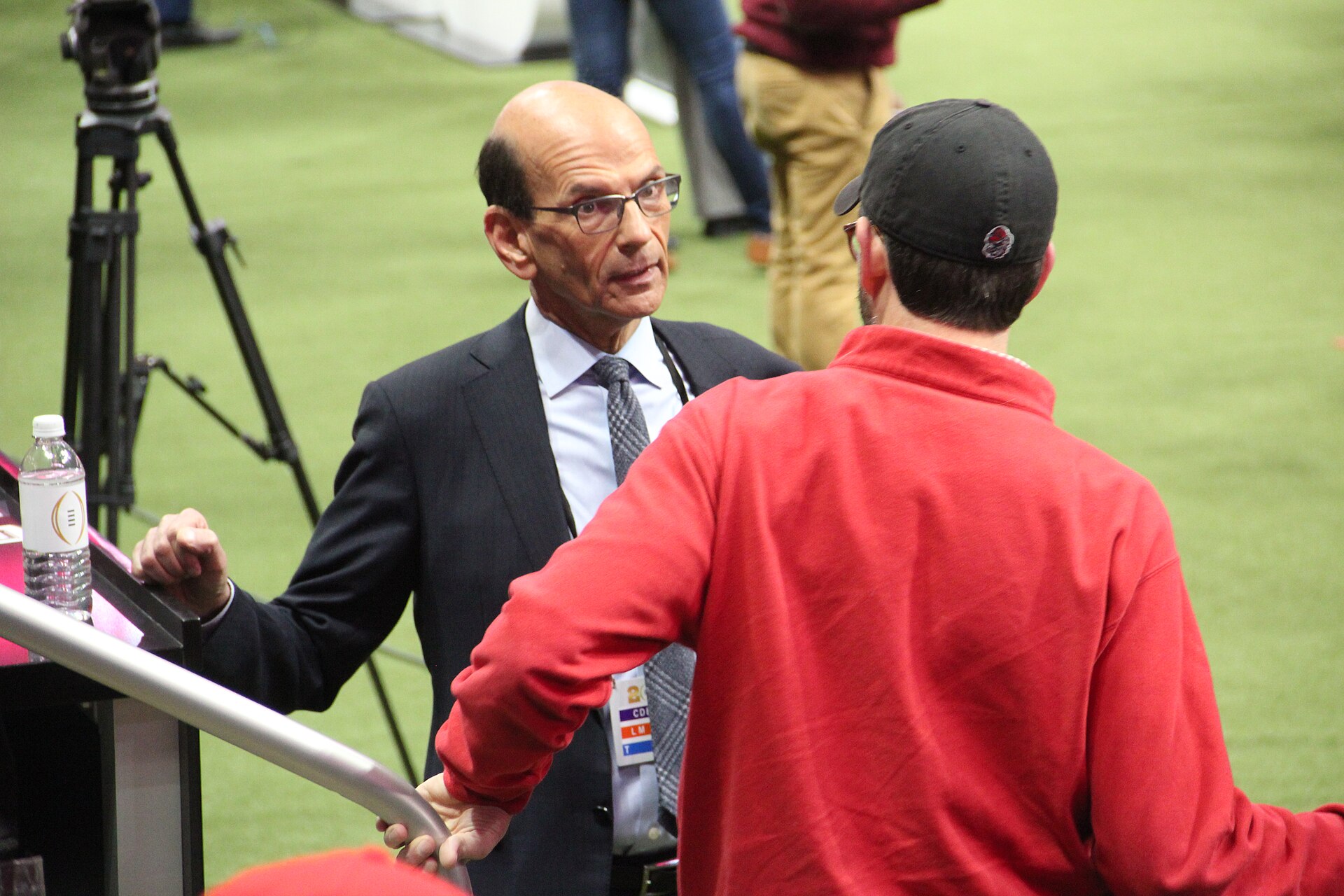
According to the report, Finebaum said he was speaking with “some Alabama person” around SEC media days when the possibility was raised. The person’s scenario was conditional: if DeBoer fails to meet the standard at Alabama and Golding proves himself at Ole Miss, Golding could become the next Alabama coach.
Finebaum’s quoted response captured the tone: “Really?” He did not present it as a report that Alabama is preparing to make a move. He presented it as the kind of startling comment that tells you a coach has changed perceptions faster than expected.
That distinction matters. College football runs on conditional futures. Most of them never happen. But the fact that Golding’s name could be floated in that context says something about how quickly a coach’s stock can move in the SEC.
Why Golding’s name resonates
Golding is not a random name attached to Alabama. He spent five seasons in Tuscaloosa as defensive coordinator under Saban, giving him familiarity with the program, the expectations and the recruiting ecosystem. That history makes the idea more plausible as a conversation starter than it would be for a coach with no Alabama connection.
His current platform also matters. Ole Miss is entering a new chapter after Kiffin, who built the Rebels into a serious SEC and College Football Playoff threat before leaving for LSU. Golding inherited both the benefit and burden of that rise: a roster and brand with momentum, plus the question of whether the progress was tied mostly to Kiffin.
The report notes that Golding led Ole Miss during its playoff run after the school’s administration did not allow Kiffin to coach the postseason. The Rebels reached the College Football Playoff semifinals and lost to Miami 31-27 in the final seconds.
That kind of emergency audition can shift reputations. Golding had not been a head coach before, but managing a high-pressure postseason situation gave evaluators a live sample of leadership under stress.
DeBoer is not on shaky ground
The most important caveat is the obvious one: Alabama already has a coach, and the available information does not suggest an imminent change. DeBoer is reported to be 20-8 through two seasons, with an SEC Championship Game appearance and a College Football Playoff trip last year.
He also signed a contract extension this offseason, according to the report. That does not make any coach untouchable forever, especially at a place like Alabama, but it is a clear signal of institutional support.
That is why Finebaum’s story should be read as a speculative SEC snapshot, not a job-opening alert. Alabama’s standard is severe, and DeBoer will always be compared against the Saban era. Still, a 20-8 start with major postseason credentials is not the profile of a coach already being pushed out the door.
The tension is familiar in modern college football. Programs want patience when they hire a coach. Fan bases and boosters often judge much faster. Alabama magnifies that tension because the baseline is not competence; it is championship contention.
Ole Miss faces its own test
For Ole Miss, the chatter is both flattering and uncomfortable. If Golding is being discussed as a future candidate for a job like Alabama, that means people inside the sport are taking him seriously. It also means the Rebels may have to spend part of his first full season answering questions about how long they can keep him if he wins big.
That is the uncomfortable price of hiring a fast-rising coach in the SEC. Success raises the floor of a program, but it also turns the head coach into a target for bigger-brand speculation.
There is another layer here because Ole Miss just experienced a high-profile departure with Kiffin leaving for LSU. The report itself points out that Golding may not want to follow a similar script and leave quickly after taking over. That is unknowable from the outside, but it is part of the reason this scenario remains complicated.
Golding’s immediate task is simpler than the rumor mill: prove Ole Miss can remain nationally relevant without Kiffin. If the Rebels stay in the playoff conversation, Golding’s name will grow louder. If they regress, the Alabama prediction will look like a media-week oddity.
What the prediction really signals
The comment is useful because it reveals how college football people think about coaching pipelines. Familiarity still matters. Alabama ties still matter. So does proof that a coach can manage elite-player expectations, pressure, donor attention and weekly SEC volatility.
Golding checks some of those boxes, but not all of them yet. He knows Alabama. He has coordinated at a high level. He has handled a tense postseason stretch at Ole Miss. What he has not yet done is build and sustain a program over multiple full seasons as a head coach.
That lack of head-coaching runway is the main argument against the prediction. If Alabama ever did need to replace DeBoer, it could look for a coach with a longer record of running a Power Four program, managing recruiting cycles and proving offensive and defensive infrastructure over time.
The argument for Golding is more about trajectory. If he turns Ole Miss into something durable after Kiffin, his résumé would look different quickly. In the SEC, a coach can go from “risky internal promotion” to “national candidate” in a season or two.
The takeaway for SEC fans
Finebaum’s reaction was the story because he sounded genuinely surprised by the prediction. But the more useful takeaway is not that Alabama is about to chase Golding. It is that Golding has already made enough of an impression for someone connected to Alabama to imagine the possibility.
For DeBoer, the scenario remains distant and conditional. His record and extension point toward continuity, even as Alabama’s expectations guarantee constant evaluation. For Golding, the attention is a reminder that his first full season at Ole Miss carries stakes beyond Oxford.
The unanswered questions are the ones that will decide whether the prediction ages as insight or noise: Can DeBoer keep Alabama at a championship level? Can Golding prove Ole Miss was not just a Kiffin-built moment? And if both coaches succeed, does the entire premise disappear?
For now, the safest read is this: Finebaum shared a wild coaching prediction because it surprised him, not because it is close to reality. In the SEC, that is often how the next coaching narrative begins — as a conversation that sounds too far-fetched until the games start changing reputations.







Leave a Reply