
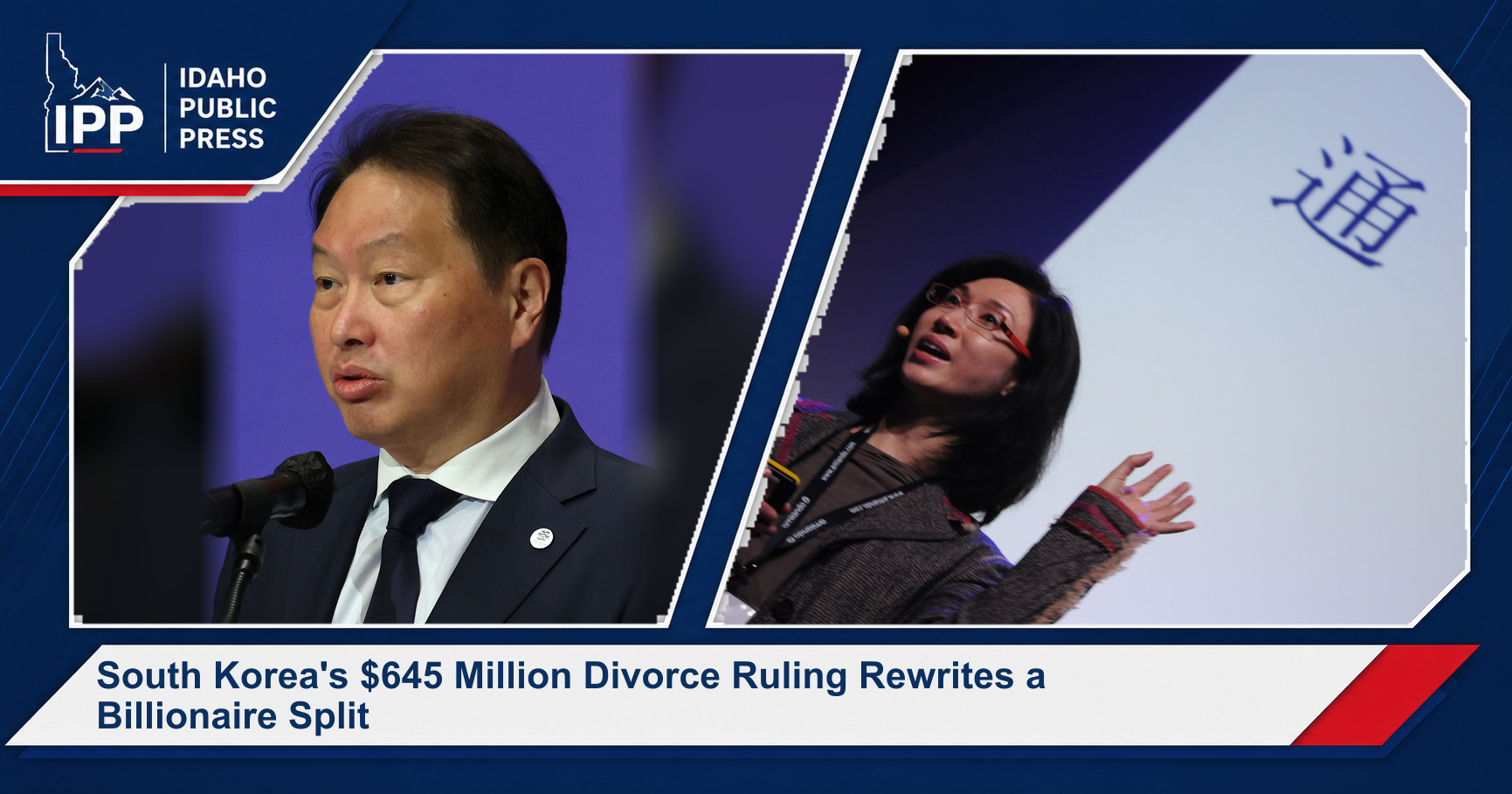
The ruling closes in on a rare public reckoning over money, marriage and power inside one of South Korea’s biggest business dynasties. It also shows how courts are weighing family labor against fortunes built through chaebol empires.
Chey Tae-won, the South Korean billionaire chairman of the SK conglomerate, was ordered by a South Korean court in Seoul to pay his ex-wife, Roh Soh-yeong, a huge divorce settlement of 944 billion won — about $645 million, or roughly $640 million in some currency conversions. The case, dubbed the “divorce of the century,” had previously carried a $1 billion award before the latest ruling reshaped one of South Korea’s most closely watched billionaire divorce fights.
The decision brings the long-running dispute closer to an ending and marks a major court victory for Roh, though reports say both sides still have a short window to seek one final Supreme Court review.
A smaller award, still historic
The latest Seoul appeals court ruling is not the eye-popping $1 billion figure that made global headlines earlier in the case. But 944 billion won remains one of the largest divorce settlements in South Korean history, according to The New York Times.
That gap matters. Roh had sought a far larger share of Chey’s wealth, which Forbes has estimated at about $5.3 billion. The court’s order gives her a massive payout while stopping well short of dividing nearly half of the SK chairman’s fortune.
Financial Times framed the award at about $640 million, underscoring how currency conversions vary slightly by outlet and exchange rate. The core fact is unchanged: a court told one of South Korea’s most powerful business figures to pay his former spouse more than half a billion dollars.
For readers outside South Korea, the number is the hook. Inside South Korea, the case lands differently: it touches the country’s most sensitive mix of family dynasties, corporate control, political lineage and the social value of unpaid domestic work.
Why this divorce became national theater
Chey is not just a rich executive. He is chairman of SK Group, South Korea’s second-largest conglomerate, whose businesses include SK Hynix, the memory-chip maker that has benefited from the global artificial-intelligence boom.
Roh is not simply a former spouse in a private dispute. She is an art museum director and the daughter of Roh Tae-woo, South Korea’s last military-backed president. Their marriage linked two pillars of modern South Korean power: big business and high politics.
That is why local media branded the split the “divorce of the century.” It was never only about who gets what after a marriage ends. It became a public case study in how wealth accumulates inside chaebol families, and how courts should treat the spouse who stood alongside that rise.
The marriage had already formally ended, according to The New York Times, but the battle over personal assets continued for years. Friday’s ruling addressed the money question that kept the case alive.
The court credited Roh’s role
The most consequential part of the decision may be the court’s reasoning, not just the total. The New York Times quoted the Seoul court as saying that the value of Chey’s shares had risen significantly because of his business activities, but that Roh contributed through “household management, child-rearing, and external activities related to the SK Group.”
That language is striking because it recognizes a familiar but often disputed claim in high-net-worth divorces: one spouse may create visible corporate value, while the other helps sustain the social, family and institutional structure around that success.
Supporters of Roh’s position will see the ruling as a rare acknowledgment that private labor can help produce public wealth. Skeptics may focus on the reduction from the earlier $1 billion level and argue the court still limited how much of a billionaire’s business gains can be treated as shared marital property.
Both readings can be true. The payout is enormous, but the court did not simply hand Roh the sweeping share she wanted.
SK’s AI boom raised the stakes
The timing made the case even more explosive. SK Hynix has become a major player in the chip supply chain powering artificial intelligence, and that surge has helped enlarge the fortune at the center of the fight.
When wealth is tied to fast-rising shares, divorce math can become especially contested. A court has to assess not only what the couple had during the marriage, but how much of later growth should be connected to shared life, family reputation and the nonexecutive spouse’s contributions.
That is why this dispute drew attention far beyond celebrity gossip. It sat at the intersection of tech wealth and family law, with an AI-era fortune being evaluated through the lens of a marriage that began long before the current chip boom.
It also showed the awkward visibility of South Korea’s chaebol system. These conglomerates are central to the national economy, but they are often still shaped by family ownership, succession battles and personal relationships that can spill into markets and courts.
What could happen next
The ruling may feel final because of the size of the award, but the legal door may not be fully closed. The New York Times reported that both sides retain the right to file one final appeal to South Korea’s Supreme Court within a week.
That means several questions remain unsettled. Will Chey accept the reduced but still enormous payout? Will Roh challenge the amount after previously seeking a larger share? And how quickly would any money change hands if the ruling stands?
What is clearer is the symbolic outcome. Roh did not receive half of Chey’s wealth, but she won judicial recognition that her role in the marriage had financial value tied to the growth of one of South Korea’s biggest business empires.
For Chey, the ruling narrows the financial hit from the earlier $1 billion figure but still leaves him facing one of the country’s largest known divorce payouts. For South Korea, the case leaves behind a sharper public debate over marriage, dynasty and the true cost of building a fortune.








Leave a Reply