

The House vote gives Republicans a clear messaging win on election law, but the measure’s practical impact depends on what happens beyond the chamber. The fight now centers on citizenship proof, voter ID and how states would administer registration.
Mike Johnson won a major House vote on the SAVE America Act on April 10, 2025, when House Republicans pushed the election bill through the House despite Democratic opposition, 220-208, with 5 members not voting, according to the Office of the Clerk. House Democrats opposed the push, making the tally a clear marker in the partisan fight over passing the SAVE America Act.
Johnson’s victory matters because the bill goes directly at voting rules for federal elections: who can register, what documents they must show, and how much responsibility states would carry to verify eligibility.
The vote gave Johnson leverage
The House Clerk’s roll call recorded the measure as passed in the 119th Congress, 1st Session. The vote question was passage, the vote type was yea-and-nay, and the final count was 220 yeas, 208 nays, 0 present and 5 not voting.
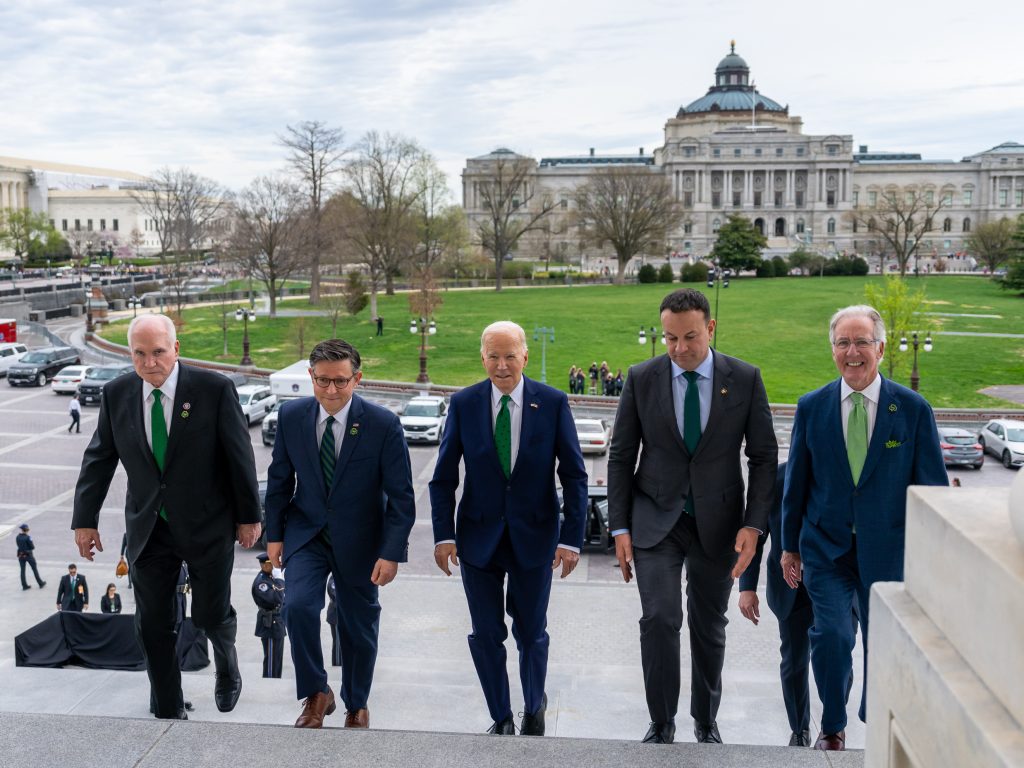
That is not a landslide in the historical sense, but in a closely divided House it is a meaningful governing win. Johnson and House Republicans showed they could unify enough members around a voting bill that Democrats strongly opposed.
The political value is obvious. Republicans can point to the vote as proof that they are acting on election integrity, a theme that has become central to the party’s national messaging. Democrats can point to the same vote as evidence that Republicans are trying to make registration and voting harder for eligible citizens.
The House vote alone does not rewrite election law. It does, however, move the issue from campaign rhetoric into legislative text, where the real costs, benefits and administrative questions become harder to avoid.
What the bill would require
Congress.gov’s summary for H.R.7296 identifies the measure as the Safeguard American Voter Eligibility Act, or SAVE America Act. The Congressional Research Service summary says the bill would require individuals to provide documentary proof of U.S. citizenship when registering to vote in federal elections.
The summary also says the bill would require photo identification to vote in federal elections. For absentee ballots, it says a voter would have to submit a copy of an identification document both when requesting the ballot and when submitting it.
The legislation also would prohibit states from accepting and processing a voter registration application for a federal election unless the applicant presents documentary proof of citizenship. Congress.gov notes that acceptable documents would include certain identification that complies with the REAL ID Act and indicates U.S. citizenship.
States would also have to create an alternative process for people to demonstrate citizenship, and they would be required to take ongoing steps to ensure that only U.S. citizens remain on voter rolls. The summary says that includes programs to identify noncitizens using information from specified sources and removing noncitizens from official lists of eligible voters.
Why Democrats fought it
The core disagreement is not over whether noncitizens should vote in federal elections. Federal law already limits voting in federal elections to U.S. citizens. The fight is over how far Congress should go in requiring documents and photo ID before a person can register or cast a ballot.
Republicans argue that documentary proof of citizenship is a common-sense safeguard. Their case is that public trust in elections depends not only on accurate results, but also on visible verification rules that voters can understand.
Democrats and voting-access advocates typically argue that these requirements can create barriers for eligible voters, especially people who do not have easy access to birth certificates, passports, naturalization papers or IDs that clearly establish citizenship. The burden may be heavier for older voters, married women whose names changed, low-income voters, students, rural voters and people born outside hospital systems.
That is why the House vote is more than a procedural win for Johnson. It captures a broader divide: one side sees tighter documentation as necessary protection, while the other sees it as a risk to participation by eligible citizens.
The state burden is central
The bill’s practical impact would fall heavily on state and local election offices. Registration systems are administered by states, but federal election rules can impose national requirements that states must implement.
Under the Congress.gov summary, states would have to reject federal voter registration applications that lack documentary proof of citizenship. They also would have to maintain systems to check voter rolls for noncitizens and remove ineligible names.
That sounds simple in a political speech. In practice, election administrators would need procedures, databases, staff training, voter notices, appeal routes and error-correction systems. If a citizen is wrongly flagged, the process for fixing that mistake would matter as much as the initial verification rule.
The bill also includes enforcement teeth. Congress.gov says it provides a private right of action for certain violations and establishes criminal penalties for certain offenses. That could increase pressure on state officials, but it could also invite litigation over how states interpret and apply the new rules.
A records wrinkle to note
There is one important distinction in the public records. The House Clerk’s April 10, 2025 roll call page labels the passed measure as the SAVE Act. Congress.gov’s page for H.R.7296, introduced on Jan. 30, 2026, uses the title SAVE America Act and expands it as the Safeguard American Voter Eligibility Act.
For readers following the legislation closely, that means the bill name alone is not enough. Acronyms can be reused, shortened or applied across related versions of legislation. The safest way to track the measure is by checking the specific bill number, vote page and congressional action.
The policy throughline is clear: the legislation is aimed at tightening eligibility verification for federal voting. But the official record details matter because a passed House vote, an introduced bill and a later version of a proposal can carry different legal consequences.
That is especially true in election law, where small changes in wording can affect millions of registrations, state compliance duties and the timing of implementation.
What happens after the House
Johnson’s win gives House Republicans a clear victory to cite, but it does not by itself make the SAVE America Act the law of the land. A bill must clear the full legislative process, and any voting overhaul would face political and legal scrutiny beyond the House floor.
The next fight would likely focus on three questions. Can the measure survive outside the House? Can states realistically administer the documentation rules without disrupting eligible voters? And how would courts view any challenge to federal requirements placed on state-run election systems?
The answers will determine whether the House vote becomes a turning point or a messaging marker. For now, the verified outcome is that Johnson and House Republicans passed the measure 220-208 over Democratic opposition, with 5 members not voting.
The larger takeaway is that voting law remains one of the sharpest partisan battlegrounds in Washington. The SAVE America Act turns that fight into a concrete set of proposed rules, and the debate now moves from whether election integrity matters to how much paperwork, verification and enforcement voters and states should be required to handle.







Leave a Reply