
A foreign-gift controversy has become an operational test for the presidential fleet. The question is not just who owns the aircraft, but whether security officials trust it for the highest-risk trips.
Donald Trump’s $400 million jet gifted by Qatar has already been accepted by the Pentagon, but the aircraft may be grounded or sidelined for some presidential travel after security concerns forced an awkward substitution in Turkey. The issue matters now because the Qatari-donated Boeing 747-8 was meant to become a showpiece Air Force One replacement, not a question mark.
According to reports from CNN and The New York Times, Trump left Ankara on an older Air Force One while the newer Qatari-donated jet was sent ahead. Officials described the move as a precaution tied to renewed hostilities with Iran, not a publicly identified specific threat.
A gift meets presidential reality
The central complication is simple: a plane can be accepted by the government and still not be trusted for every presidential mission.
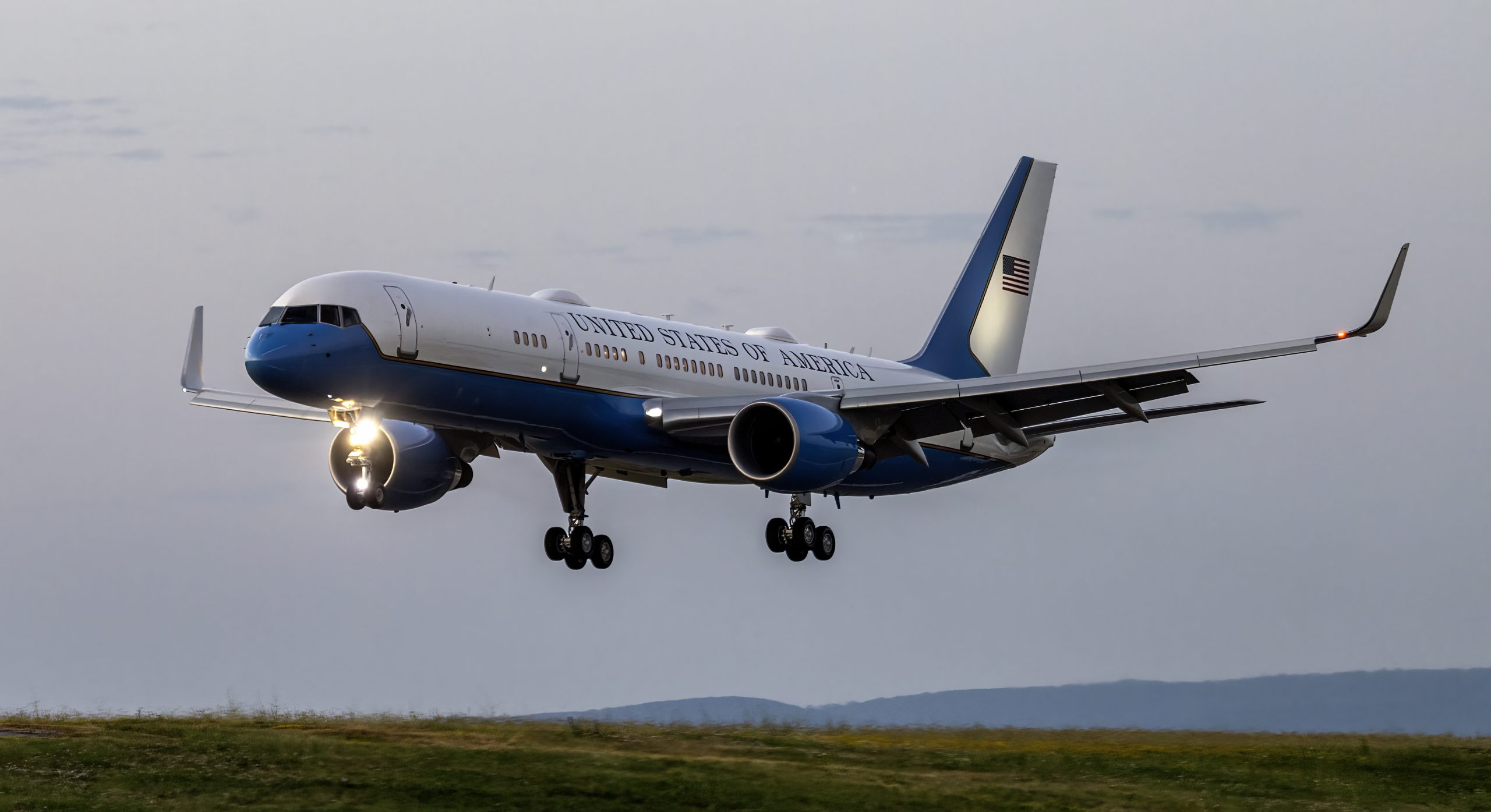
The Pentagon’s acceptance of the Qatar-donated aircraft gives the transfer an official channel, which is politically and legally important. It frames the jet as a government asset rather than a personal present to Trump. But Air Force One is not just a call sign painted onto an expensive aircraft. It is a flying command center designed around communications, survivability, countermeasures and tightly controlled security procedures.
That is why the reported grounding question is not necessarily about whether the jet can fly. It is about whether it can fly with the president in situations where the risk level changes quickly.
The Turkey episode exposed that gap. The aircraft had enough status to be used on the trip, but when conditions shifted, officials reportedly decided the older plane was the safer choice for Trump’s departure.
Turkey changed the risk picture
The New York Times reported that Trump flew to Turkey on the Qatari-donated Boeing 747-8 for a NATO summit. After he arrived, hostilities involving Iran resumed, and the United States launched strikes while Trump and other NATO leaders were in Ankara.
When it was time to leave, the Times reported, the Secret Service urged that Trump use the older Air Force One instead. CNN similarly reported that security concerns prompted Trump to depart Turkey on the older aircraft while the Qatari-donated jet was sent ahead.
That distinction matters. Officials cited in the reports did not describe a specific public threat against the plane. They described a precaution in a more dangerous environment.
In presidential travel, precautions can be decisive. A route, aircraft, communications setup or landing plan may be acceptable on Monday and unacceptable by Wednesday if the regional threat picture changes.
The White House pushes back
The White House has rejected the idea that the newer jet is unsafe in ordinary terms. Steven Cheung, the White House communications director, told The New York Times that the new Air Force One is a state-of-the-art aircraft fitted with high-level security protocols to protect the president and staff.
Cheung also said the administration uses tools including distraction and misdirection because enemies of America have their sights on Trump. That argument leaves room for ambiguity: a plane swap can be presented as a deliberate security tactic rather than an admission of a technical shortfall.
People briefed on the aircraft’s capabilities told the Times a more complicated story. They said the newer plane does not have all the features of the older aircraft, and that the departure switch was made on Secret Service advice.
Both things can be true at once. The Qatari-donated jet may have significant security upgrades and still lack some of the specialized protections built into the older presidential aircraft over many years.
Acceptance is not clearance
The Pentagon’s acceptance of the gift is a major milestone, but it should not be confused with full operational clearance for every possible presidential trip.
Accepting a foreign-donated aircraft into the federal inventory addresses one set of questions: ownership, custody and whether the transfer is being handled as a government matter. It does not answer all the classified questions about missile defense systems, secure communications, electronic countermeasures or emergency command capabilities.
That is the heart of the grounding issue. The aircraft may not be grounded in the way a commercial jet is grounded by regulators after a mechanical defect. Instead, it may be functionally grounded for certain presidential missions if security agencies decide the older aircraft provides better protection.
For the public, that can look like contradiction: the government accepted the jet, the president used it, and yet officials may still steer him away from it under pressure. In the world of presidential transport, that is not unusual. Certification is not a single switch.
The politics are unavoidable
The Qatar connection adds a political charge that an ordinary aircraft upgrade would not carry.
Critics of the arrangement have raised concerns about the optics of a foreign government providing a luxury aircraft associated with the president, even if the Pentagon is the formal recipient. Foreign gifts to U.S. officials are sensitive for a reason: they can create questions about influence, access and whether national policy is being shaped by symbolic favors.
Supporters of the transfer can argue the opposite. If the plane is accepted by the Pentagon, modified by U.S. authorities and used as a government asset, they may see it as a practical way to expand or modernize the presidential fleet without treating it as Trump’s personal property.
The security issue cuts across that partisan fight. Even people comfortable with the transfer still have to answer whether an accelerated retrofit can match the protection level of an aircraft built and maintained for the presidential mission over time.
What remains unresolved
The key unanswered question is whether the Turkey swap was a one-off decision driven by a sudden Iran-related security environment, or the first public sign of a broader limitation on the aircraft’s use.
If the jet lacks certain defensive or communications features, it could remain available for lower-risk travel while being sidelined for trips near conflict zones or during periods of heightened threat. It could also undergo additional modifications before officials are comfortable using it more broadly.
Much of that answer will remain classified. The government is unlikely to provide a checklist of what the Qatari-donated plane has, what it lacks and which threats concern the Secret Service most.
For now, the practical takeaway is narrower than the political noise around the gift. Trump’s $400 million Qatar jet has been accepted by the Pentagon and has entered the presidential travel story. But the Turkey episode shows that acceptance is not the same as unquestioned trust, and Air Force One decisions are ultimately made by risk, not luxury.



Leave a Reply