

The finding is not a legal forecast, but it is a political warning sign. It shows how the Gaza war and the ICC case have changed the way many Americans view Israel's prime minister.
Benjamin Netanyahu is facing a striking U.S. public-opinion signal: A poll found that nearly half of Americans would support arresting Benjamin Netanyahu. Respondents in the Economist/YouGov poll were asked whether the United States should enforce an International Criminal Court arrest warrant for Netanyahu over alleged war crimes tied to Israel’s military campaign against Hamas in Gaza. The result: 49 percent said he should be detained, 27 percent said he should not, and 23 percent were unsure.
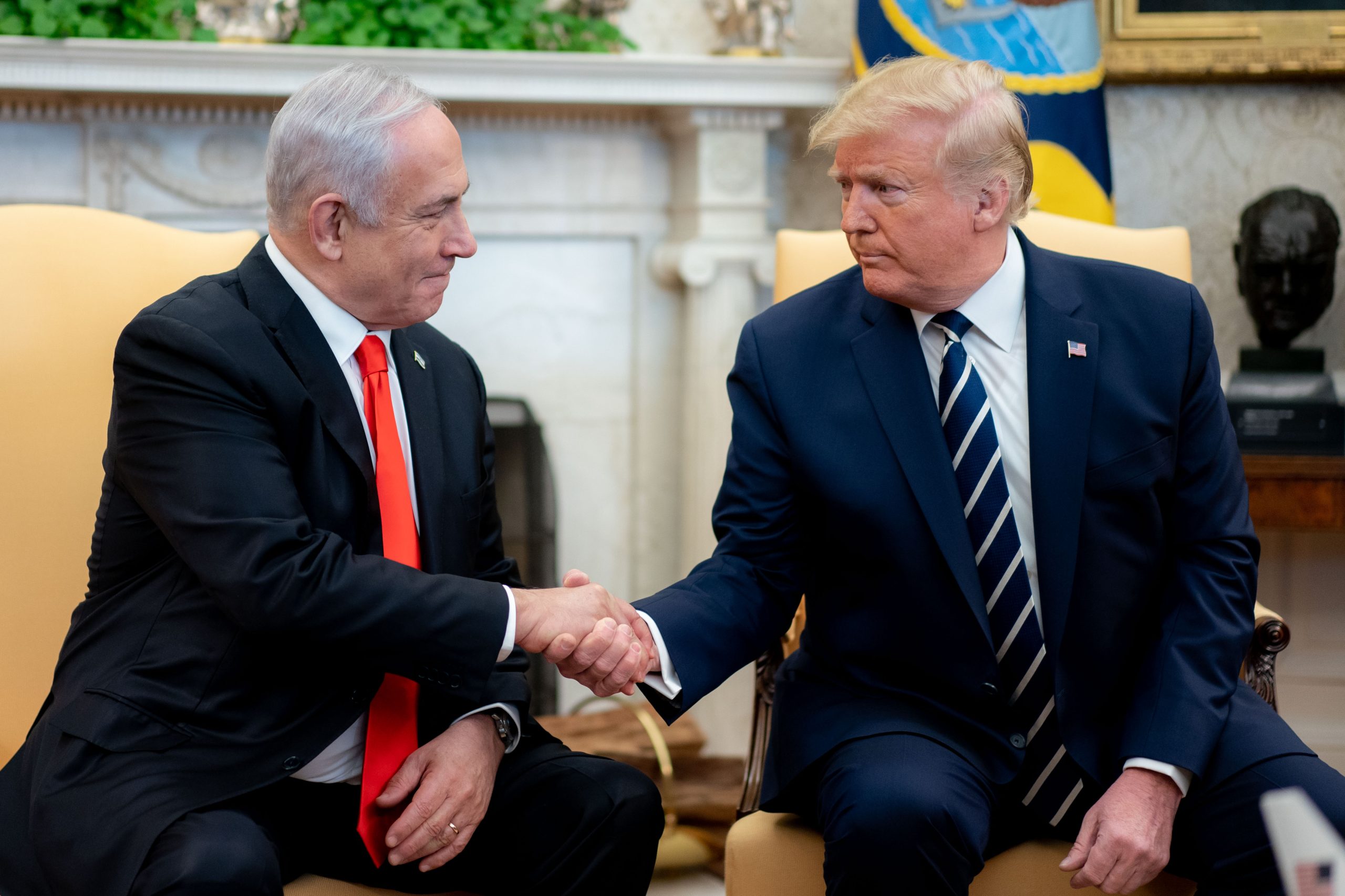
The finding matters now because Netanyahu is in the United States this week to meet President Donald Trump, while Israel and the Trump administration reject the International Criminal Court case. It is not a prediction that U.S. authorities will act. It is a measure of how politically toxic the Gaza war has become for Netanyahu among American voters.
The number is politically jarring
The top-line figure is the story: 49 percent of Americans in the Economist/YouGov survey said Netanyahu should be detained under the ICC warrant if he is in the United States, according to reporting by The Times of Israel. That is close to half the country backing a step that would have once been almost unthinkable in mainstream U.S. politics: arresting the sitting prime minister of Israel, one of Washington’s closest allies.
The 27 percent opposed to arresting him is also important. It shows that resistance to the ICC case remains substantial. But the undecided share, 23 percent, suggests that a large portion of the public is either unsure about the legal issues, uneasy about Netanyahu, or unwilling to take a firm position on a highly charged question.
Polls do not settle law or policy. They do, however, show the climate in which politicians operate. For Netanyahu, the climate in the United States looks far less forgiving than it did before the war in Gaza reshaped the debate over Israel, civilian casualties and U.S. military and diplomatic support.
ICC warrant meets U.S. reality
The International Criminal Court warrant cited in the survey is tied to alleged war crimes connected to Israel’s campaign against Hamas in Gaza. Israel strongly denies the allegations and has rejected the legitimacy of the case. The Trump administration has also flatly opposed the ICC action against Israel, according to The Times of Israel, and has sanctioned Hague officials involved in the case.
There is a practical reason the poll should not be read as an arrest timetable. The United States is not a member of the ICC. That means Washington does not face the same treaty obligations as ICC member states when it comes to enforcing court warrants.
That legal reality makes the wording of the poll especially revealing. Many respondents were not simply being asked whether they liked or disliked Netanyahu. They were asked whether the United States should enforce an international arrest warrant. Nearly half said yes anyway.
That gap between law and public sentiment is where the politics live. Even if the federal government is not moving toward detention, public support for such an act puts pressure on elected officials who have defended Netanyahu or avoided direct criticism of his wartime leadership.
A sharp partisan split
The poll shows deep party differences. Among Democrats, 68 percent backed arresting Netanyahu. Among Republicans, 24 percent did. Independents landed much closer to Democrats than Republicans, with 55 percent supporting detention.
That split tracks the larger U.S. argument over Israel and Gaza. Democratic voters have grown more critical of Netanyahu and more skeptical of unconditional U.S. support for Israel’s military campaign. Republican voters remain more supportive of Israel’s government and more hostile to the ICC.
The independent number may be the most politically consequential. A majority of independents saying Netanyahu should be arrested suggests the issue is not confined to the Democratic base or campus protest politics. It has moved into the center of public opinion, at least as measured by this survey.
For the White House and Congress, that complicates the usual U.S.-Israel script. Leaders can still reject the ICC and stand with Netanyahu, but they are doing so in a country where a large share of voters now views him through the lens of alleged war crimes.
Gaza changed Netanyahu’s standing
The poll is best understood as a referendum on Netanyahu’s image after the Gaza war, not as a technical judgment on international criminal procedure. The Times of Israel reported that similar figures appeared when respondents were asked whether they thought Netanyahu was guilty of war crimes.
That does not mean every respondent has followed the evidence in the ICC case. Public opinion often compresses complex legal issues into moral judgments. In this case, those judgments are being shaped by months of images and reports from Gaza, the scale of destruction, the humanitarian crisis, and the continued association of Netanyahu with the conduct of the war.
Supporters of Israel’s government argue that the campaign is aimed at Hamas and that the ICC case unfairly targets Israeli leaders while ignoring the security context of the October 7 attack and the hostage crisis. Critics argue that Israel’s military response has caused intolerable civilian harm and that accountability should reach senior decision-makers.
The poll captures that collision. It does not prove that Americans agree on the facts. It shows that a large share is willing to endorse an extraordinary consequence for Netanyahu personally.
New York adds another wrinkle
Netanyahu’s travel plans add a practical and symbolic layer. The Times of Israel noted that his expected visit to New York for the United Nations General Assembly in September has already been shadowed by threats from the city’s mayor to try to have him arrested.
Any such attempt would raise thorny questions about federal authority, diplomatic protection, local law enforcement and the United States’ nonmembership in the ICC. It would also create a global spectacle around Netanyahu’s movements on U.S. soil.
That is why the poll matters even if no arrest occurs. Public opinion can shape protests, campaign rhetoric, congressional pressure and the security environment surrounding high-profile visits. Netanyahu may be welcomed by the Trump administration, but the political backdrop outside official meetings is far more hostile.
The White House meeting gives Netanyahu the ally he wants in Washington. The poll shows the audience beyond the White House is much more divided.
The takeaway for Washington
The strongest reading of the Economist/YouGov result is not that Netanyahu is about to be put in handcuffs in the United States. It is that the idea now has measurable support from nearly half of Americans in a major poll.
That is a meaningful shift in the politics around Israel. For years, U.S. leaders often assumed that sharp criticism of an Israeli prime minister carried more risk than reward. The new numbers suggest the risk may now run in both directions, especially for Democrats and for officials trying to hold independent voters.
For Netanyahu, the poll is another sign that his international problem is not limited to hostile governments, activist groups or the ICC itself. It extends into U.S. public opinion, including voters in the country Israel most depends on diplomatically.
The unresolved question is how much that sentiment changes policy. The Trump administration’s position is clear: it rejects the ICC case against Israel. But the poll shows a widening gap between official U.S. policy and a substantial share of the American public. That gap is now part of Netanyahu’s political reality every time he comes to the United States.








Leave a Reply