
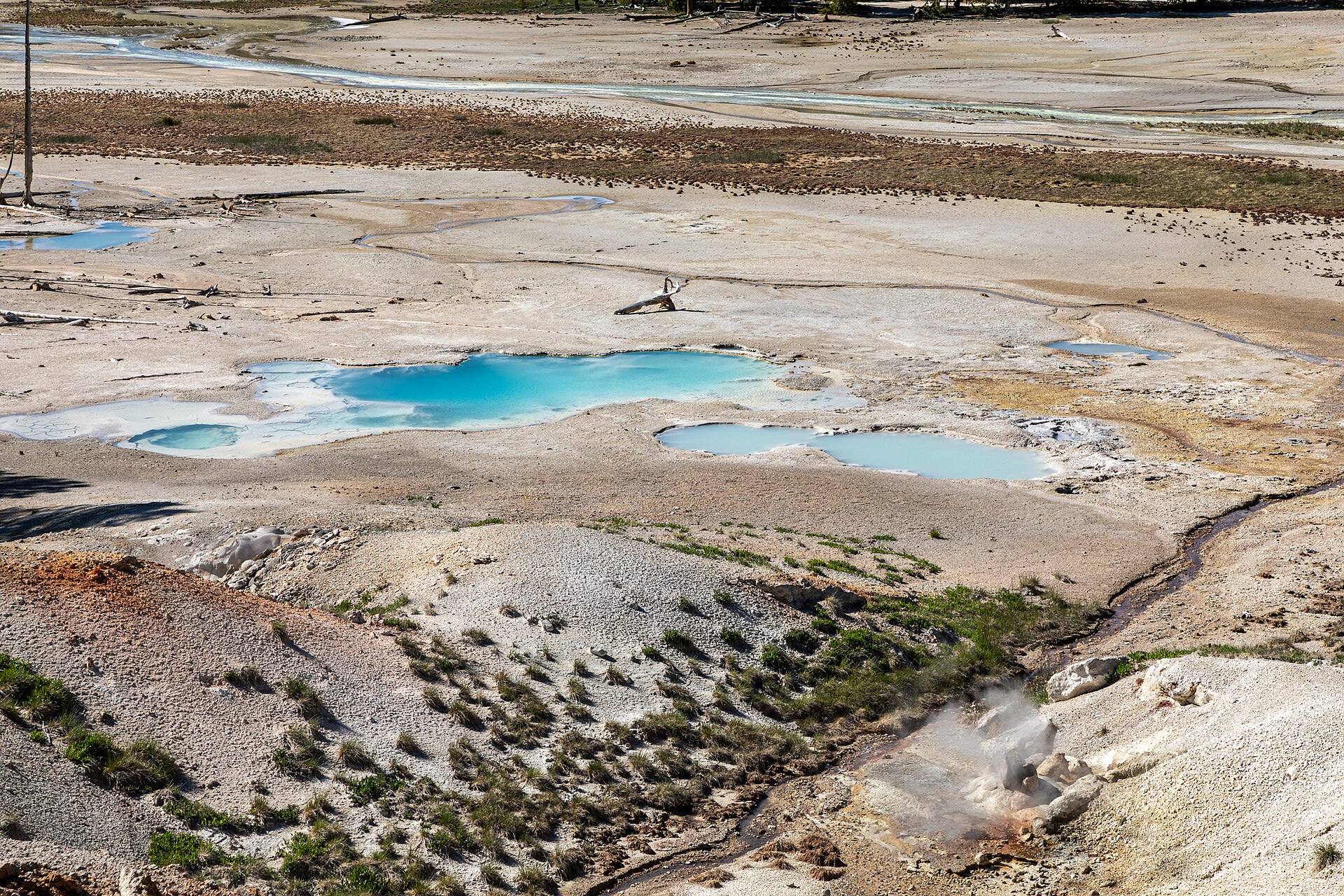
The 2016 death of 23-year-old Colin Scott was not a mystery of Yellowstone’s wilderness but a devastating accident in a clearly hazardous thermal area. The case explains why the park’s boardwalks and closure signs are safety barriers, not suggestions.
A 23-year-old man, Colin Scott, dipped his finger into a Yellowstone hot spring and accidentally fell into it in Wyoming’s Yellowstone National Park in June 2016. Scott died, and officials later said the boiling, acidic water had essentially dissolved his remains before they could be recovered.
The case, reported from a park incident report, is a grim explanation of why Yellowstone warns visitors not to leave designated boardwalks or approach its thermal pools. These features can look calm from a distance, but the ground and water around them can be lethal.
What happened to Colin Scott
Scott, an Oregon resident, was in the Norris Geyser Basin with his sister, Sable Scott, on June 7, 2016. According to accounts of the incident report published by the BBC and CNN, the pair had left the defined boardwalk area while looking for a place to soak in a thermal feature, an activity sometimes called “hot potting.”
His sister was recording on a mobile phone as Scott reached down to test the water. Reports described him as dipping a finger into the hot spring before he slipped and fell into it.
Yellowstone officials did not publicly release the video or detailed descriptions of it, citing sensitivity toward Scott’s family. That restraint matters: the enduring lesson is not the graphic detail, but how quickly a visitor can be in danger after crossing into an area closed for safety.
Why recovery could not continue
Rescue personnel located Scott’s body in the pool after the fall, according to the reported incident record. But they suspended recovery efforts because of fading light, an approaching lightning storm and the danger the geothermal area posed to responders.
When workers returned the following day, officials said they could not find significant remains. Yellowstone deputy chief ranger Lorant Veress said there had been a significant amount of dissolving in a short time because of the pool’s high temperature and acidity.
That is the basis for reports saying Scott “dissolved.” It is not a supernatural claim about Yellowstone; it is a description of the effect that extremely hot, chemically aggressive water can have after prolonged exposure.
Norris Basin is not a bathing spot
Norris Geyser Basin is one of Yellowstone’s most active geothermal landscapes. Hot springs, steam vents, mud pots and geysers are powered by heat beneath the park, creating an environment that can shift dramatically over short distances.
A pool’s color or still surface does not reveal whether its water is near boiling, highly acidic or both. The thin crust near a feature can also conceal hot water or unstable ground, turning a short step off a boardwalk into a serious fall hazard.
Park warnings can seem obvious after an accident, but the point of marked paths is broader than keeping visitors out of the water. They also keep people off fragile ground that may not support their weight and away from places where rescue itself could put others at risk.
The rule violations at the center
The public accounts of Scott’s death make clear that this was not a case of someone unexpectedly falling from a standard visitor path. He and his sister had gone beyond the designated boardwalk and into an area subject to closures and warning signs.
That distinction does not lessen the tragedy. It does explain why Yellowstone’s safety instructions are unusually firm around hydrothermal features: the consequences of entering a prohibited area can be immediate, while any attempt to help may expose rescuers to the same hazards.
There is also a practical misconception worth confronting. Visitors may imagine a thermal pool as an outdoor spa because steam and warm water can look inviting. Yellowstone’s natural hot springs are not managed soaking pools. Their temperatures, chemistry and physical boundaries are unpredictable.
What visitors should take from it
Yellowstone’s scenery invites close attention, but thermal safety depends on maintaining distance. The safest approach is also the simplest: remain on established boardwalks and trails, follow posted closures, and never test the water with a hand, foot or object.
- Stay on marked paths: They are placed to avoid unstable ground and hazardous water.
- Respect every closure: A closed thermal area may be dangerous even when it appears quiet.
- Do not attempt to soak: Natural geothermal water is not a controlled recreational facility.
- Keep children close: A stumble near a hot spring can have consequences before anyone has time to react.
Scott’s death remains one of Yellowstone’s clearest examples of the gap between what visitors can see and what they cannot. The park’s hot springs are remarkable natural features, but their heat, acidity and unstable margins demand the same caution people would give any other extreme environment.
The warning is still straightforward
The most unsettling fact in this case is not the phrase “essentially dissolved.” It is that Scott’s death followed a decision to move beyond the protective infrastructure designed for exactly this landscape.
Yellowstone can be enjoyed safely from its boardwalks, overlooks and marked trails. The boundaries around thermal areas are there because a few feet can separate a memorable view from water too hot, acidic and dangerous for anyone to approach.










Leave a Reply