
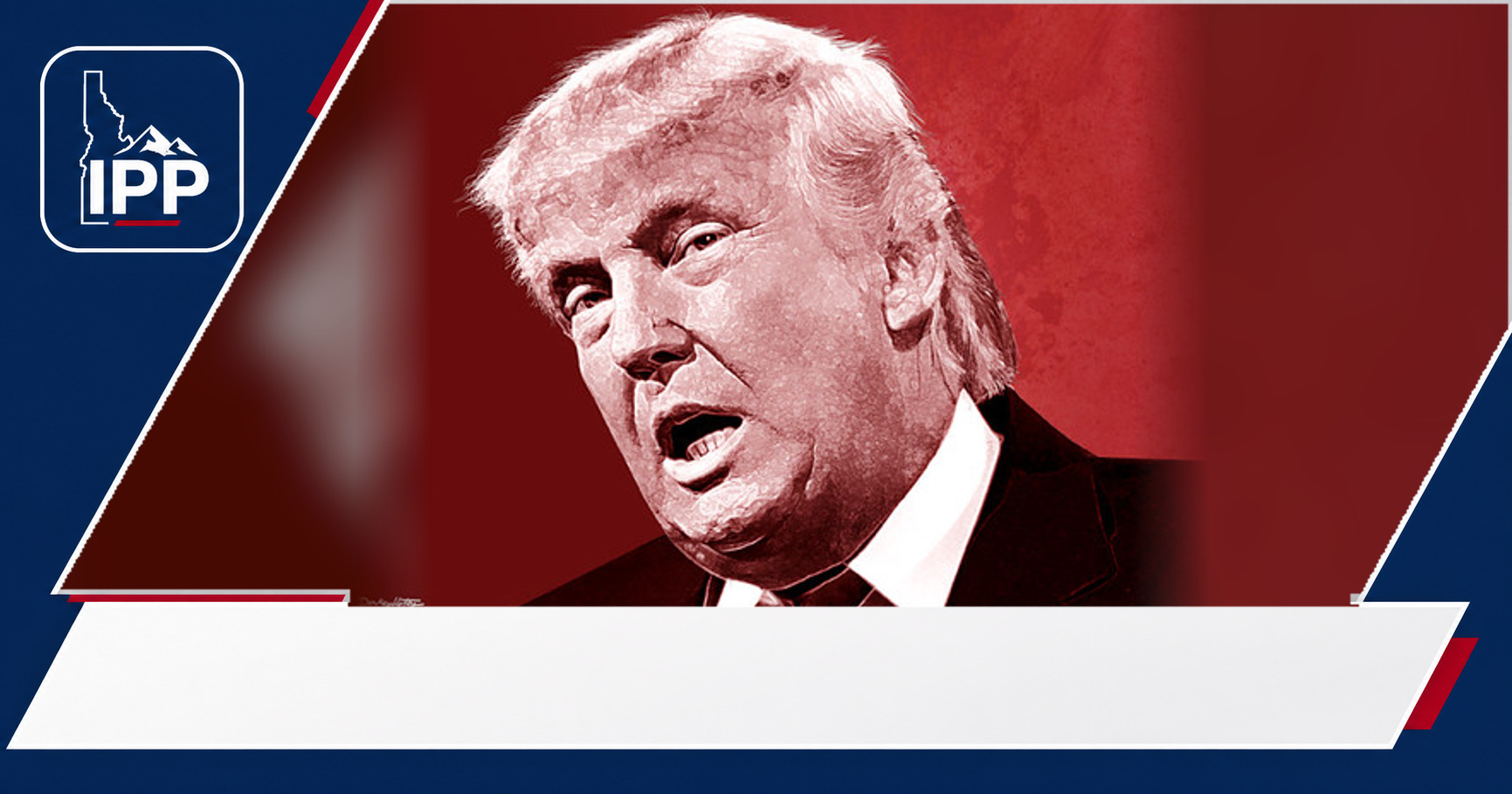
A small misspelling can become a big political distraction when it lands inside an attack line. Trump’s latest slip is being used by critics as evidence of the risks in his rapid-fire messaging style.
Donald Trump made a spelling error while attacking Democrats, and the mistake was humiliating for Trump because it undercut the insult he was trying to land. The political gaffe, surfaced in a Mirror US item circulating on MSN, turned a familiar Trump broadside into a story about accuracy, discipline and how quickly small errors become campaign-season ammunition.
The available source extract does not identify the exact misspelled word, so the core confirmed point is narrower: Trump used insults aimed at Democrats, made a basic spelling mistake in the process, and critics treated the slip as embarrassing.
The typo overtook the attack
That is the political hazard of a public typo: it can steal the spotlight from the original message. Trump’s attacks on Democrats are hardly unusual, but a misspelling inside one of those attacks gives opponents and commentators a cleaner target than the policy dispute itself.
For supporters, a spelling slip may look trivial, especially in a political culture saturated with social media posts, rushed statements and clipped video. For critics, it fits a larger argument about carelessness, discipline and whether a leader’s public words are being checked before they are pushed to a massive audience.
The gaffe also shows how modern political coverage works. A post or statement does not have to change policy to become news; it only has to reveal something that readers can quickly understand, share and argue over. A basic spelling error does that instantly.
Why small errors stick
Trump’s communication style has always leaned on speed, repetition and blunt personal branding. That approach can dominate attention, but it also increases the chance that a small mistake becomes part of the story.
A typo in an ordinary post might vanish. A typo in an insult is different. It creates a built-in irony: the person trying to belittle an opponent has handed that opponent a reason to mock the attack itself.
That is why this kind of mistake often travels farther than a dry policy line. It requires no deep context. Readers do not need to know the latest procedural fight in Congress to understand why a misspelled word in a political insult is embarrassing.
Still, the scale of the mistake matters. A spelling error is not a scandal. It does not carry the weight of a court ruling, a vote, an executive action or a major campaign promise. The real significance is reputational, not governmental.
A documented pattern online
Trump’s spelling has been a recurring subject of media attention for years. In 2019, CBS News reported on research discussed by CNN’s Reliable Sources and compiled by Factba.se, a site that tracked Trump’s public words and social media posts.
According to that report, Factba.se counted 188 misspellings in Trump’s tweets from Inauguration Day 2017 through Oct. 31, 2019, using a conservative method that excluded many grammar and punctuation issues. The same analysis said Trump had made at least 350 spelling mistakes since he began tweeting in 2009, compared with four for Barack Obama over the period examined for Obama’s account.
The report put Trump’s error rate at 1.40%, while Obama’s was listed at 0.06%. Factba.se said it gave Trump the benefit of the doubt on disputed spellings, non-American variants and casual online language.
Those numbers are old, and they do not prove anything about the latest misspelling on their own. But they explain why a fresh typo is not treated as a one-off by Trump’s critics. It lands in a preexisting file of memorable mistakes, from odd spellings to deleted posts to the infamous “covfefe” moment.
Democrats get an easy opening
For Democrats, the political value is obvious. Trump often uses ridicule as a weapon; a spelling error inside an insult lets them reverse the joke without having to answer the substance of the attack.
That does not mean the response is automatically persuasive beyond people who already oppose him. Trump’s base has often accepted, or even embraced, his rough-edged style as proof that he is not speaking through consultants. A polished statement can read as cautious. A flawed one can read as unfiltered.
That split is central to understanding why these episodes keep recurring. To critics, the typo is evidence of sloppiness. To many supporters, the coverage of the typo is evidence that media and political opponents are nitpicking because they dislike the messenger.
Both reactions can be politically useful. Critics get a clean viral moment. Trump gets another example to present as hostile coverage. The typo becomes less about spelling and more about which side controls the meaning of the mistake.
What remains unclear
The biggest caveat is that the available extracted source material does not show the full original post or statement, nor does it identify the exact word Trump misspelled. That limits what can be responsibly said about the mechanics of the error.
It is also unclear whether Trump or his team corrected the spelling, deleted the message, left it in place or responded to the criticism. Those details matter because they can change the political read: a quick correction suggests staff discipline, while a refusal to correct can turn the error into a posture.
What is clear is the verified shape of the episode from the trend signal: Trump attacked Democrats, made a basic spelling error while doing so, and the mistake was framed as humiliating because it weakened the force of his insult.
That narrow framing is enough to explain why the story traveled, but not enough to support claims about motive, mental fitness or the seriousness of the underlying political fight. A typo can be revealing without being definitive.
The messaging lesson
The episode is a reminder that political communication now gets judged at two speeds. The first is immediate: did the attack land? The second is forensic: did the wording contain a mistake that can be clipped, mocked and circulated?
Trump has built a political brand around dominating that first speed. He knows how to force attention and make opponents react. The risk is that rapid-fire posting and insult-driven messaging leave less room for basic quality control.
For any politician, the lesson is simple: when the message is an attack, the margin for error shrinks. A spelling mistake in a bland update may be forgotten. A spelling mistake in an insult becomes the headline.
That is why this particular slip matters now. It is not because one misspelled word changes the political landscape. It matters because it shows how quickly a candidate’s intended punch can turn into a punchline.






Leave a Reply