
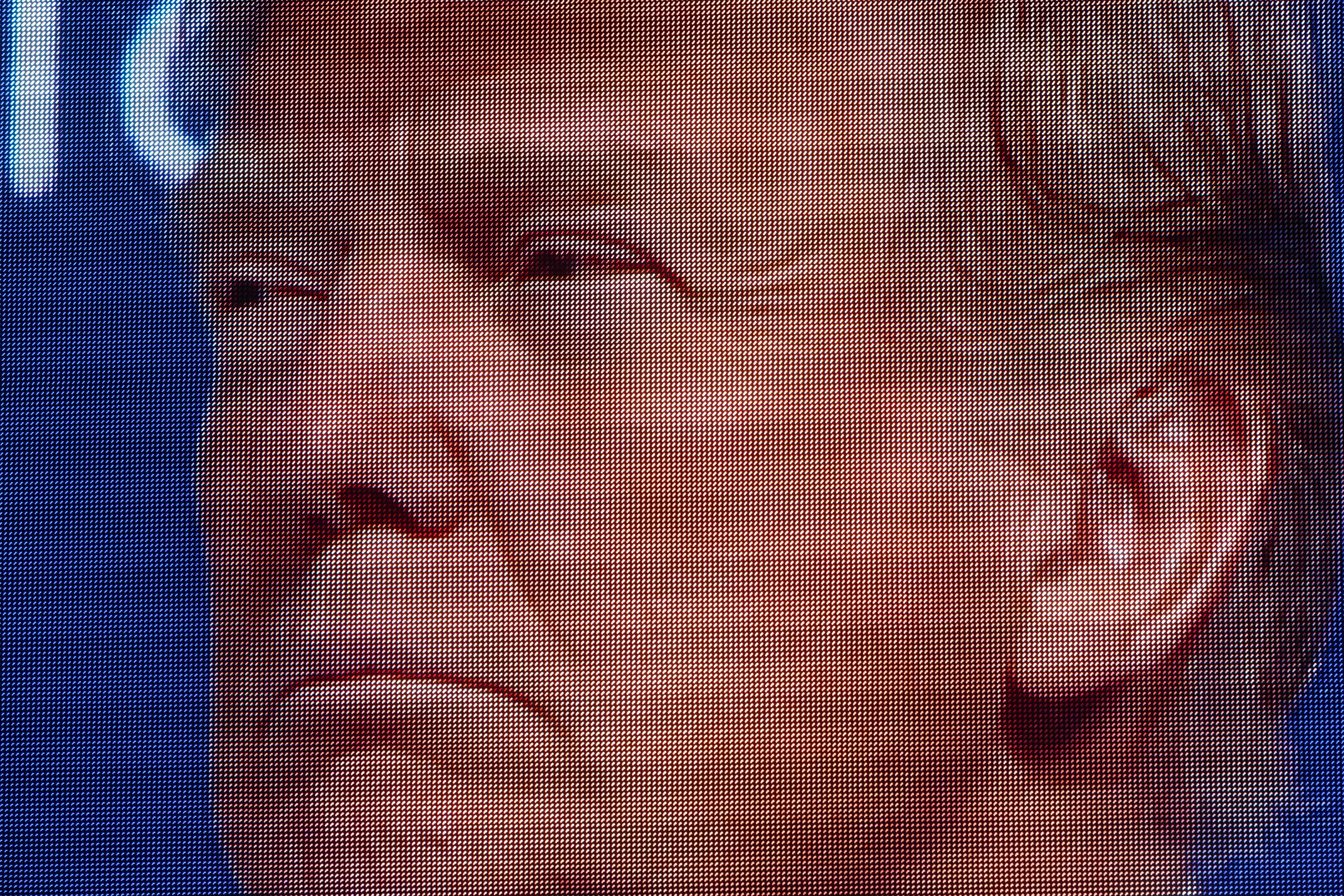
The image is a small social-media moment with a larger lesson: viewers now have to judge not only what politicians say online, but whether the pictures attached to their messages reflect reality.
Donald Trump posted an AI-filtered photo of himself that portrays him looking younger, according to the source material provided for this report. Trump is 80 years old, making the altered-looking image a notable example of how quickly filters and generative-AI aesthetics have entered the visual language of politics.
The available source brief does not identify the platform, date, caption or technical tool behind the image, so it is not possible to independently determine whether it was made with generative AI, a conventional beauty filter or another editing method. That uncertainty is part of the story: highly polished political images can travel faster than the context needed to interpret them.
A younger image, a familiar instinct
Politicians have always managed their visual presentation. Campaign portraits are staged, lighting is selected carefully, and official photographs are designed to project energy, authority and confidence.
Digital tools have changed the scale and speed of that process. An image can now be smoothed, relit, reshaped or entirely generated in minutes, then shared directly with millions of people without the visual guardrails that once came with a campaign photo shoot or a newsroom caption.
In Trump’s case, the reported younger-looking photo matters because age has remained a recurring subject in American political coverage. Images that appear to soften the visible signs of age can become part of that wider public conversation, whether they are intended as a joke, a stylized portrait, a promotional post or something else.
There is no evidence in the material supplied that Trump made a false statement about his age or presented the image as documentary photography. The more immediate issue is how viewers interpret an altered image when its creation process is not clearly explained.
What the available report does not establish
Descriptions such as “AI-filtered” are often used broadly online. They can refer to a face-smoothing filter, an AI-assisted editing feature, a generated portrait, or a picture that has passed through several tools.
The source material here confirms the central claim that Trump posted a younger-looking AI-filtered photo, but it does not include the image itself, a link to the original post, metadata, or a statement from Trump or his team. Those gaps make firm technical conclusions inappropriate.
That distinction is worth keeping. A retouched portrait is not automatically a deepfake, and an AI-enhanced image is not automatically an attempt to deceive. The label alone does not answer the key questions: What was changed? Who changed it? Was the alteration disclosed? And how was the image framed for the audience?
For political figures, those questions have consequences beyond one post. The public routinely treats photos as evidence of health, presence, crowds, events and personal demeanor. The more easily visuals can be changed, the less reliable appearance alone becomes.
Trump has appeared in AI-image debates before
This is not the first time Trump’s likeness has featured in discussions about synthetic imagery. In 2023, false AI-generated images depicting Trump being arrested circulated widely online, prompting fact-checking and public debate about how realistic fabricated visuals could appear.
The BBC reported at the time that Trump also shared an AI-generated image of himself kneeling in prayer on Truth Social. Its report noted visible anomalies in the picture, including issues with the depiction of fingers.
That earlier episode illustrates an important difference between an openly stylized image and a fabricated news-like scene. A flattering or youth-enhancing portrait may be understood as image management. A convincing fake of an arrest, disaster, endorsement or public event can create a false account of something that never happened.
The boundary can blur when an image is shared without a label. A viewer encountering it out of context may not know whether it is a joke, a campaign-style illustration, an edited photograph or a synthetic creation.
Why age makes the image resonant
Trump’s age is not incidental to the reaction around a younger-looking image. At 80, he is part of a political generation whose fitness, stamina and visibility have drawn intense public attention.
That attention can produce two competing reactions. Supporters may see a polished image as harmless branding, the online equivalent of a favorable official portrait. Critics may see age-altering visuals as an effort to shape perceptions in an area where voters are already seeking unvarnished information.
Both responses can coexist without proving motive. Politicians are expected to present themselves favorably, but voters also have a legitimate interest in understanding when a visual is interpretive rather than straightforwardly photographic.
The larger risk is not that every edited photo becomes a scandal. It is that constant, lightly altered imagery can train audiences to overlook the line between ordinary presentation and materially misleading manipulation.
How to read political images carefully
AI detection tools can be useful, but they are not definitive on their own. The most practical checks are often simpler and more reliable than trying to identify a single technical flaw.
- Find the original post: Look for the account, date, caption and any label explaining how the image was made.
- Check the claim around the image: A stylized portrait makes a different claim from a picture purportedly showing a real event.
- Look for independent reporting: If an image depicts a consequential event, credible outlets should be able to confirm the event itself.
- Watch for visual oddities: Hands, jewelry, text, reflections, teeth and background details can still reveal errors, though increasingly sophisticated tools may leave few obvious clues.
- Resist instant certainty: A picture that looks polished is not necessarily fake, and a picture that looks unusual is not necessarily AI-generated.
The BBC’s reporting on earlier fake Trump images quoted AI experts who cautioned that synthetic content is improving rapidly and can be difficult to distinguish from authentic material. The best defense, then, is not merely close inspection. It is checking provenance and context.
The bigger question is disclosure
Trump’s reported younger-looking image is unlikely to settle the broader argument over political filters, AI portraits and authenticity. It does, however, show how normal these tools have become in public-facing communication.
There is a case for giving political figures room to use satire, stylized art and ordinary photo editing, just as public figures have long done. There is also a strong case for clear disclosure when an image is generated or substantially altered, particularly when it could be mistaken for a real-world photograph.
What remains unclear in this instance is the image’s precise origin and how Trump characterized it when he posted it. Until the original post and its context are available, the most responsible reading is narrow: Trump shared a photo reported to use AI-style filtering to make him appear younger, and the episode underscores how much visual context now matters in politics.







Leave a Reply