
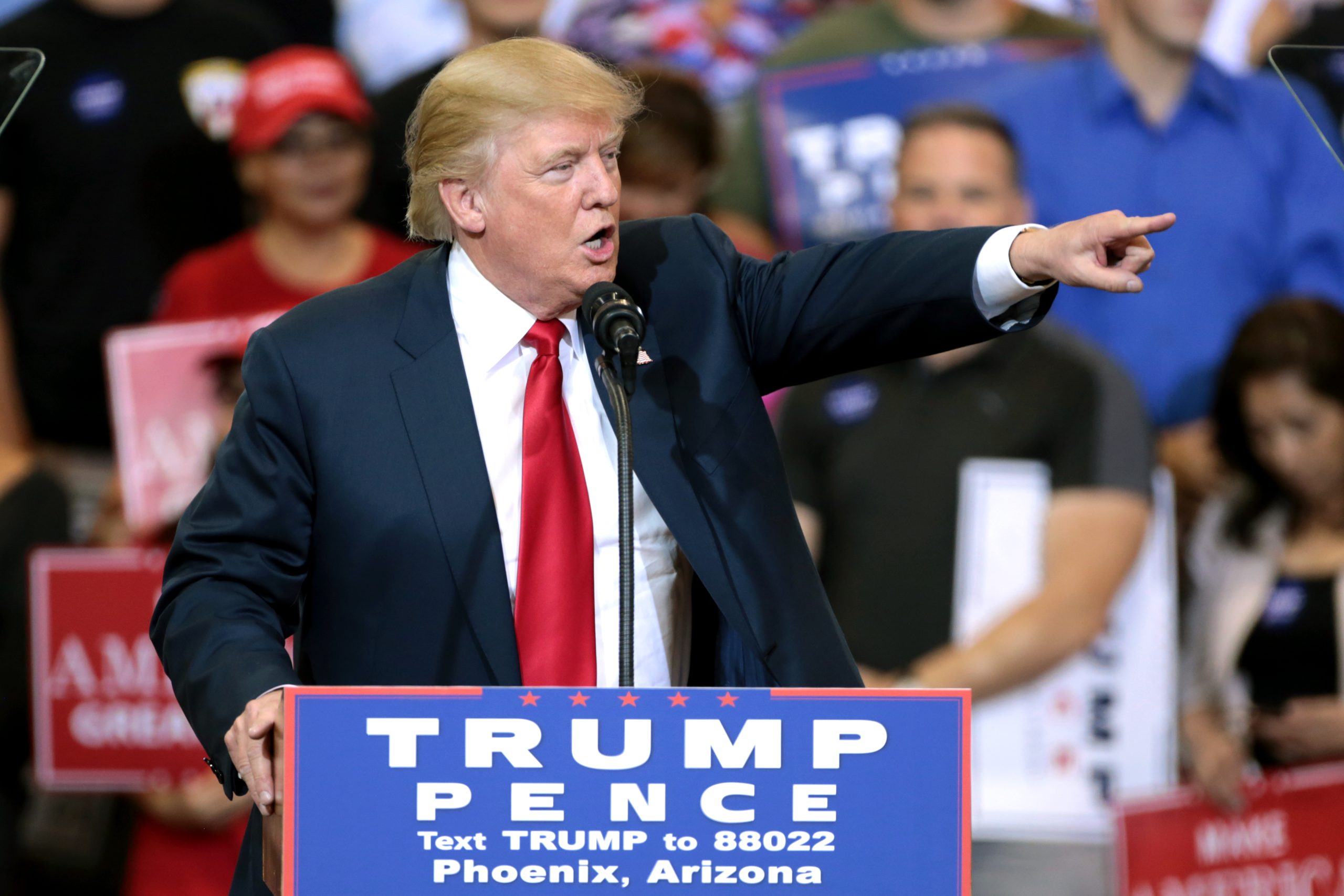
The results sharpen Arizona’s fall matchups in a state where both parties see pickup chances. They also show the different pressures facing Republicans aligned with Trump and Democrats trying to hold swing districts.
Donald Trump’s preferred candidates won in Arizona’s primaries on Tuesday, July 21, 2026: Arizona voters made Rep. Andy Biggs the Republican nominee for governor and elevated Jay Feely, a Trump-backed former NFL kicker, in a key U.S. House race. On the Democratic side, Rep. Greg Stanton survived a left-wing primary challenge, making these the main Arizona primary takeaways heading into November.
The short version: Trump’s picks prevailed where it mattered most for Republicans, while one House Democrat avoided the kind of bruising primary that can drain money and attention before a competitive general election. The results set up sharper races for governor, Congress and election administration in a state that remains central to both parties’ national maps.
Trump’s endorsement still carried
Arizona’s Republican primaries offered a clean test of Donald Trump’s influence over the party’s voters. In the biggest statewide race, Rep. Andy Biggs won the GOP nomination for governor, defeating a field that included Rep. David Schweikert and business executive Karrin Taylor Robson, according to reporting from The Washington Post and The Seattle Times.
Biggs is not a low-profile nominee. He is a former leader of the House Freedom Caucus and one of the House Republicans who voted to overturn the 2020 presidential election results. That history will follow him into the general election against Democratic Gov. Katie Hobbs.
Trump also got the House candidate he wanted in Arizona’s 1st Congressional District. Jay Feely, a former NFL kicker endorsed by Trump, won the Republican primary in a battleground seat that includes Scottsdale and part of Phoenix. The Seattle Times reported that Feely had initially planned to run in a safer Republican district before Trump urged him to switch to the 1st District.
That matters because primaries are not just about who wins a nomination. They show which messages and alliances are rewarded by the most engaged voters. In Arizona’s GOP, Trump’s blessing still looked like a major asset.
Biggs gives Hobbs a contrast
The governor’s race now becomes one of the clearest ideological fights on Arizona’s fall ballot. Hobbs, a Democrat seeking reelection, is expected to frame Biggs as too hard-line for a swing state. Her campaign has already pointed to his role in efforts to challenge the 2020 election as part of that case.
Republicans see the race differently. They argue Hobbs is vulnerable and that Biggs can consolidate conservative voters more effectively than Kari Lake did in the 2022 governor’s race. In that view, the GOP problem four years earlier was not that Arizona was out of reach, but that the nominee alienated too many voters who might otherwise have backed a Republican.
The risk for Republicans is obvious: what wins a primary can become opposition material in November. Biggs’s record may energize the Republican base, but Democrats will try to make the contest a referendum on whether Arizona wants another statewide fight over election legitimacy and partisan confrontation.
The race will also test how much national political branding matters in a state where voters often split tickets. Arizona has backed both Democrats and Republicans in high-stakes races over the last several cycles, which makes candidate image and suburban margins especially important.
Feely enters a costly race
Feely’s win in the 1st District puts a celebrity-adjacent Republican newcomer into what both parties expect to be a highly expensive House race. The seat is open because Schweikert, the Republican incumbent, gave it up to run for governor.
The district’s geography explains the attention. It covers Republican-friendly and swingy parts of the Phoenix area, including Scottsdale. Seats like this are exactly where House majorities are made: suburban, expensive to advertise in and sensitive to shifts among independents and college-educated voters.
Feely’s primary was not gentle. The Seattle Times described a race marked by attacks between Feely and former state lawmaker Joseph Chaplik, including cease-and-desist letters and dueling websites. That kind of primary can leave scars, but a clear win and Trump’s support may help Feely unify Republicans quickly.
His general-election pitch appears likely to lean on economic themes. The question is whether Feely can move from Trump-backed primary winner to district-focused candidate in a seat where Democrats will try to make the contest about national Republican politics.
Stanton dodged a Democratic fight
For Democrats, Rep. Greg Stanton’s primary win may be less flashy than the Republican results, but it is politically valuable. Stanton, a moderate Democrat and former Phoenix mayor, defeated a left-wing challenger and, according to The Seattle Times, won more than 80 percent of the vote.
That margin matters because Stanton is one of the Arizona Democrats Republicans want to target. His Phoenix-area 4th Congressional District is competitive enough that neither party can treat it as safe. The Seattle Times reported that Trump carried the district by less than two points in 2024.
The challenge against Stanton reflected a broader tension inside the Democratic coalition, including disagreement over Israel policy. Stanton and Rep. Yassamin Ansari, another Arizona Democrat who also won her primary, have been backed by the American Israel Public Affairs Committee. Their challengers criticized U.S. policy toward Israel, including calls for an arms embargo.
Stanton’s decisive result gives him room to pivot quickly to the general election against Republican Daniel Butierez, another Trump-aligned candidate. For Democrats trying to defend swing seats, avoiding a prolonged intraparty fight can be nearly as important as winning the primary itself.
Election oversight stays central
Arizona’s primaries also elevated another Trump-backed figure with national implications: Mark Finchem, who won the Republican nomination for secretary of state, according to The Seattle Times. The office is important because it helps oversee elections in one of the country’s most scrutinized swing states.
Finchem has disputed the 2020 election results and was outside the U.S. Capitol on Jan. 6, 2021. He has denied wrongdoing and has defended his presence there as lawful protest. Democrats, voting-rights groups and some moderate Republicans are likely to argue that his nomination puts election administration itself on the ballot.
That race may not receive the same airtime as governor or Congress, but it could have long-term consequences. In Arizona, where statewide races can be close and the Legislature is narrowly divided, the secretary of state is not a ceremonial post.
Official vote totals and certification remain the work of Arizona election officials, with results maintained through the Arizona Secretary of State’s office. Campaign claims often move faster than the official process, especially in high-temperature races, so the final administrative steps still matter.
The November map sharpened
The primary results point to two different but connected realities. Republican primary voters in Arizona remain highly receptive to Trump’s endorsements and candidates tied closely to him. Democratic voters, at least in Stanton’s race, chose a pragmatic incumbent over a left-wing challenge in a competitive district.
Both parties can find encouragement. Republicans got nominees who excite their base in a state they believe is moving back toward them. Democrats avoided some internal damage and now have clear contrasts to draw against Biggs, Feely, Butierez and Finchem.
Both parties can also find warning signs. Trump’s support can help win GOP primaries, but Arizona general elections often require persuading voters who are not loyal to either party. Democratic incumbents may survive internal challenges, but they still face a difficult environment in districts where Trump performed well.
The unanswered questions now are practical ones: how quickly primary rivals unite, how much outside money floods Phoenix-area media markets, whether Hobbs can define Biggs early, and whether Feely can make his campaign less about Trump and more about local concerns. Arizona’s July 21 results did not settle those fights. They made them harder to ignore.



Leave a Reply