
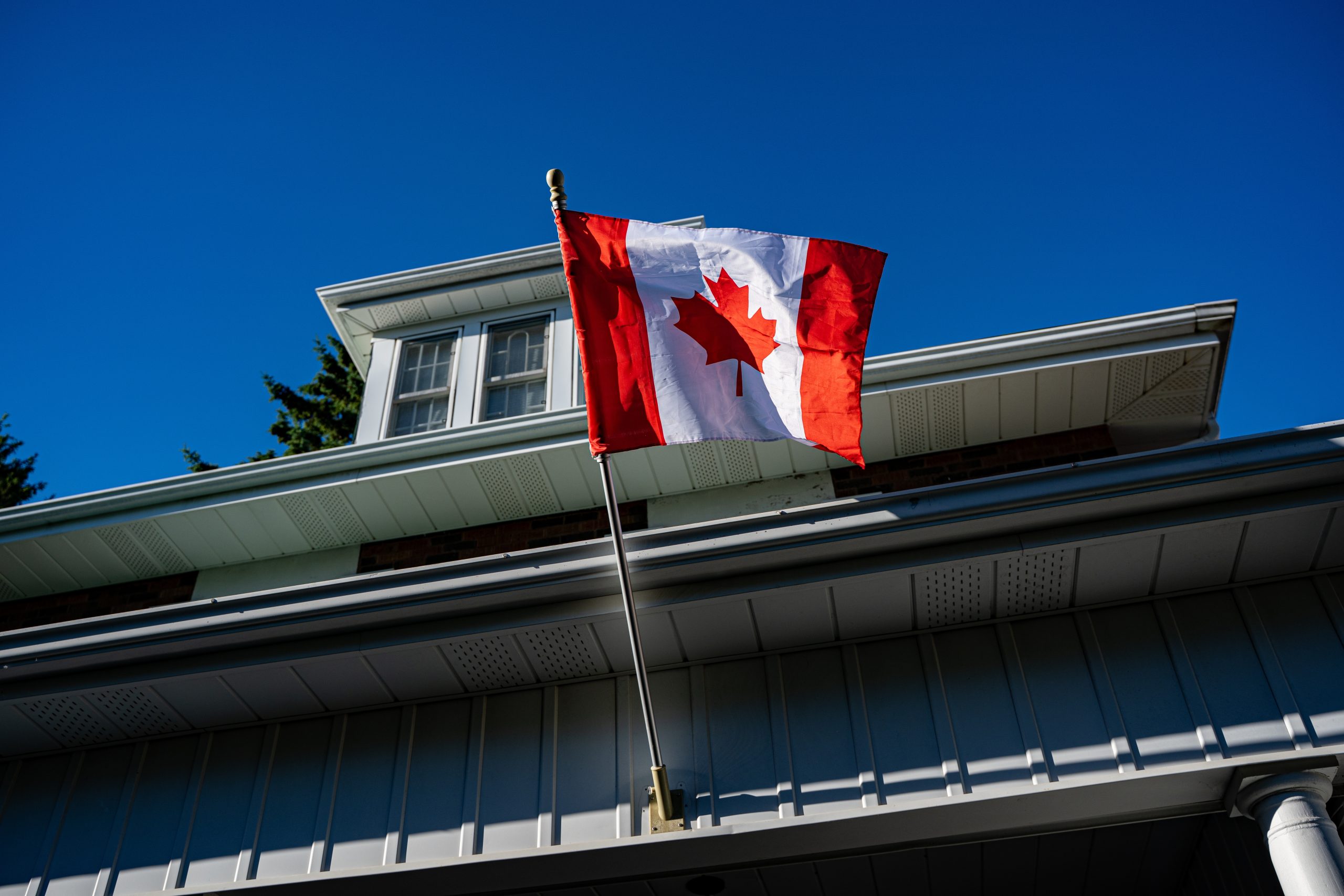
The numbers point to more than routine anti-Trump sentiment. They suggest a sharp deterioration in how Canadians see the United States itself.
Damning polls show Canadians strongly dislike Donald Trump’s America, and CNN chief data analyst Harry Enten said Tuesday this article explains the polling behind that view: Canada’s net favorability toward the United States has moved from +13 points before Trump returned to office to -33 points now. Trump’s tariffs and other actions toward Canada are part of the reason, including his newly announced 50% tariffs on America’s northern neighbor.
Enten’s sharper phrase — that Canadians “hate, hate, hate” the United States — matters because it describes a rupture with a close ally, not just another bad week in cross-border politics.
A friendship turns sharply colder
The United States and Canada are often described in diplomatic shorthand as unusually close: neighbors, trading partners, military allies and cultural cousins. That is why the polling cited by Enten landed with force.
According to the figures he discussed on CNN’s “OutFront,” Canadians’ net favorability rating of the United States was positive before Trump’s return to office. At +13 points, more Canadians viewed the U.S. favorably than unfavorably.
Now, Enten said, that measure has fallen to -33 points. A 46-point swing is not a small partisan wobble. It suggests that anger at the current U.S. administration may be bleeding into broader feelings about the country.
That distinction is important. People can dislike a president without turning against a nation. The polling Enten highlighted indicates many Canadians are not separating the two as cleanly as Washington might hope.
The tariff fight is personal
The immediate political backdrop is Trump’s new 50% tariffs on Canada. Tariffs are usually discussed as trade instruments: taxes on imports, negotiating leverage, pressure on industries or governments.
For Canadians, they can also read as an insult from a partner that benefits from deep economic integration. Canada and the United States share supply chains in autos, energy, agriculture, steel and consumer goods. A tariff fight between the two countries is not abstract; it can hit jobs, prices and local businesses on both sides of the border.
Enten framed the shift as the result of Trump taking a longtime ally and turning it into a target. That is a political interpretation, but it is backed by the timing of the numbers he cited: attitudes were positive before Trump returned to office and sharply negative after his renewed confrontation with Canada.
Still, the polling does not prove tariffs are the only cause. Trump’s rhetoric, his broader foreign policy style and Canadian domestic politics may all play a role. The tariffs are the most visible trigger, not necessarily the whole story.
Confidence in Trump collapses
The more specific numbers on presidential confidence are even starker. During Joe Biden’s presidency, Enten said, 52% of Canadians expressed confidence in the U.S. president, while 46% did not.
Under Trump, only 20% of Canadians say they are confident in the president, compared with 79% who are not. Enten summarized it bluntly: four in five Canadians lack confidence in the U.S. president.
That gap helps explain why a view of Trump may be shaping a view of America. In moments of international stress, the president becomes the face of U.S. power. If allies see that face as hostile, erratic or transactional, trust in the country can suffer.
There is a political warning here for Washington. Allied publics matter. Governments can maintain formal cooperation even when voters are angry, but sustained public resentment limits how much political capital allied leaders can spend on working with the U.S.
Why the wording hit hard
Enten’s “hate, hate, hate” line is the part built for television and social media. It is memorable, exaggerated in tone and easy to clip.
But the underlying point is not merely theatrical. The polling shift from +13 to -33 means Canadian public opinion has crossed from net positive to clearly negative. That is the real headline behind the phrase.
The word “hate” also carries risk. Polling typically measures favorability, confidence or approval, not hatred as an emotion. Enten was interpreting the scale of the decline, not quoting a survey question that asked Canadians whether they hated the United States.
That nuance matters because cross-border public opinion can be volatile. Canadians may oppose Trump’s policies while still consuming American culture, doing business with Americans, visiting the U.S. or maintaining family ties there. The relationship is colder, but it is not simple.
Canada’s anger has consequences
A sustained drop in Canadian favorability toward the U.S. could affect politics in both countries. Canadian leaders may face more pressure to take a harder line in trade disputes, diversify economic relationships or publicly distance themselves from Washington.
American officials, meanwhile, could find cooperation harder on issues where Canada has been a steady partner: border management, energy flows, defense coordination, intelligence sharing and North American manufacturing.
The tariff dispute also raises a practical question for U.S. voters. If Trump’s approach is meant to extract concessions, the cost may be a weaker reservoir of goodwill from one of America’s closest allies. That goodwill has long functioned as a quiet advantage for the United States.
There is a competing argument from Trump’s defenders: tariffs are a tool to protect American workers and force better terms from trading partners. In that view, anger from Canada is evidence that the pressure is being felt. The polling does not settle that debate, but it shows the diplomatic price is real.
What remains unclear
The biggest unknown is whether this is a temporary backlash or a lasting shift. Public opinion can rebound if a dispute cools, tariffs are reversed or leaders change tone. It can also harden if voters come to see the other country as unreliable.
The polling cited by Enten captures a moment when Canadian opinion has moved sharply against Trump’s America. It does not tell us how long the anger will last, how different regions of Canada vary, or whether younger and older Canadians are reacting in the same way.
It also leaves open whether Canadians are judging the United States as a whole or mainly its current leadership. The collapse in confidence in the U.S. president points strongly to Trump as the driver, but the negative favorability number suggests the damage may be spreading beyond him.
For now, the takeaway is clear: the U.S.-Canada relationship is not just facing another trade disagreement. The polling Enten highlighted suggests many Canadians now see Trump’s America as a problem, and the numbers are severe enough that Washington cannot dismiss them as routine noise.







Leave a Reply