
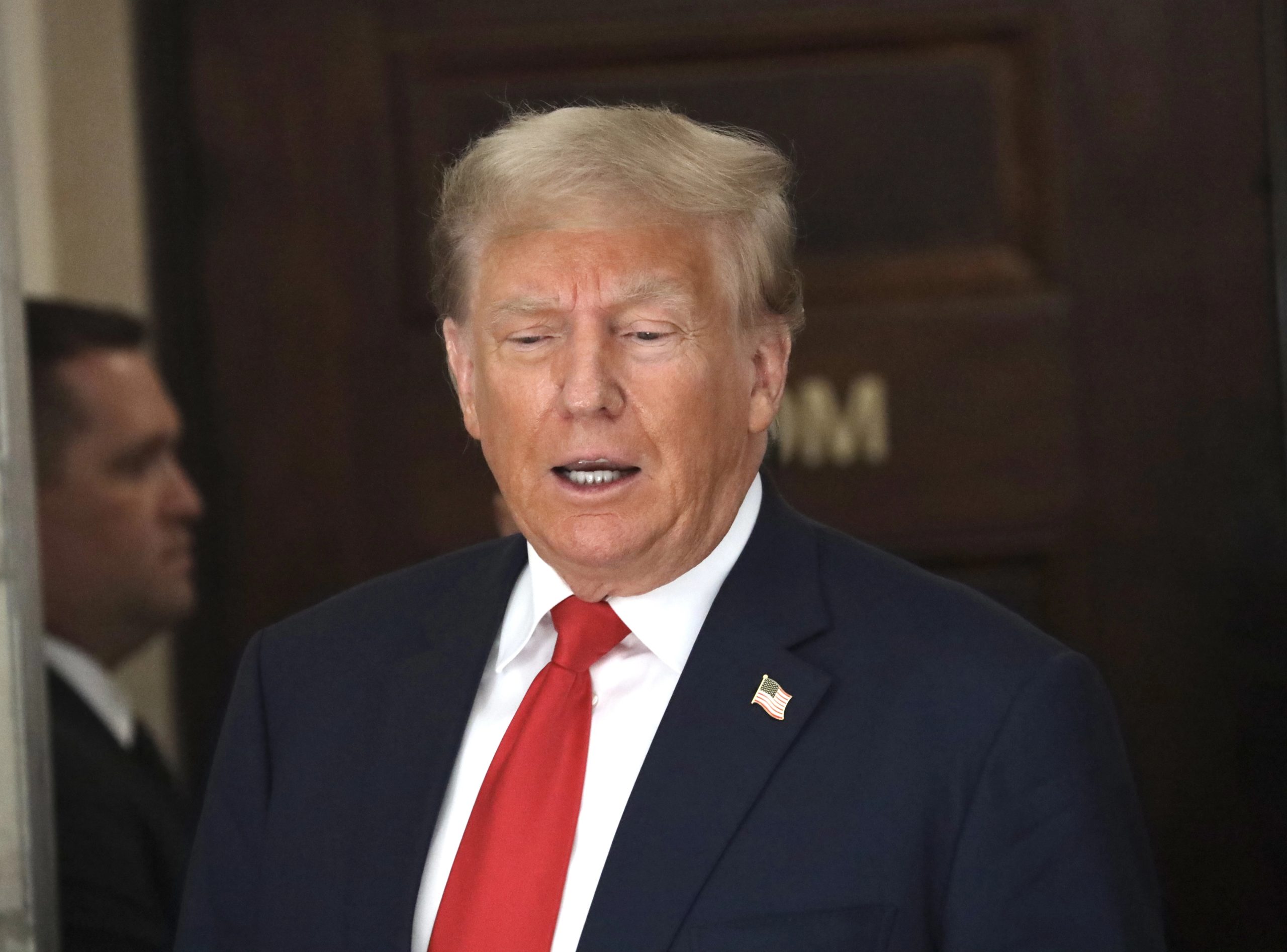
The phrase “Trump’s inevitable reckoning” captures a real legal and political pressure point, but the path is messier than the slogan. Courts have narrowed some options, voters weigh others, and key questions remain unsettled.
Donald Trump is facing an inevitable reckoning, the countdown has officially begun, and the central question is no longer whether his legal and political accountability matters. It is how that accountability can happen after the Supreme Court reshaped the rules for prosecuting a former president.
That makes the latest wave of “Trump’s inevitable reckoning” commentary more than another anti-Trump prediction. It points to a real tension in American politics: courts can define immunity, prosecutors can test the limits, and voters can deliver judgment, but none of those clocks run on the same schedule.
The claim behind the countdown
The strongest version of the reckoning argument is simple: Trump’s long-running effort to treat legal exposure as political theater cannot postpone accountability forever. The presidency, the courts and the electorate all eventually force choices that slogans cannot avoid.
But “inevitable” is a loaded word. It can mean moral inevitability, as in the belief that a public figure must eventually answer for conduct alleged by prosecutors or condemned by critics. It can also imply legal certainty, which is much harder to support.
That distinction matters. A reckoning in politics can arrive as lost power, public rejection, damaged legitimacy or historical judgment. A reckoning in law requires evidence, procedure, jurisdiction and rulings that survive appeal.
Trump’s critics often collapse those categories because they see the legal and political stories as inseparable. His supporters do the same from the opposite direction, arguing that criminal scrutiny of him is really a political weapon. The country is now living inside that dispute.
Immunity changed the legal map
The key legal backdrop is the Supreme Court’s July 1, 2024 decision in Trump v. United States. The court held that former presidents do not have absolute federal criminal immunity for unofficial acts. At the same time, it recognized absolute immunity for core constitutional powers and at least presumptive immunity for many official acts.
That ruling did not declare Trump legally untouchable. It also did not clear an easy path for prosecutors. It created a sorting exercise: which alleged conduct was private, which was official, and which falls within a zone where courts must be especially cautious.
For accountability advocates, the important part is that the court rejected the broadest claim that a president can never be prosecuted for conduct connected to the office. For Trump and defenders of expansive executive power, the important part is that the court warned against criminalizing presidential decision-making too easily.
The result is a legal framework that slows the clock even as it keeps it running. Any serious prosecution involving presidential conduct now has to pass through the immunity filter before reaching the larger factual questions.
Why the delay matters
Delay is not a side issue in cases involving a former president. It can shape public understanding, election timing, witness availability and the practical value of any eventual ruling.
Critics of the Supreme Court’s handling of Trump’s immunity claim argued that even taking the case and issuing a broad decision risked pushing accountability beyond the moment when voters most needed clarity. Opinion writers, including at The New York Times, framed the delay as a democratic problem: the public may be left to make political decisions before the legal system supplies answers.
That concern is not the same as saying Trump is guilty of anything. It is about timing. In a normal criminal case, slow process can frustrate victims, defendants and prosecutors. In a presidential case, slow process can affect the entire political system.
Trump’s allies see the same timing issue differently. They argue that rushing cases against a major political figure can look like election interference, especially when prosecution and campaign calendars collide. That argument resonates with voters who already distrust federal institutions.
The case for accountability
The accountability case rests on a basic democratic principle: no president should be able to use the office as a shield against criminal law. The Justice Department, in briefing the immunity fight, warned that an extreme version of Trump’s position could free a president from criminal consequences for grave abuses of power.
The Supreme Court did not accept that extreme position. Its opinion said former presidents lack immunity for unofficial conduct. That sentence is the legal anchor for anyone arguing the countdown is real.
There is also a political anchor. Presidents are not judged only by courts. They are judged by voters, Congress, historians, party elites, donors, former aides and the officials asked to carry out their orders. Political accountability is messier than a verdict, but it can arrive faster and cut deeper.
That is why the reckoning narrative persists even when legal proceedings slow down. Trump’s conduct, his claims of immunity and the institutional response to both have become tests of whether the American system can discipline a leader who treats ordinary constraints as optional.
The case against certainty
Still, certainty is the weakest part of the “inevitable reckoning” frame. Legal exposure is not the same as legal defeat. Public controversy is not the same as disqualification. Outrage is not a substitute for admissible evidence and judicial findings.
Trump has survived scandals, impeachments, investigations and civil and criminal scrutiny while retaining intense support inside the Republican coalition. For his voters, the accumulation of cases and accusations often strengthens the belief that he is being targeted by hostile institutions.
That is why a prediction of inevitable collapse has failed before. Trump’s political brand has repeatedly converted pressure into proof of persecution. Any analysis that ignores that dynamic misunderstands his durability.
The more realistic view is that accountability is approaching on multiple fronts, but not in a single dramatic scene. The courts may answer some questions. Elections may answer others. The historical judgment may take longer than either.
What remains unresolved
The biggest unresolved question is how far the Supreme Court’s immunity framework reaches in practice. Lower courts must still apply its categories to specific allegations, and those decisions can be contested.
Another unresolved question is whether voters treat legal accountability as a disqualifying concern, a partisan attack or background noise. That answer may vary sharply by party, state and media environment.
There is also an institutional question: can the justice system move with enough speed to matter while still preserving the fairness that gives its judgments legitimacy? If it moves too slowly, critics call it toothless. If it moves too quickly, Trump’s defenders call it rigged.
That is the real countdown. It is not simply a countdown to Trump’s downfall. It is a countdown for American institutions to show whether they can apply law and political judgment to a former president without either bending the rules for him or bending them against him.
The clean takeaway
Trump’s reckoning may be approaching, but it should not be mistaken for a guaranteed ending. The Supreme Court left room for prosecution of unofficial acts while protecting official presidential functions, creating a narrower and more complicated path.
For readers trying to make sense of the moment, the useful question is not whether one opinion writer’s countdown is emotionally satisfying. It is whether the legal system, the political system and the public can each do their part without pretending the others do not matter.
If accountability comes, it will likely come in pieces: a ruling here, a voter judgment there, a public record that becomes harder to dismiss. That may be less cinematic than an “inevitable reckoning,” but it is closer to how power is actually checked.









Leave a Reply