

The U.S. still has no permanent home for its civilian nuclear waste. A reported five-state proposal raises the political and environmental stakes of moving beyond Nevada’s long-stalled Yucca Mountain site.
Donald Trump is again at the center of a nuclear waste fight after a leaked Trump-linked plan reportedly involves five U.S. states as possible nuclear waste dumping grounds, with reports using the phrase “Five states chosen” to describe a proposal that could push the United States, the White House and the Department of Energy toward new storage sites for roughly 95,000 metric tons of radioactive nuclear waste.
The shift would move beyond the current Yucca Mountain-focused approach in Nevada, a long-stalled federal framework that has shaped U.S. nuclear waste policy for decades. The political problem is simple: almost everyone agrees the waste needs a safer long-term answer, but few states want to become the answer.
A leak meets a legal dead end
The reported plan has not been publicly released by the White House or the Department of Energy, and the identities of the five states have not been independently confirmed in the research available here. That matters because nuclear waste siting is not a normal land-use dispute. It triggers federal law, state resistance, tribal sovereignty questions, transport concerns and decades of mistrust.
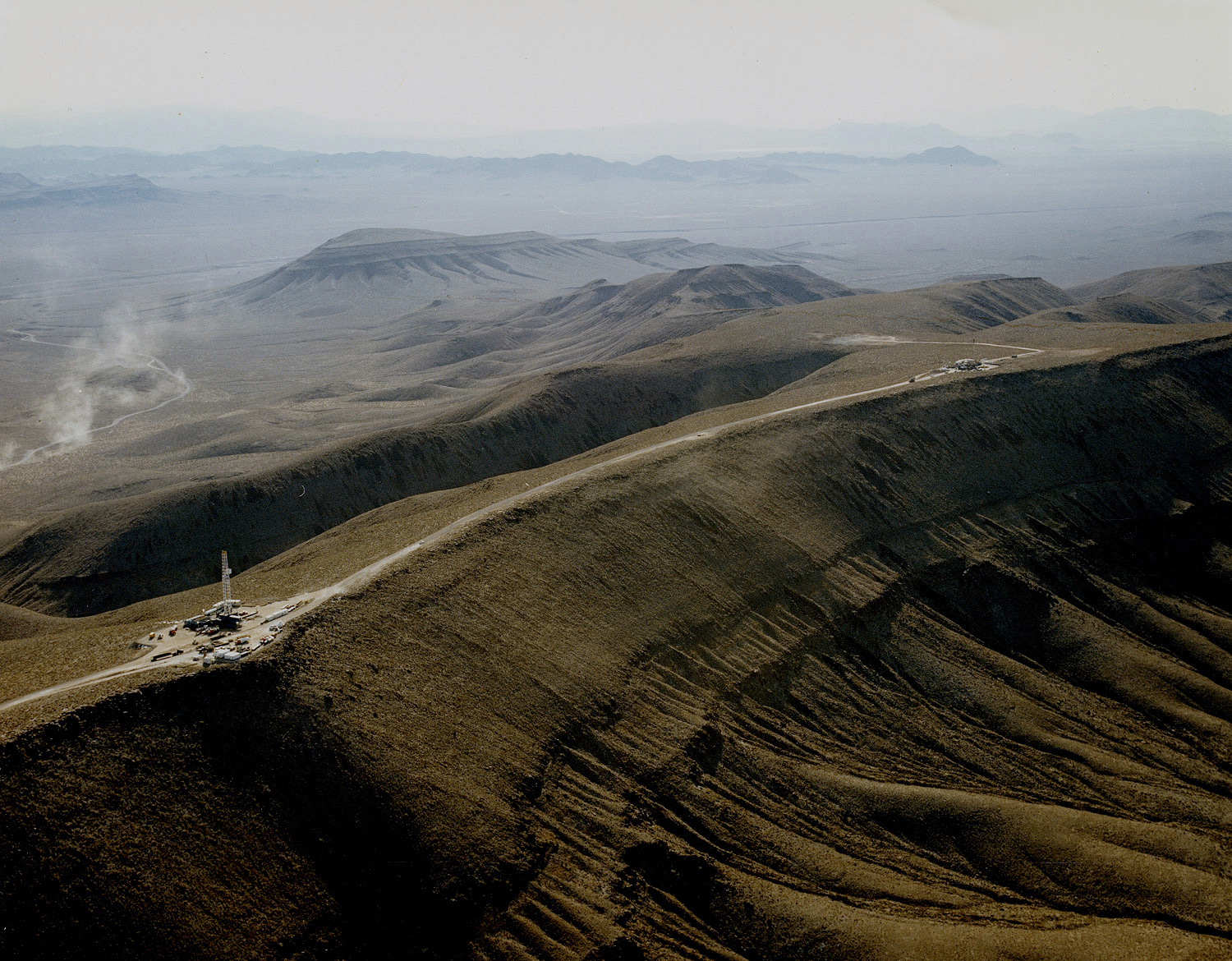
What is clear is the policy direction being signaled: a search that would shift or expand disposal planning beyond Yucca Mountain, the Nevada site selected by Congress as the nation’s only statutory candidate for a permanent high-level nuclear waste repository.
That would be a major turn. Under the Nuclear Waste Policy Act, Yucca Mountain remains the only repository candidate site named in law, even though development and licensing have been effectively suspended since 2010. The Congressional Research Service has repeatedly noted the core contradiction: the United States has no permanent disposal facility for spent nuclear fuel and other highly radioactive waste, while the one site named in law remains politically frozen.
Why Yucca Mountain still dominates
Yucca Mountain is not just a place on a map. It is the symbol of the federal government’s decades-long failure to settle the nuclear waste question.
The Department of Energy submitted a license application for Yucca Mountain to the Nuclear Regulatory Commission in 2008. The Obama administration later moved to withdraw the application and stopped pursuing funding. Congress has not provided new Yucca Mountain development funding since fiscal year 2010, according to Congressional Research Service material.
Trump’s first administration tried to revive the project by including funding requests for fiscal years 2018, 2019 and 2020. Congress did not approve those requests. The administration then did not seek additional Yucca Mountain funding for fiscal year 2021, and the Biden administration also moved away from the site, favoring a consent-based approach.
That history explains why a leaked Trump-linked plan involving five states would land with such force. It would reopen the same fight, but with new possible targets.
The waste is already somewhere
The phrase “nuclear dumping grounds” is politically loaded, but the underlying problem is real. Spent nuclear fuel is already stored across the country, mostly at reactor sites, in pools and dry casks. Those arrangements are designed for safety, but they were never meant to be the final national solution.
The U.S. inventory is commonly described at around 95,000 metric tons and growing as reactors continue to operate. Without a permanent repository or a consolidated interim storage program that can survive legal and political challenges, the waste remains scattered at existing sites.
Supporters of a new siting push argue that the current system is unfair and inefficient. Communities that hosted power reactors are still hosting waste, including places where reactors have shut down. Utilities and ratepayers also have a long-running stake because the federal government was supposed to begin accepting commercial spent fuel years ago.
Opponents counter that moving the waste can create new risks and new inequities. A host state could become a de facto permanent storage site, especially if a so-called temporary facility opens before a permanent repository exists.
Consent is the hard part
After the Obama administration moved away from Yucca Mountain, the Blue Ribbon Commission on America’s Nuclear Future recommended a consent-based process for future nuclear waste facilities. The idea was straightforward: do not force a repository or storage site onto a state, local community or tribe without negotiated agreement.
That approach sounds cleaner than the old Yucca Mountain fight, but it raises difficult questions. Who gets to consent? A governor? A county? A tribal government? Nearby communities along rail and highway routes? What happens if local officials support a project but state leaders oppose it?
The Department of Energy has explored consent-based siting in recent years, but exploration is not the same as selecting a site. Any serious plan would need to address:
- Whether the sites would be for interim storage, permanent disposal or both.
- How radioactive waste would be transported across state lines.
- Whether host communities would receive long-term funding or legal guarantees.
- What role states, tribes and local governments would have in approval.
- How environmental reviews and Nuclear Regulatory Commission licensing would proceed.
A leaked proposal that appears to identify five states before public consent is established would almost certainly face a backlash, even from people who agree the waste problem must be solved.
Trump’s energy agenda adds pressure
The politics are also tied to nuclear power’s comeback in Washington. Both parties have shown growing interest in nuclear energy as a source of reliable electricity that does not produce carbon emissions while operating. Tech companies, utilities and grid planners are also looking for dependable power as electricity demand rises.
But nuclear expansion runs into the same unresolved question: what happens to the waste? New reactors, advanced reactors and life extensions for existing plants are easier to sell if the federal government can show a credible disposal path.
That is why a Trump-linked effort to broaden the site search would be more than a waste-management decision. It would sit at the intersection of energy security, climate policy, rural land politics and federal-state power.
For Nevada officials and Yucca Mountain opponents, the concern is different. They have long argued that their state was singled out without true consent. If a new plan names other states, those states may make the same argument.
What remains unconfirmed
The biggest unanswered questions are still basic. The full leaked document has not been made public in the source material available here. The five states have not been verified here. There is no confirmed formal decision from the White House or the Department of Energy in the available research.
There is also a legal question: can any administration truly move beyond Yucca Mountain without Congress changing the Nuclear Waste Policy Act? As CRS has noted, Yucca Mountain remains the sole repository candidate named under current law. A president can set priorities and request funding, but Congress controls appropriations and statutory changes.
The practical question may be even harder. Any site would need scientific review, environmental analysis, licensing and political acceptance. Nuclear waste policy moves slowly because the consequences are measured in generations, not election cycles.
For now, the leaked-plan report is best understood as a warning flare. The United States has postponed a permanent nuclear waste decision for decades. If a future Trump administration or any White House tries to name new states, the fight will not be over whether the waste exists. It will be over who is asked to live with it.










Leave a Reply