
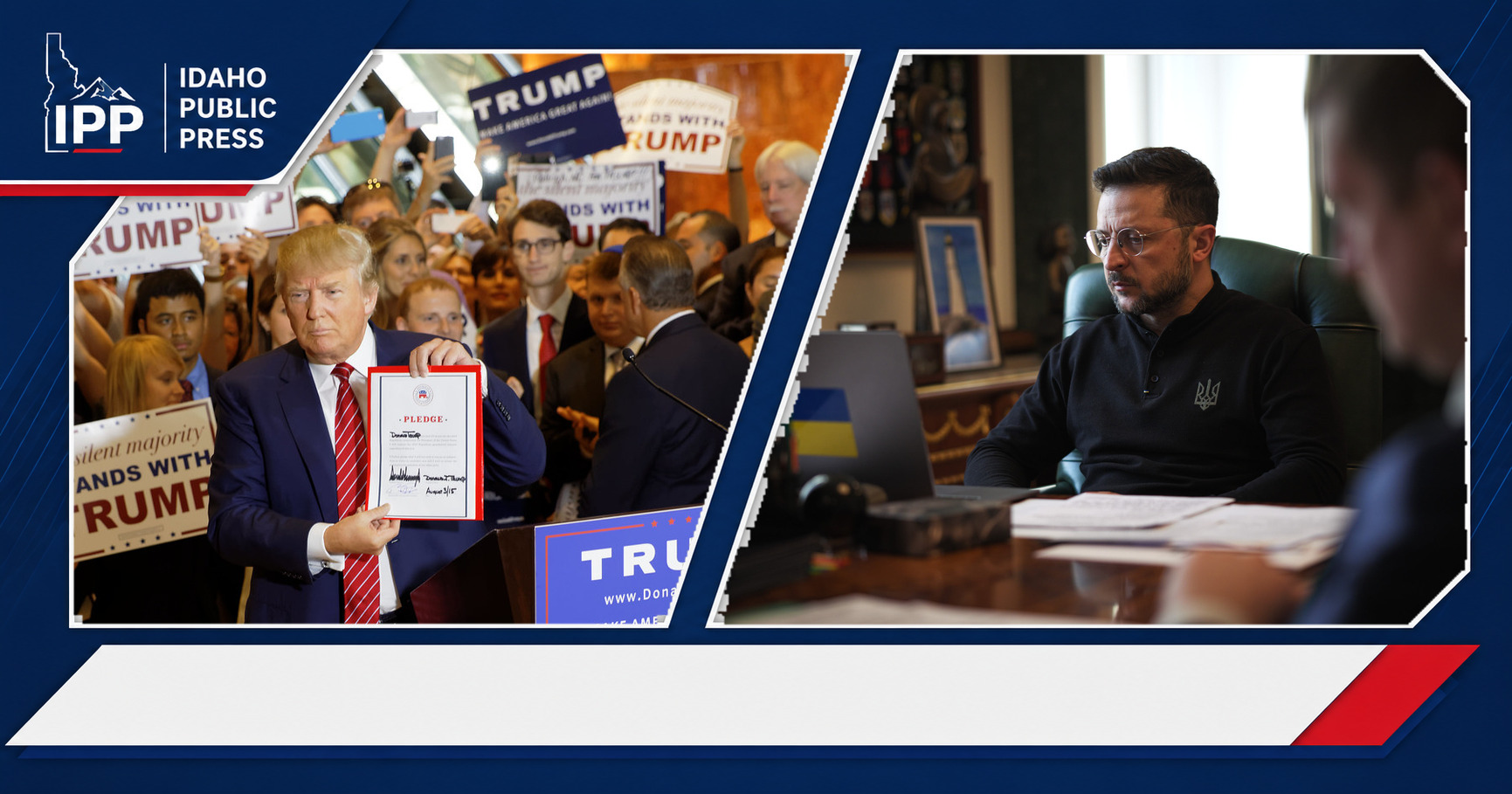
The meetings matter because Ukraine and Israel are asking Washington to stay engaged while the U.S. weighs risk, resources and political fallout. What Trump says next could shape how both allies read American support.
Donald Trump meets with Volodymyr Zelenskyy and Benjamin Netanyahu as the wars in Ukraine and Iran press onto Washington’s foreign-policy calendar, according to CBS News’ latest coverage. The meetings put Zelenskyy and Netanyahu amid wars that demand different U.S. choices but compete for the same presidential attention.
That is why the timing matters. Ukraine is fighting for survival against Russia, while Israel’s confrontation with Iran has become a defining test of U.S. backing, deterrence and restraint.
Two allies, two wars
The core fact is straightforward: President Trump met with Ukrainian President Volodymyr Zelenskyy and Israeli Prime Minister Benjamin Netanyahu, CBS News reported, in the context of active wars involving Ukraine and Iran.
The political meaning is more complicated. Zelenskyy and Netanyahu arrive in any conversation with Washington carrying very different asks, risks and domestic pressures. For Trump, the paired meetings create a split-screen foreign-policy moment: reassure partners, preserve leverage and avoid being boxed into promises he may not want to keep.
Ukraine’s war is a grinding territorial and security struggle. Israel’s war with Iran, described by CBS News in its related coverage as a U.S.-Israeli war with Iran, raises a different set of escalation fears. Both conflicts force the same question in Washington: how much support is enough, and what does “enough” actually mean?
Why Trump’s role matters
Trump’s meetings matter because U.S. presidents do more than approve weapons, sanctions or statements. They set the tone allies use to judge whether Washington is steady, transactional, impatient or prepared to escalate.
For Zelenskyy, the central concern is continuity. Ukraine depends heavily on Western political and military support, and every high-level meeting is read in Kyiv, Moscow and European capitals as a signal about endurance. Even a carefully worded comment from Trump can affect expectations about negotiations, battlefield support or pressure on Russia.
For Netanyahu, the question is U.S. alignment during a dangerous regional conflict. Israel looks to Washington for diplomatic cover, military coordination and strategic backing. But U.S. leaders also have to weigh the danger of a wider war, the safety of American forces and the political cost of appearing either too passive or too eager to deepen involvement.
That is the bind. Trump can try to project strength to both leaders, but strength can mean different things depending on the war. In Ukraine, it may mean sustaining pressure on Russia. In the Iran conflict, it may mean deterring Tehran while keeping the fighting from expanding further.
Ukraine wants staying power
Zelenskyy’s diplomacy with Trump is likely to be judged through one main lens: whether Ukraine can count on the United States for the long haul. That does not require every detail of the meeting to be public. The existence of the meeting itself is a signal, but it is not the same as a guarantee.
Ukraine’s challenge is that battlefield needs and political patience rarely move at the same speed. Kyiv needs predictable support. Washington’s politics often produce uncertainty, especially when foreign aid, defense spending and negotiations become partisan arguments.
Supporters of a strong U.S. role argue that Ukraine’s defense is tied to the credibility of American commitments and the security of Europe. They see meetings like this as necessary maintenance of an alliance under pressure.
Skeptics see a different danger: open-ended U.S. involvement with unclear limits. For them, the meeting raises questions about burden-sharing, exit strategy and whether European allies should carry more responsibility.
Netanyahu brings Iran risk
Netanyahu’s meeting with Trump sits in a more immediate escalation frame. A war involving Iran is not just another regional crisis; it touches oil markets, Gulf security, U.S. military posture and the risk of retaliation across several fronts.
Israel’s argument for firm U.S. backing usually rests on deterrence: if Iran believes Washington and Israel are divided, the risk of further aggression may rise. That view treats visible unity as a tool for preventing worse conflict.
The opposing concern is that visible unity can also be read as a blank check. Critics of deeper U.S. involvement warn that Washington can slide from support into ownership of a war, especially when military coordination and public rhetoric tighten.
That makes Trump’s language important. A pledge of support, a threat, a call for talks or a vague statement about strength could each send a different message to Tehran, Jerusalem and U.S. voters.
The same Washington bottleneck
The two meetings also expose a basic reality of American power: even when conflicts are separate, they compete inside the same system. Presidential time, intelligence focus, weapons production, congressional support and public attention are not unlimited.
That does not mean Ukraine and Israel are in a simple contest with each other. The wars are different, the regions are different and the U.S. interests are different. But the political bandwidth is shared.
Several pressure points now sit side by side:
- Military resources: how the U.S. prioritizes arms, air defense, ammunition and readiness.
- Diplomatic leverage: whether Trump uses meetings to press allies as well as reassure them.
- Escalation risk: how Washington supports partners without widening either war.
- Domestic politics: whether voters and lawmakers accept the costs of continued involvement.
That bottleneck is why the meetings are more than routine diplomacy. They show how quickly a president can be pulled between reassurance and restraint.
What remains unclear
The available CBS/MSN trend material confirms the meetings and the war context, but it does not provide a detailed public readout of what Trump, Zelenskyy and Netanyahu said behind closed doors. That leaves the most important questions unanswered for now.
Did Trump press Zelenskyy toward negotiations, promise continued support or focus on burden-sharing with Europe? Did he give Netanyahu firmer backing on Iran, urge limits or discuss a diplomatic off-ramp? Those distinctions matter, and they cannot be assumed from the meeting itself.
The next signals may come from official statements, remarks to reporters, aid decisions, military movements or the reactions from Kyiv, Jerusalem, Tehran and Moscow. In foreign policy, the choreography often comes first, but the consequences usually appear in the follow-through.
The clean takeaway is this: Trump’s back-to-back engagement with Zelenskyy and Netanyahu places two wars inside one presidential frame. The meetings do not resolve the hard choices facing Washington, but they make them harder to separate.











Leave a Reply