
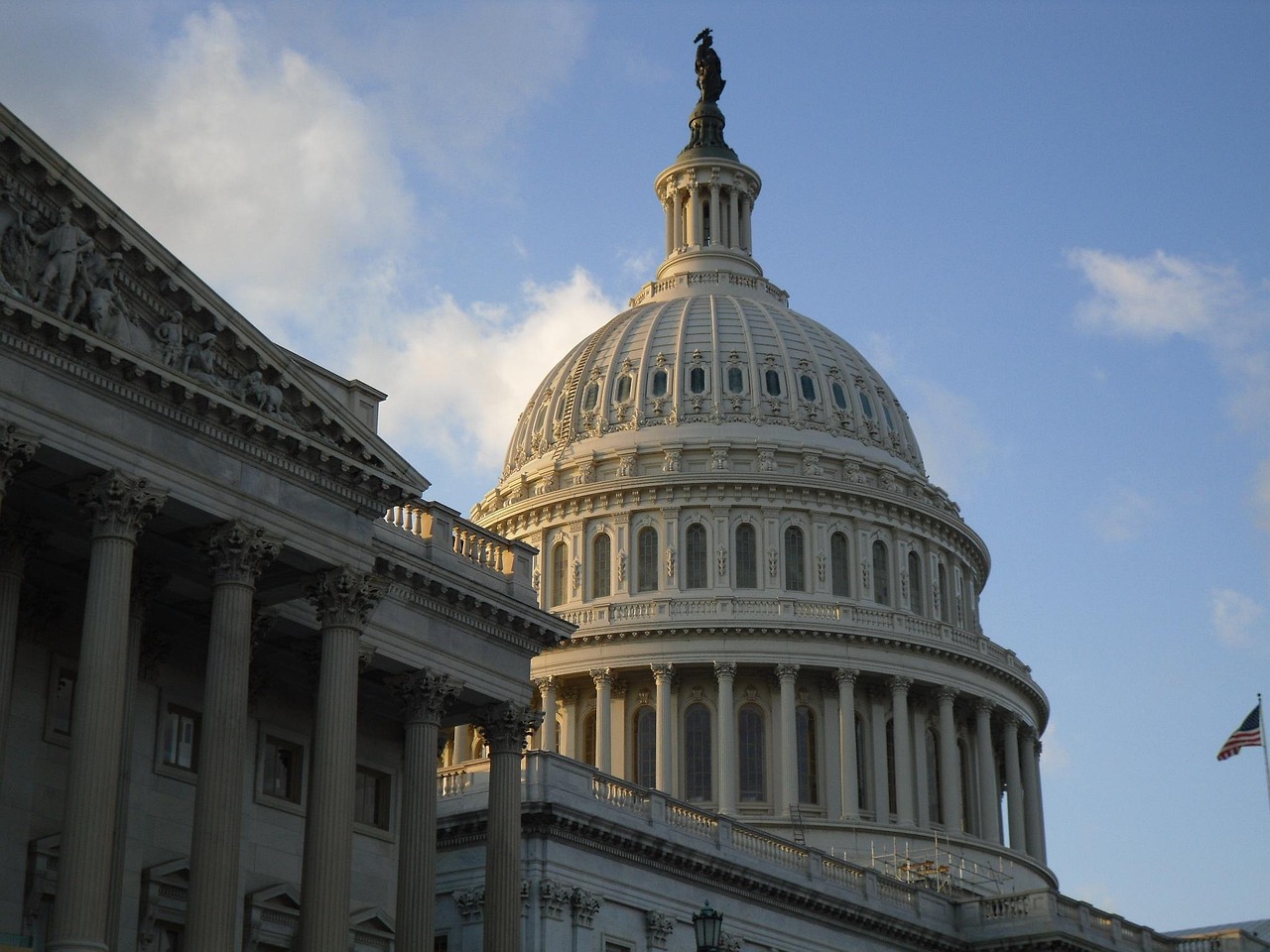
Republicans control the agenda, but control is not the same as momentum. A fight over immigration money is now raising doubts about whether the party can deliver its next big legislative pitch before the midterms.
Republicans have the gavels, the calendar and a list of priorities they want to sell before the midterm elections. The problem is that Congress is moving like a machine with sand in the gears.
A stalled immigration funding bill, reported by the Associated Press, has become more than a one-off delay. It is a warning sign for the GOP’s broader agenda, including a possible third party-line reconciliation package that party leaders hope could showcase Republican governing power before lawmakers leave for August recess.
A stumble on friendly ground
The bill at the center of the current friction was supposed to be politically straightforward for Republicans: roughly $70 billion to fund immigration enforcement through the rest of President Donald Trump’s term, according to the AP.
Immigration enforcement is one of the party’s clearest unifying issues. That is why the delay matters. If Republicans are struggling to move a package built around a core campaign promise, the harder fights ahead become more revealing.
The AP reported that progress stalled amid concerns over provisions including White House ballroom security funding and a $1.8 billion fund tied to claims of government mistreatment. Those details have complicated what leadership wanted to frame as an easy lift.
The immediate consequence is delay. The bigger consequence is doubt: whether the same coalition can hold together for a much larger bill with more painful trade-offs.
The next bill is bigger
Republican leaders have been laying groundwork for what some in Washington are calling “Reconciliation 3.0,” a party-line package that could bypass the Senate filibuster if it meets the rules of the reconciliation process.
House Speaker Mike Johnson and Majority Leader Steve Scalise have been meeting with committee and caucus leaders to test which ideas have enough support among rank-and-file Republicans, according to the AP.
The rough shape is already politically loaded: hundreds of billions of dollars in increased Pentagon spending, paired with cuts elsewhere that Republicans describe as efforts to reduce waste and fraud. The Trump administration has called for $350 billion in defense funding through reconciliation, the AP reported.
That makes the coming debate much harder than a messaging vote. Every dollar for defense must be packaged with decisions about where to cut, how deeply to cut and which members will have to defend those choices back home.
Thin margins change everything
Johnson has already shown he can move a major Republican bill through a narrow House. Last summer, the House passed Trump’s tax and spending cuts package 218-214, with Republicans able to lose only three votes and still prevail. They lost two.
That history gives leadership a reason for confidence. Johnson told reporters the next measure would be “just as beautiful, but not as big,” adding that fewer provisions could mean fewer things needed to get members to yes.
But a slim majority turns every faction into a pressure point. Fiscal hawks, defense hawks, swing-district Republicans and members with local concerns can each demand changes. One small dispute can become a full stop.
Rep. Jodey Arrington, the Texas Republican who chairs the House Budget Committee, suggested the defense component could help unify the party. “I can’t imagine a Republican not wanting to support our troops and military community in a time of conflict,” he said, according to the AP.
Democrats see a vulnerability
Democrats are watching the GOP’s timing as closely as the substance. Rep. Brendan Boyle of Pennsylvania, the top Democrat on the House Budget Committee, told the AP that Republicans face a tougher path now than they did during last year’s tax and spending fight.
Boyle pointed to two forces: Trump’s approval rating and the approaching midterm elections. Vulnerable House Republicans, he argued, may be more cautious about voting for a bill that Democrats can portray as cutting health care or other benefits.
That attack line has numbers behind it. The earlier tax and spending cuts bill reduced Medicaid spending by more than $900 billion over a decade and cut nutrition assistance by about $187 billion over a decade, according to Congressional Budget Office figures cited by the AP.
Republicans reject Democratic framing that casts their cuts as harmful austerity. Still, in competitive districts, the distinction between “waste and fraud” and “cuts to programs” can be decided less by committee language than by campaign ads.
The Senate is not sold
Even if House Republicans find the votes, the Senate is not offering a blank check. Senate Majority Leader John Thune called a third reconciliation bill a “potential option,” according to the AP, which is notably short of a full endorsement.
“We haven’t made any commitments on that, but we’re hearing people out,” Thune said.
Other Senate Republicans have been more openly cautious. Sen. Thom Tillis of North Carolina said lawmakers should know what will be in the bill before the process begins, warning that an unclear product could unravel. He called the idea “kind of a moonshot,” according to the AP.
Sen. Lisa Murkowski of Alaska also expressed concern about the strategy. That matters because reconciliation can avoid a Democratic filibuster, but it cannot erase Republican hesitation.
The clock is now the opponent
The August recess gives the GOP a deadline with political meaning. Passing a major package before lawmakers leave town would let Republicans campaign on action: border funding, defense investment and spending discipline, all bundled into a governing argument.
Failure would tell a different story. It would suggest that even unified party control can be slowed by internal distrust, procedural limits and the fear of taking hard votes too close to an election.
That is why the phrase “zombie Congress” has resonance in Washington right now. The danger for Republicans is not that nothing is happening. It is that the institution keeps lurching forward without enough force to finish the work party leaders promised.
The coming weeks will test whether the GOP’s agenda is merely delayed or structurally stuck. The difference could shape not only the legislative calendar, but the party’s midterm pitch: Republicans can claim power, but voters will judge whether they used it.











Leave a Reply