

Black voters turned out under Louisiana’s 2024 map and elected a second Black member of Congress. But the Supreme Court’s later ruling means that map cannot be used in future elections, putting new pressure on the fight over how voting power is measured.
Black voters turned out to vote in Louisiana’s 2024 congressional election, when a map with a second majority-Black district helped produce the election of Cleo Fields. The Supreme Court later weakened the Voting Rights Act’s practical force in Louisiana v. Callais, blocking that map from future use and reopening a consequential fight over whether turnout alone can protect Black voters’ political influence.
The immediate stakes are in Louisiana, but the ruling reaches beyond one state. It adds a constitutional limit to how states may draw districts in response to the Voting Rights Act, even when federal courts have found that a prior map likely diluted Black voting strength.
A second Black district disappears
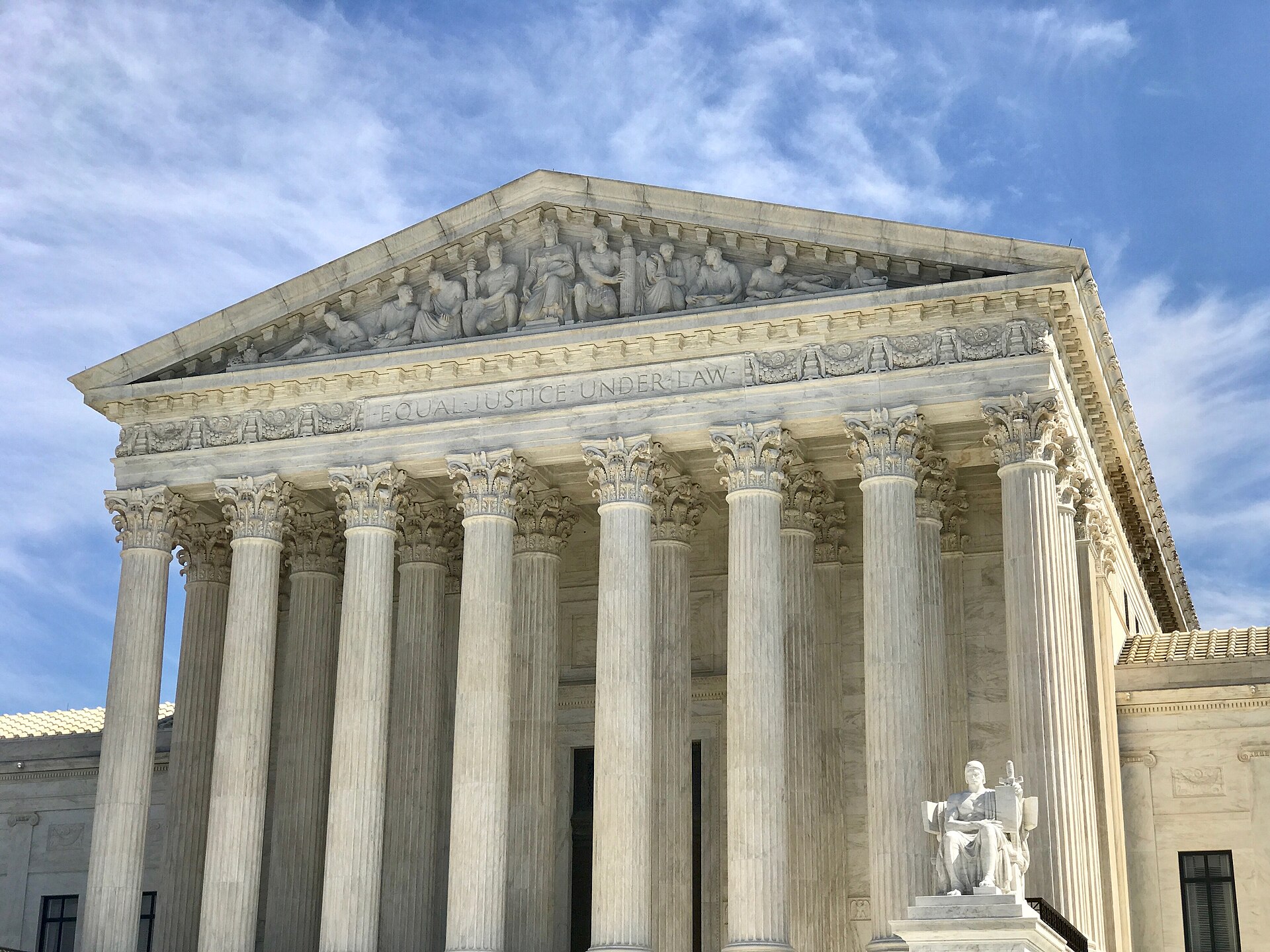
On April 29, 2026, the Supreme Court ruled 6-3 in Louisiana v. Callais, leaving in place a lower-court decision that barred Louisiana from using its 2024 congressional map in future elections.
That map had created a second majority-Black district among Louisiana’s six congressional seats. It was adopted after Black voters challenged the state’s earlier 2022 map, which contained one majority-Black district even though Black residents make up roughly one-third of Louisiana’s population.
A federal judge concluded that the 2022 plan was likely at odds with Section 2 of the Voting Rights Act, the provision that bars voting practices or procedures resulting in racial discrimination. The U.S. Court of Appeals for the 5th Circuit upheld that finding and directed the state to draw a replacement.
The 2024 map did just that. Fields, who had previously served in Congress in the 1990s, won the newly configured district in the November 2024 election.
Turnout is not the only test
The Louisiana story complicates a familiar political claim: that voting participation is the decisive measure of electoral power. Turnout matters, but district design can determine whether communities that vote in large numbers have a realistic opportunity to elect candidates they prefer.
Majority-Black districts are not automatic guarantees of any candidate’s win, and voters are not a monolith. Still, such districts can matter where voting patterns and population geography would otherwise divide a minority community among several districts, reducing its collective influence in each one.
That is why the 2024 map became more than a technical redistricting dispute. For Black voters who had won their original Section 2 challenge, the second district was a remedy for what they said was dilution of their voting power. For the plaintiffs challenging the replacement map, it was an unconstitutional use of race in drawing political lines.
The Supreme Court’s decision did not say Black voters should not participate, nor did it erase the right to vote. Its impact is subtler and potentially broader: it narrows the room states have to use race-conscious mapmaking as a response to alleged Voting Rights Act violations.
The court’s competing visions
Justice Samuel Alito’s majority opinion stressed the Constitution’s general prohibition on government discrimination based on race. The central question, he wrote, was whether complying with the Voting Rights Act belongs on the short list of interests that can justify racial classifications.
The majority treated the constitutional concern as paramount when a state intentionally creates a second majority-minority district. Louisiana and the challengers had argued that race-based redistricting is unconstitutional, including when officials say it is meant to comply with Section 2.
The dissenters viewed the outcome very differently. Justice Elena Kagan, joined by Justices Sonia Sotomayor and Ketanji Brown Jackson, said the decision had rendered the relevant Voting Rights Act protection “all but a dead letter,” according to SCOTUSblog’s account of the ruling.
That divide captures the case’s larger conflict. One side sees race-conscious districting as a dangerous constitutional sorting of citizens. The other sees it as a necessary, limited response to entrenched racial vote dilution—one Congress specifically addressed through the Voting Rights Act.
What Section 2 still means
The ruling did not formally strike down Section 2 of the Voting Rights Act. That distinction matters. The provision remains federal law, and voters can still bring challenges alleging that maps unlawfully weaken minority voting power.
But a law’s text and its usable remedies are not the same thing. If states face heightened constitutional barriers when drawing districts to address proven or likely Section 2 violations, future plaintiffs may have a harder time securing maps that create meaningful electoral opportunity.
Louisiana’s timeline shows the tension. The state’s 2022 map was challenged by Black voters; lower courts found a likely Section 2 problem; the state drew a new map with a second majority-Black district; and that corrective map was then invalidated as an unconstitutional racial gerrymander.
For election-law advocates, the unanswered issue is how a state can comply with Section 2 without making the kind of deliberate race-based decision the Supreme Court rejected. The court’s ruling leaves that question at the center of the next round of litigation and mapmaking.
Louisiana’s map fight continues
The decision concerns future elections, not Fields’ 2024 victory. But Louisiana will need a congressional map that can withstand both Voting Rights Act challenges and constitutional objections to racial gerrymandering.
Mapmakers may emphasize traditional redistricting principles such as compactness, political boundaries and communities of interest. Yet those choices are themselves contested, because every line affects which voters are grouped together and whose preferences can shape a congressional seat.
Partisan politics also shadowed the litigation. During the case, Louisiana argued that its redistricting decisions were driven not only by race but by an effort to protect influential Republican incumbents, including House Speaker Mike Johnson and Rep. Julia Letlow. The challengers said it was implausible to treat race and politics as equally responsible for the map.
That overlap is common in modern redistricting cases. Race, party preference and geography can correlate, making it difficult for courts to separate a lawful political decision from an unlawful racial classification.
The turnout debate has changed
Black voter turnout in Louisiana demonstrated engagement under the 2024 map. The Supreme Court ruling demonstrates the limit of treating participation as the whole story.
Voting rights disputes often turn on access to the ballot, but representation also depends on what happens after ballots are cast: how votes are aggregated, where district boundaries fall and whether minority communities have an equal opportunity to elect their preferred candidates.
The practical outcome of Louisiana v. Callais is clear for now: Louisiana cannot rely on the 2024 map with its second majority-Black congressional district in future elections. What remains unclear is what replacement map will satisfy the Constitution while also meeting the Voting Rights Act’s command against racial discrimination in voting.
That uncertainty is why the case matters far beyond one election cycle. The debate is no longer simply about whether Black voters turn out. It is about whether the legal system will recognize turnout as political power when the maps beneath it change.








Leave a Reply