
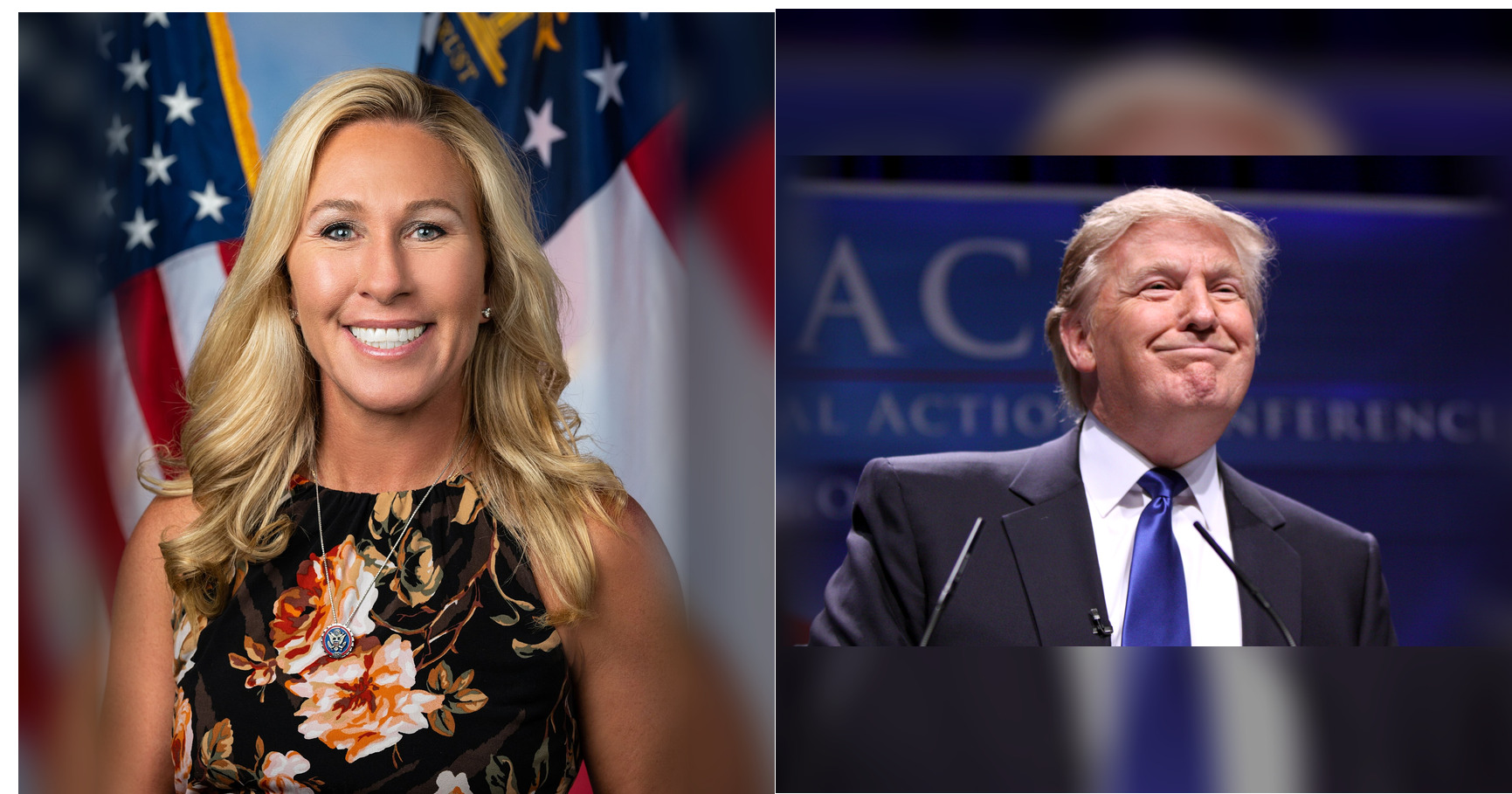
A onetime Trump loyalist is now openly challenging the president’s priorities and political authority. Their dispute points to deeper tensions over foreign policy, the Epstein files and the direction of MAGA.
Marjorie Taylor Greene responded to Donald Trump’s attack on MAGA supporters by saying, “I wish I had never supported him,” according to the report that sparked the latest Trump-Greene rift. Trump criticized MAGA supporters, described in the report as “losers,” and Greene’s reply has turned a dispute between two longtime political allies into a public argument over the future of the MAGA movement.
The break matters because Greene was once among Trump’s most visible defenders in Congress. Their fight is now exposing a larger question inside the Republican coalition: whether loyalty to Trump remains the defining test of MAGA politics, or whether prominent supporters can challenge him while still claiming the America First banner.
A striking break from Trump
Greene’s reported expression of regret is notable precisely because her political rise has been closely linked to Trump. She entered Congress as he was leaving the White House, became a highly visible promoter of Trump-aligned politics and campaigned energetically for his return to power.
Earlier this year, the relationship looked especially close. The Associated Press reported that Greene attended Trump’s address to Congress in a red cap reading “Trump was right about everything,” and Trump greeted her warmly afterward. That image now stands in sharp contrast to the public hostility between them.
Trump, for his part, has used a familiar political playbook against a former ally: ridicule, nicknames and the threat of backing a primary challenger. In one social-media post reported by AP, he called Greene “Wacky” and accused her of doing nothing but “COMPLAIN, COMPLAIN, COMPLAIN!”
The candidate report frames the latest escalation around Trump’s criticism of MAGA supporters and Greene’s sharp response. The full underlying post and its precise wording were not included in the available source material, so the broader significance is clearer than every detail of the exchange.
Policy fights drove the split
This is not simply a quarrel about personality. Greene has criticized Trump’s attention to foreign policy, arguing that his administration should place greater emphasis on domestic concerns. She has cast that position as a defense of an America First agenda focused on Americans’ economic and political frustrations.
She has also pressed Trump over the release of additional documents connected to Jeffrey Epstein. That issue has become a pressure point among some conservative voters and commentators who want more disclosure, while the administration has faced questions about how it has handled the matter.
Those disagreements give the feud more substance than an ordinary clash between an elected official and a president. Greene is not positioning herself as a conventional Republican critic of Trump. Instead, she is arguing that Trump has drifted from the priorities that energized many of his own supporters.
Trump’s allies can make the opposite case: that a president must set a broad national-security agenda and cannot allow every factional demand to dictate policy. To them, Greene’s public criticism risks weakening a Republican administration and handing ammunition to Democrats.
Who owns the America First label?
The fight centers on a question that has followed Trump’s movement for years: Is MAGA a coalition with room for disagreement, or is it primarily organized around Trump’s personal leadership? Greene’s response suggests she believes the movement’s commitments should outrank allegiance to any one politician.
That claim is politically risky. Trump has shown unusual ability to maintain support among Republican voters even after breaking with former advisers, lawmakers and political allies. A high-profile dispute can leave the critic isolated, particularly when Trump signals support for a primary opponent.
Yet Greene is different from many Republicans who have crossed him. Her public identity was built within the movement, not outside it. She speaks in the language of Trump-era populism and has a direct audience among voters who share concerns about immigration, Washington institutions, spending and foreign involvement.
That makes the argument harder to dismiss as a simple establishment-versus-MAGA divide. It is a conflict between competing versions of Trump-aligned politics, each claiming to speak for the voters who made the movement powerful.
The Georgia stakes are real
Greene represents a deeply conservative district in northwest Georgia, but even a safe-seat lawmaker can face consequences when a president endorses a challenger. Trump said he would support a primary challenge to her, according to AP, raising the prospect that the feud could move from online statements into an electoral contest.
The split also follows tension over Greene’s statewide ambitions. AP reported that she considered a 2026 challenge to Democratic Sen. Jon Ossoff before deciding against it. Trump said he had shown her polling indicating she had little chance of winning.
Greene later declined to run for Georgia governor and criticized what she called the state’s political “good ole boy” system. Those episodes may have added to the sense that her standing in the Republican establishment and her relationship with Trump were becoming less certain.
For Georgia Republicans, the dispute is uncomfortable because the state remains politically competitive in major statewide races. Party leaders have an interest in limiting internal damage before the midterms, while Trump and Greene each have incentives to prove they cannot be ignored.
A test before the midterms
AP described the falling-out as a potential warning of more MAGA rifts before the 2026 midterm elections. Republicans may control the White House and Congress, but governing often magnifies differences that are easier to set aside during a campaign.
Greene’s critics may see her challenge as a tactical move designed to preserve her relevance and appeal to disaffected conservatives. Her supporters may see it as evidence that she is willing to criticize powerful figures when she believes the movement has lost focus. Neither interpretation resolves the political question of how much support she can retain if Trump continues opposing her.
Trump’s response will also matter. If he keeps the conflict personal and pursues a primary challenger, he could demonstrate that his influence over Republican candidates remains decisive. If other lawmakers begin echoing Greene’s concerns about foreign policy or transparency, the feud could become a wider argument about the party’s governing priorities.
For now, the clearest outcome is the rupture itself. A politician once celebrated as one of Trump’s fiercest congressional allies is publicly questioning her past support, while Trump is treating her as an adversary. The MAGA movement has survived past splits, but this one is a reminder that control of its message is not automatically settled.







Leave a Reply