
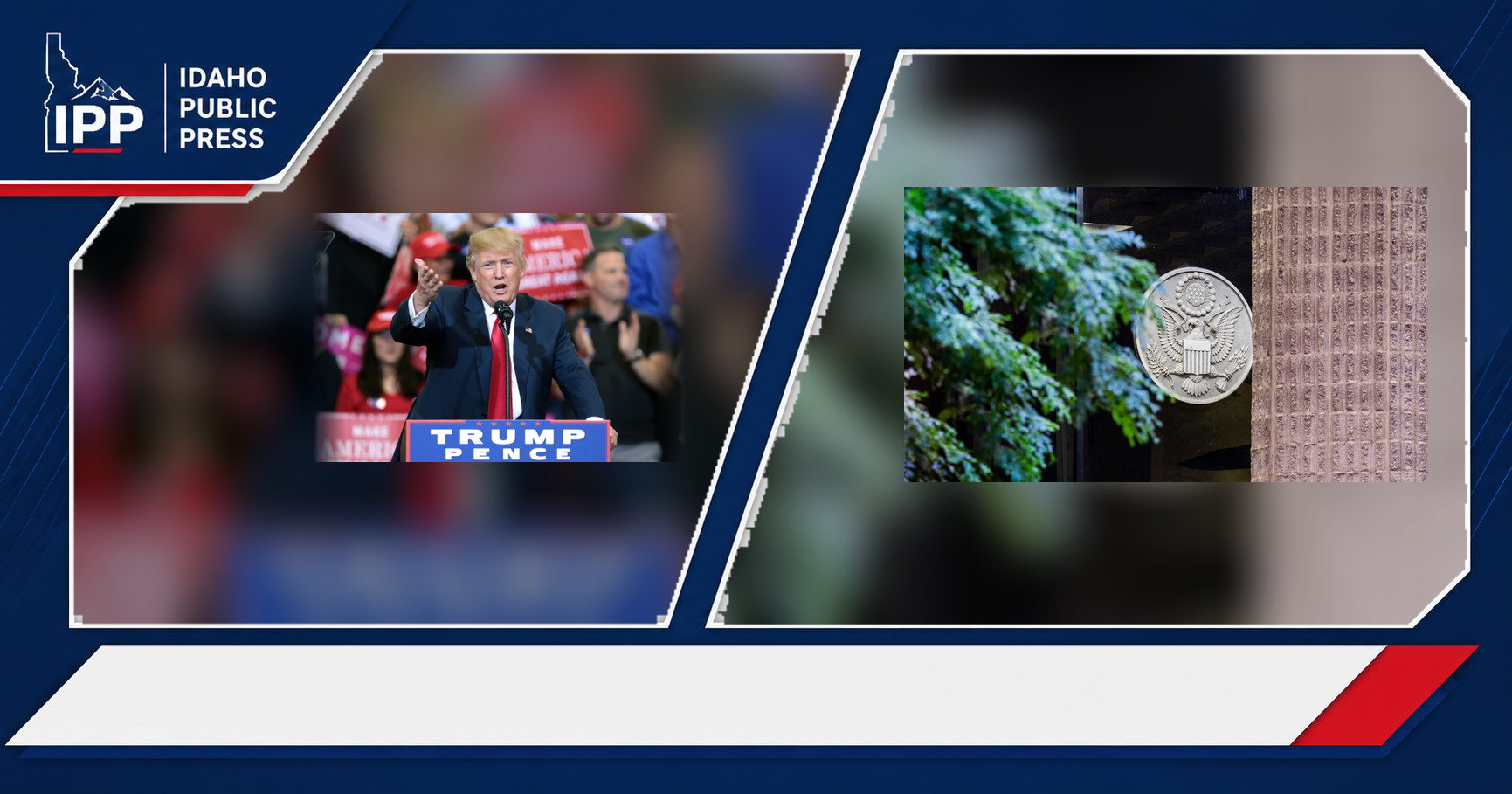
The court’s decision closes Trump’s bid to overturn the 2023 verdict in Carroll’s civil case. It does not resolve a separate, far larger defamation judgment that remains under challenge.
The U.S. Supreme Court declined to rehear Donald Trump’s appeal in the $5 million E. Jean Carroll case, leaving the civil jury’s verdict and damages award in place. The appeal concerned Carroll’s claim that Trump sexually abused her in the 1990s and later defamed her when he denied it.
The court gave no explanation for declining the case, which is typical when it refuses to take up an appeal. The outcome ends Trump’s effort to overturn the 2023 verdict in this case, though a separate $83 million Carroll defamation judgment follows its own legal path.
The court declined to intervene
Trump had asked the nation’s highest court to review a lower-court ruling that upheld the verdict from a federal civil trial in New York. The Supreme Court’s decision not to hear the appeal means that lower-court outcome stands.
This was not a fresh Supreme Court finding about what occurred between Trump and Carroll. Rather, it was a decision not to revisit the legal arguments already considered by the trial court and federal appeals court.
In practical terms, the denial leaves intact the jury’s award of $5 million to Carroll. The verdict included findings that Trump sexually abused Carroll and defamed her.
What the 2023 jury decided
Carroll, a former magazine columnist, sued Trump under New York’s Adult Survivors Act, a law that briefly opened a window for certain older sexual-assault claims to be brought in civil court.
She said Trump attacked her in a Manhattan department-store dressing room in the mid-1990s. Trump denied her account, said the encounter did not happen and argued that Carroll’s claim was false.
After the 2023 trial, a jury found Trump liable for sexual abuse and defamation. It awarded Carroll $2 million for sexual abuse and nearly $3 million for defamation, totaling about $5 million.
The jury did not find Trump liable for rape under the specific definition used in New York’s penal law. That distinction has been central to public discussion of the verdict, although the jury’s sexual-abuse and defamation findings remained legally significant.
Trump challenged evidence at trial
Trump’s Supreme Court petition focused in part on evidence admitted during the trial. His lawyers argued that the judge improperly allowed jurors to see the 2005 Access Hollywood recording in which Trump spoke about kissing and groping women.
Trump also objected to testimony from two women who accused him of earlier sexual misconduct. The trial judge allowed that evidence under federal rules that can permit proof of other alleged sexual assaults in certain civil cases.
A federal appeals court rejected Trump’s challenge and concluded that a new trial was not warranted. Trump then sought Supreme Court review, his final available route for overturning the $5 million verdict.
Trump has continued to criticize the case publicly, describing it as politically motivated and disputing the legal process. Those statements reflect his position; they do not alter the verdict left standing by the courts.
Carroll calls the ruling final
Carroll’s attorney, Roberta Kaplan, said the Supreme Court’s decision affirmed the jury’s unanimous verdict and ended Trump’s attempts to avoid the outcome in the $5 million case.
That characterization captures the procedural consequence: there is no further ordinary appeal from the Supreme Court’s refusal to take the case. The judgment is no longer subject to review through this appeal route.
Still, the court’s order was not an endorsement of either side’s full account of the litigation. Supreme Court denials typically come without explanation and do not set legal precedent or signal agreement with the lower court’s reasoning.
The separate $83 million case remains
Readers may see two different Carroll damage figures because Trump and Carroll have litigated more than one civil case. The Supreme Court action concerns the $5 million 2023 verdict, not the later $83 million judgment.
The $83 million award came from a separate jury verdict in 2024 over defamatory statements Trump made about Carroll after the first verdict. A federal appeals panel rejected Trump’s appeal in that case, but its legal status should not be conflated with the Supreme Court’s action on the earlier case.
The cases are connected by the same parties and related allegations, yet they involve different statements, different trials and dramatically different damages awards. Keeping them separate is essential to understanding what the latest court action does—and does not—settle.
Why the refusal matters now
The Supreme Court’s move delivers a definitive legal endpoint to one of the civil cases involving Trump and Carroll. For Carroll, it preserves the monetary award and the jury findings. For Trump, it removes a final appellate avenue in the $5 million matter.
The decision also underscores a narrow but important point about Supreme Court practice: the justices hear only a small share of petitions, and a refusal to take a case is usually terse. The court did not issue an opinion, revisit trial testimony or establish a broader rule about civil sexual-abuse claims.
What remains unresolved is the ultimate disposition of the separate $83 million defamation judgment and any additional proceedings connected to it. But on the 2023 $5 million verdict, the litigation has reached its endpoint.





Leave a Reply