

The numbers point to more than one unpopular ruling. They show a legitimacy problem building around an institution that depends on public acceptance but does not answer to voters.
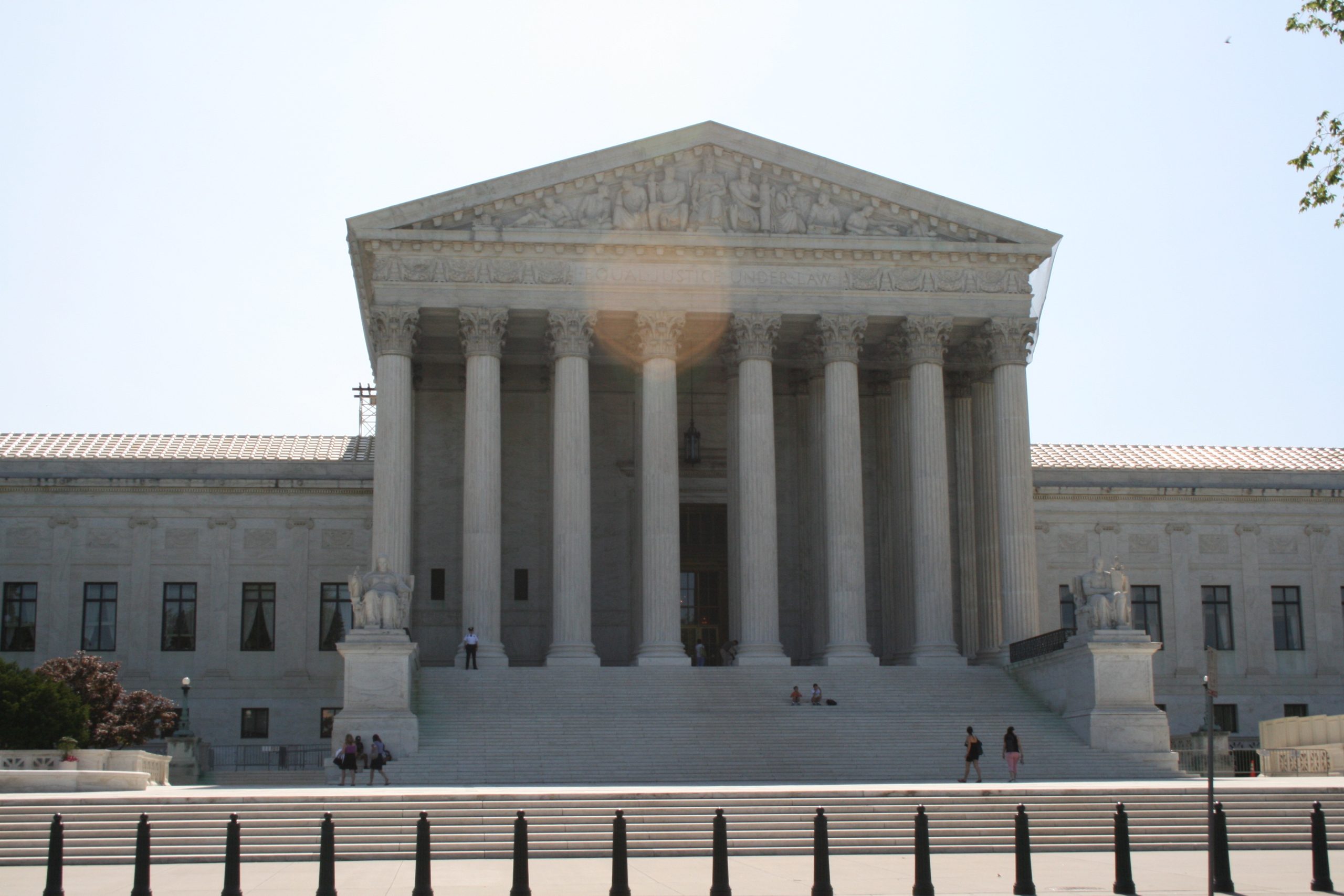
Public approval of the U.S. Supreme Court has fallen to a record low in the United States, according to an NBC News poll of registered voters conducted Feb. 27-March 3. The survey found the court at its lowest level on record since NBC began asking the confidence question in 2000: 22% said they had a great deal or quite a bit of confidence in the Supreme Court.
That is not a survey of all adults, and the wording measured confidence rather than job approval, but the signal is blunt: declining confidence is weakening the court’s public standing at a volatile moment.
The poll’s stark numbers
The NBC News poll found 40% of registered voters said they had some confidence in the high court, while 38% said they had very little or no confidence.
The 22% high-confidence figure is below the previous NBC News low of 27%, recorded after the Supreme Court overturned Roe v. Wade in 2022. The court’s high-water mark in the NBC series was 52% in December 2000, before the Bush v. Gore ruling that helped settle the presidential election.
The survey was conducted among 1,000 registered voters using a mix of telephone interviews and an online survey sent by text message. NBC News reported a margin of error of plus or minus 3.1 percentage points.
That methodology matters because “public approval” is often used as a shorthand for the court’s standing, but this poll asked about confidence. The distinction is real. Still, for an institution whose authority rests heavily on legitimacy, a record low in confidence carries political weight.
Why this record matters
The Supreme Court does not run for reelection. Its justices have lifetime appointments, and they are insulated by design from short-term public anger.
That insulation is supposed to protect constitutional judgment from political pressure. It also creates a tension: the court can ignore polls, but it cannot function well if large portions of the country see it as just another political actor.
Unlike Congress or the presidency, the court has no army of its own to enforce decisions. It relies on other officials, lower courts and the public’s acceptance of its authority. When trust erodes, every major ruling risks being filtered first through partisan suspicion.
That is the deeper warning inside the NBC numbers. The problem is not merely that one side is angry. The survey suggests confidence has weakened broadly enough to make the court’s legitimacy a recurring issue rather than a temporary reaction.
Partisanship cuts both ways
Republicans still express more confidence in the court than Democrats do, according to NBC News, but neither party’s numbers give the court much comfort.
In the latest survey, 35% of Republicans said they had a great deal or quite a bit of confidence in the Supreme Court. Among Democrats, that figure was 9%.
Those numbers reflect years of bruising fights over the court’s conservative majority, including abortion, voting rights, presidential power and the role of federal agencies. The current court has a 6-3 conservative majority, a fact that shapes how many voters interpret its major rulings before they even read them.
Jeff Horwitt, a Democratic pollster with Hart Research Associates who conducted the survey with Republican pollster Bill McInturff of Public Opinion Strategies, told NBC News that controversial rulings are one thing, but a loss of respect is another. His point was that the court is not simply angering voters; it is losing confidence as it does so.
Rulings are driving perceptions
The court’s public standing has taken repeated hits around its most visible decisions. The 2022 decision overturning federal abortion rights was a major inflection point, especially among Democrats.
NBC News also pointed to a 2024 poll conducted after the Supreme Court ruled that President Donald Trump had broad criminal immunity in a case tied to his actions before the Jan. 6, 2021, attack on the U.S. Capitol. In that survey, 55% of Republicans said they had a great deal or quite a bit of confidence in the court, while 4% of Democrats said the same.
The latest survey followed another high-profile ruling: the court striking down Trump’s sweeping tariffs, according to NBC News. That decision drew approval from 54% of voters in the poll, while 27% disapproved. The same survey found 55% said Trump’s tariffs were hurting the economy, compared with 33% who said they were helping.
That mix complicates the easy partisan story. A court with a conservative majority can still disappoint conservatives. If it hands losses to Trump on major issues, Republican confidence may weaken further, even as some Democrats reassess. Public trust is not fixed; it moves with the cases people notice.
The justices’ competing argument
There is a serious counterpoint: courts are not supposed to chase popularity. A ruling can be legally sound and deeply unpopular. If judges treat polling as a command, judicial independence collapses into politics by another name.
Chief Justice John Roberts made that argument in 2022, saying disagreement with an opinion is not, by itself, a basis for questioning the court’s legitimacy. That view remains central to the court’s self-defense.
Justice Elena Kagan, from the court’s liberal wing, has framed the danger differently. She warned in 2022 that courts run into trouble when people see them as extensions of the political process or as imposing personal preferences rather than law.
Both views can be true at once. The court should not decide cases to win applause. But if voters increasingly believe decisions are political outcomes dressed in legal language, the court’s independence becomes harder to defend.
What remains unclear
One poll does not prove a permanent collapse in the Supreme Court’s standing. It does show that the court is sitting at the lowest point in NBC News’ confidence trend, with a larger share of voters expressing very little or no confidence than expressing high confidence.
The next question is whether the number rebounds after less divisive terms or worsens as the court moves through more politically explosive cases. Issues tied to presidential power, immigration, elections and individual rights can quickly turn legal disputes into national loyalty tests.
The justices may not answer to voters, but they do operate in a country where confidence is part of the institution’s operating system. The NBC News poll is a reminder that the court’s authority is not only written into the Constitution. It is also granted, day by day, by people willing to accept its judgments even when they lose.
Right now, that willingness looks more fragile than at any point in NBC’s polling record.











Leave a Reply