
The request puts a pointed question to the Pentagon before November’s midterm elections: what safeguards will keep the military out of a contested civilian vote? It also revives a debate over presidential power, election security and the military’s nonpartisan role.
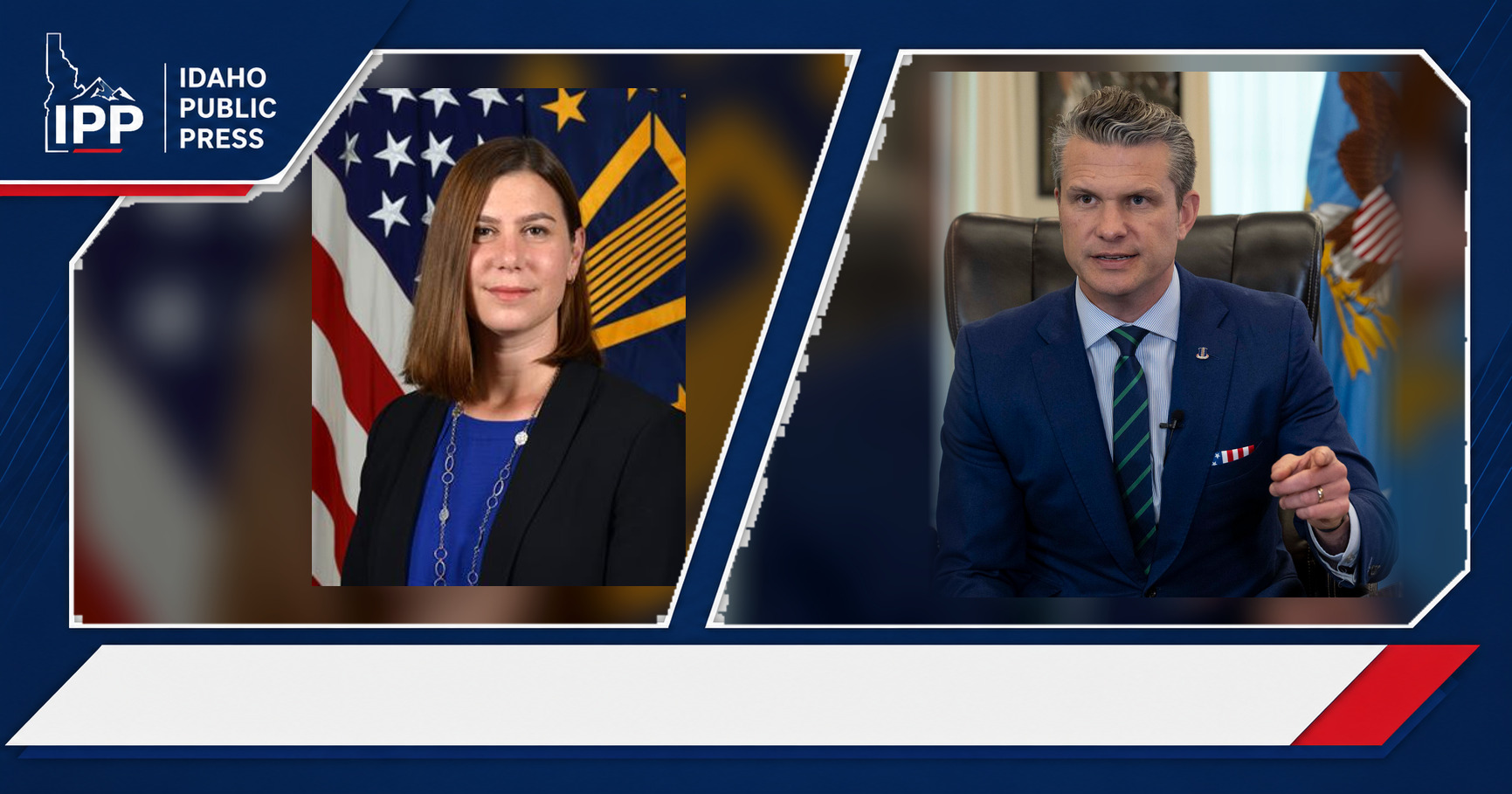
Sen. Elissa Slotkin pressed Defense Secretary Pete Hegseth and Gen. Dan Caine for a commitment Tuesday that the U.S. military will stay out of November’s midterm elections. The Michigan Democrat sought assurances that U.S. troops would not be sent to polling places, used to seize election materials or otherwise drawn into election activity in the United States.
Slotkin’s request does not point to a publicly announced Pentagon plan to deploy troops for the vote. Its significance is the boundary she wants Hegseth and Caine to state plainly: election disputes belong to civilian institutions, not the armed forces.
Slotkin wants a direct answer
In letters to Hegseth and Caine, the chairman of the Joint Chiefs of Staff, Slotkin asked them to confirm that the Defense Department would not send federal troops to polling sites or seize election materials.

That wording matters. It addresses both the physical presence of troops at voting locations and the possibility of military involvement with ballots, voting machines or other records tied to an election.
The Pentagon said it would respond directly to Slotkin, as it does with congressional correspondence. The Joint Chiefs did not immediately provide a response, according to the Associated Press.
For now, that leaves Slotkin without the unambiguous public commitment she requested. A routine reply to a senator is not necessarily a policy announcement, but the absence of an immediate answer has kept attention on the question she raised.
Why the concern is surfacing now
Slotkin told the AP that she fears President Donald Trump could challenge an unfavorable midterm result and attempt to frame it as illegitimate. That is Slotkin’s assessment, not evidence of a current order to involve the military.
She pointed to Trump’s actions and discussions surrounding the 2020 election, when he contemplated using the military to seize voting machines after his defeat. She also cited more recent deployments of the National Guard to cities over the objections of Democratic officials, as well as the use of active-duty Marines in Los Angeles during an immigration crackdown in 2025.
Those episodes involve different legal circumstances from staffing election sites. Still, Slotkin’s argument is that they make it reasonable to seek a commitment before voting begins rather than after a dispute erupts.
The White House has rejected the underlying premise. Chief of staff Susie Wiles said in a Vanity Fair interview last year that claims Trump would use the military to suppress voting in the midterms were “categorically false” and would not happen.
The legal line around polling places
Federal law generally bars the deployment of armed federal forces at election locations unless it is necessary to repel armed enemies of the United States, according to the AP report. The standard is intentionally narrow.
That does not mean military personnel have no connection to elections. Service members can vote, and the armed forces help administer absentee voting for military and overseas voters. Those routine functions are different from placing troops at civilian polling sites or using military power to collect election materials.
The National Guard adds another layer. Guard forces operating under state authority are not the same as federal troops under Pentagon command. If military personnel were involved in an election-related security situation, that distinction could become central to the legal and political debate.
State and local officials typically administer elections, while courts and Congress handle formal disputes under the governing legal processes. The key concern behind Slotkin’s letter is whether any federal military role could blur those civilian lines.
Hegseth faced the question before
Slotkin raised a related scenario with Hegseth during an April congressional hearing, asking whether he would follow an order to seize ballots. Hegseth characterized the question as a “gotcha hypothetical.”
He also said he had never been ordered to do anything illegal and would not carry out an illegal order. That answer expressed a limit, but it was not the specific assurance Slotkin is now seeking about troops at polls and election materials.
Her latest letters appear designed to turn a hypothetical exchange into a written record. A written response could clarify how Hegseth and Caine view the department’s obligations if an election-related request reaches the Pentagon.
Supporters of Slotkin’s approach can argue that clear rules protect both voters and service members from political pressure. Critics may view the request as amplifying a scenario for which no public operational plan has been presented. Both views center on the same point: confidence depends on knowing where the line is before a crisis.
A nonpartisan military is the stake
The modern U.S. military’s professional legitimacy rests heavily on its separation from partisan contests. Military leaders have repeatedly emphasized that service members serve the Constitution and civilian leadership, not a political party or candidate.
Slotkin has asked such questions before. In 2020, then-Rep. Slotkin wrote to Gen. Mark Milley, who was chairman of the Joint Chiefs at the time, about military involvement in an election dispute.
Milley replied that he believed deeply in an apolitical U.S. military and said election disputes are to be resolved by U.S. courts and Congress, not the military. That earlier response is the kind of institutional reassurance Slotkin is seeking again.
There is a practical reason for that clarity. Even a limited military presence near voting operations could be interpreted differently by voters, local election workers and state officials, especially in a polarized environment. Preventing that ambiguity is one reason civilian control and military nonpartisanship are treated as more than ceremonial principles.
What remains unresolved before November
The central unresolved issue is whether Hegseth and Caine will give the categorical commitment Slotkin requested. The Pentagon has said only that it will reply directly to her, and Caine’s office had not commented publicly.
No public evidence in the AP report indicates that the Defense Department plans to send federal troops to polling places or seize election materials. The White House’s prior denial likewise says such use of the military will not occur.
But Slotkin’s letters show that a denial from a political official and a formal commitment from the Pentagon are not the same thing in her view. She is seeking an on-the-record statement from the officials who would sit within the military chain of command.
As November approaches, the debate will likely remain focused on a basic democratic safeguard: voting is run by civilian authorities, and any challenge to the result must be settled through the law rather than through military force.





Leave a Reply