
The reversal shifts attention from the people charged to the government repair project at one of Washington’s most visible landmarks. Several questions remain about the contractor, the initial allegations and whether other cases still exist.
Federal prosecutors dropped the remaining vandalism cases involving the Lincoln Memorial Reflecting Pool in Washington, D.C., after concluding the damage was not caused by vandalism. Washington prosecutors moved to dismiss charges against the defendants, with the U.S. Attorney’s Office in D.C. abandoning cases tied to David Hearn, Justin Carreno, Sophie Dennison-Gibby and Cameron Thiers.
The reversal matters because the Reflecting Pool damage had been publicly framed as an attack on a national landmark. Now, the central dispute has shifted to whether a failed repair job — not the people charged — caused the pool’s blue lining to peel and fail.
A prosecution theory falls apart
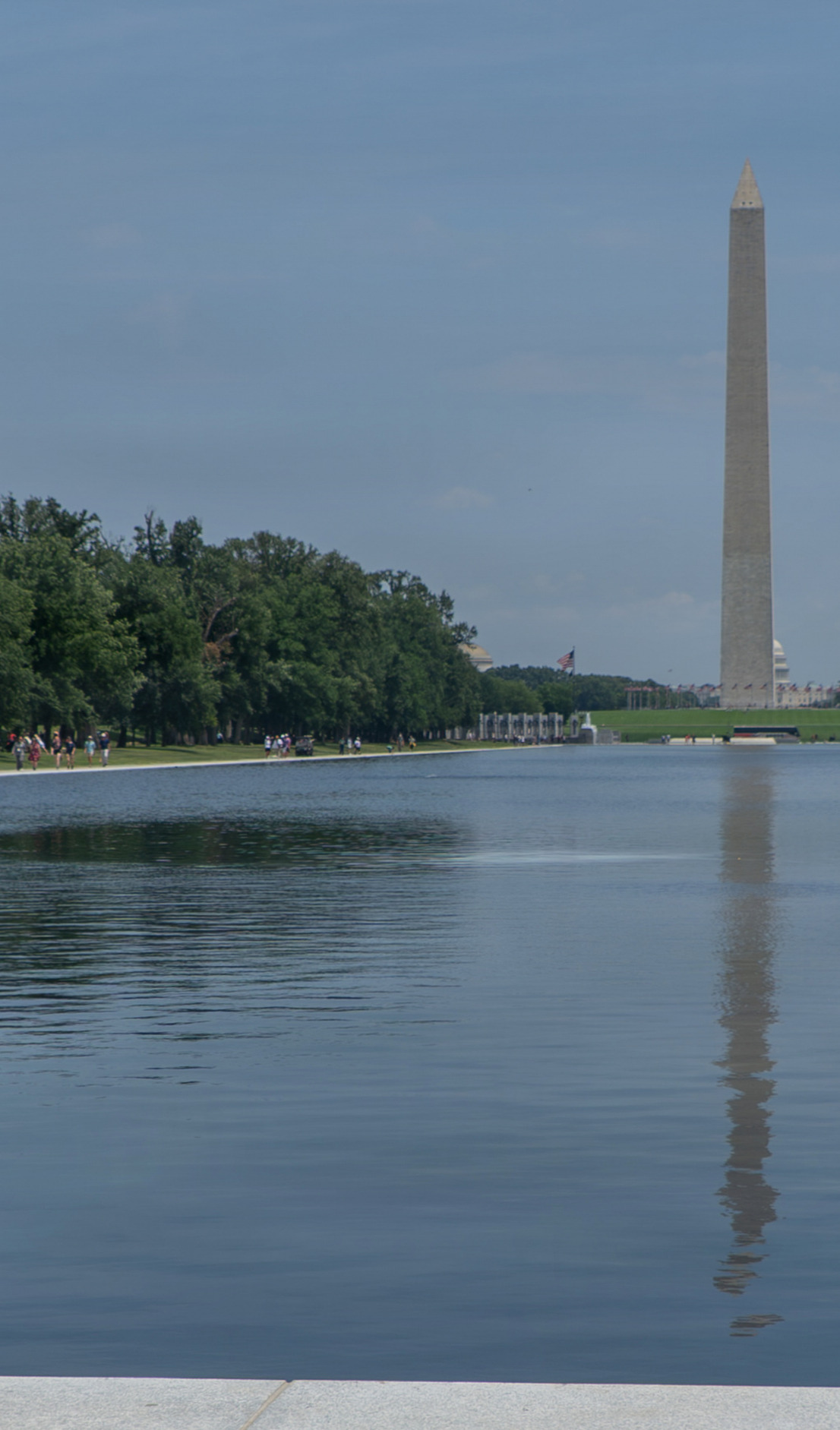
The dismissals mark a sharp turn in cases that had carried both legal and symbolic weight. The Lincoln Memorial Reflecting Pool is not just another public site; it sits on one of the most photographed stretches of the National Mall, between the Lincoln Memorial and the Washington Monument.
According to reporting on the court filings, U.S. Attorney Jeanine Pirro’s office moved to end the cases after investigators concluded that “the damage was the result of a botched installation and not vandalism.” That finding undercut the basic premise of the prosecutions.
The most serious case was against David Hearn, a former Olympic canoeist, who had faced a felony allegation connected to damage at the pool. Prosecutors first moved to dismiss his case, then followed with motions involving three misdemeanor defendants: Justin Carreno, Sophie Dennison-Gibby and Cameron Thiers.
Those three had been charged with destruction of property under $1,000, according to the reported filings. The shift means the publicly identified cases are no longer proceeding on the theory that the defendants caused the widespread damage.
The contractor question now looms
The new focus is the repair work itself. The Interior Department, which oversees the site, had awarded a no-bid contract to Atlantic Industrial Coatings, a Virginia firm, to address long-running problems at the Reflecting Pool.
The pool has had a history of water leaking between its long concrete slabs. This year’s project was supposed to help fix the site, but the new blue coating reportedly began failing almost immediately after completion.
Pirro’s filing blamed a “flawed installation” and pointed to a rush to complete the work ahead of the America 250 celebration on July 4. That is a different kind of public problem: less dramatic than vandalism, but potentially more consequential for how federal agencies manage high-profile repairs.
If the coating failed because of contractor error, the unanswered questions move from criminal intent to procurement, inspection and accountability. Who approved the work, what testing was done, and whether taxpayers will bear the cost of another fix are now central issues.
How defendants were pulled in
The people charged were swept into a case that prosecutors now say rested on the wrong explanation for the damage. That does not erase the fact that they were accused in court, faced potential penalties and were publicly associated with damage to a national memorial.
G. Allen Dale, an attorney for Cameron Thiers, told The New York Times that prosecutors contacted him by email about their intent to drop the case. “Mr. Thiers and I are both very happy this case is over,” Dale said. “It probably shouldn’t have been brought in the first place.”
Jamison Koehler, who represents Sophie Dennison-Gibby, said his client was relieved after facing the possibility of jail time. He also said she had been frightened by the prospect of the federal government bringing its full force against her and others.
Dismissal is not the same as a finding that every factual question has been resolved. But in practical terms, prosecutors no longer appear prepared to tell a judge that these defendants were responsible for the damage that prompted the cases.
Politics amplified the damage claims
The Reflecting Pool cases unfolded in an unusually charged atmosphere. President Trump had been focused for months on the pool’s condition, according to the reporting, and administration officials initially blamed vandals after the new lining began peeling.
That public framing raised the stakes for the defendants. Damage to a landmark like the Lincoln Memorial Reflecting Pool can quickly become more than a maintenance issue; it can be cast as disrespect toward a national symbol.
There is a fair argument that prosecutors and federal agencies should take alleged vandalism at memorials seriously. Public monuments are expensive to maintain, emotionally significant and vulnerable to damage.
But serious attention also requires restraint. When an accusation involves a famous site and political pressure, the government’s obligation to verify the cause becomes even more important, not less.
What remains unclear
The U.S. Attorney’s Office in D.C. did not expand publicly on the dismissals; spokesman Timothy Lauer declined to comment, according to the report. That leaves several parts of the story unresolved.
Earlier this summer, federal officials said at least seven people had been accused of vandalizing the pool. The identities of any others and the status of any possible cases were not immediately clear. That makes the phrase “remaining cases” most precise when applied to the publicly identified prosecutions described in the recent filings.
It is also unclear what consequences, if any, Atlantic Industrial Coatings may face. The reported filings place blame on a faulty installation, but court motions to dismiss criminal charges do not by themselves determine civil liability, contract penalties or agency discipline.
Another open question is whether the Interior Department will release more detail about what went wrong. A public explanation would matter because the site belongs to the public, the contract involved federal decision-making, and the failed work became the basis for criminal accusations.
The takeaway for a public landmark
The Reflecting Pool reversal shows how quickly a visible maintenance failure can become a criminal case, a political talking point and then a government embarrassment. The damage was real. The dispute is over who or what caused it.
For the defendants, the immediate outcome is relief from prosecution in the cases prosecutors moved to dismiss. For the public, the larger issue is whether federal officials moved too quickly from damaged property to criminal blame.
The Lincoln Memorial Reflecting Pool will still need repairs, and officials will still need to protect national landmarks from actual vandalism. But after these dismissals, the next hard look belongs not to alleged vandals, but to the repair process that prosecutors now say failed.









Leave a Reply