
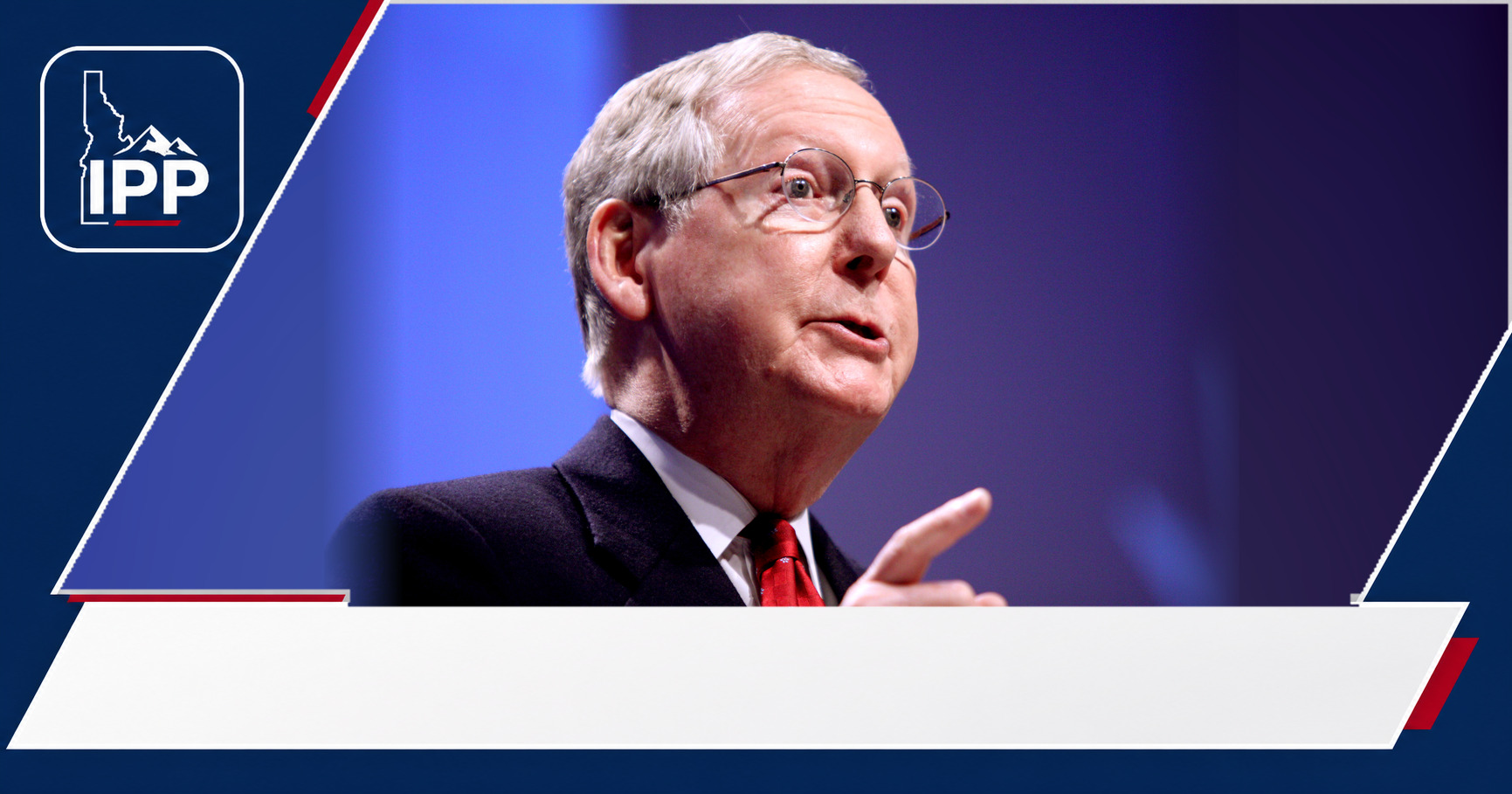
McConnell is not leaving the chamber immediately, but his decision starts the political endgame for one of Washington’s most consequential Republicans. The fight to replace him is already testing where Kentucky’s GOP goes next.
Mitch McConnell will not seek reelection in 2026, and he is retiring when his current term ends, closing a seventh term for Kentucky in the U.S. Senate. The Washington announcement, made Thursday on his 83rd birthday, means this article explains why his departure matters for the Senate, Republicans and Kentucky politics now.
The point is not that McConnell has vanished from the Capitol overnight. It is that one of the Senate’s most durable power brokers has placed an end date on a career that shaped courts, party strategy and Kentucky’s influence in Washington for four decades.
A retirement with two clocks
McConnell’s decision creates two timelines at once. In the official one, he remains a sitting senator until his term ends in January 2027. In the political one, the succession fight has already begun.

The Associated Press reported that McConnell told colleagues he would not seek an eighth term, saying his current term would be his last. He also signaled that he intends to keep working, telling senators he had unfinished business.
That distinction matters. An announced retirement can reduce a senator’s future leverage, but it does not erase present authority. McConnell still has a vote, a committee perch and decades of relationships that younger senators do not.
Still, the announcement turns every McConnell move into part of an exit chapter. The question in Washington is no longer whether he plans another race. It is how much influence he can exercise before the clock runs out.
Why McConnell mattered so much
McConnell was first elected to the Senate in 1984 and became the longest-serving Senate party leader in U.S. history. His reputation was built less on soaring speeches than on patience, vote-counting and a willingness to use Senate rules aggressively.
Supporters see him as a disciplined conservative strategist who delivered lasting wins, especially on the federal judiciary. Reuters described his career as one that helped shape the Supreme Court’s conservative direction, a legacy that will outlast his time in office.
Critics see the same record differently. To them, McConnell’s hardball tactics deepened partisan distrust and turned institutional power into a permanent campaign weapon. His handling of judicial confirmations became a defining example of that divide.
Both readings can be true in political terms. McConnell was effective, and his effectiveness often came from making the Senate more combative. That is why his departure feels larger than a single retirement announcement.
Trump’s GOP moved past him
McConnell’s exit also marks a generational and ideological shift inside the Republican Party. He came from a Reagan-style Republican tradition: hawkish abroad, business-friendly at home and deeply invested in the Senate as an institution.
The party he is leaving is more openly shaped by Donald Trump’s populist politics. AP noted that McConnell’s power had diminished alongside his strained relationship with Trump and the changing dynamics of the GOP.
That does not mean McConnell became irrelevant. He remained a symbol of Republican establishment power, and for many conservatives, a symbol of major conservative victories. But the party’s center of gravity is no longer where McConnell spent decades building it.
The irony is hard to miss. McConnell helped Republicans win control of institutions that still shape American life. Yet the party’s future candidates increasingly run by promising to be less like the old Washington leadership he embodied.
Kentucky’s open-seat scramble
In Kentucky, McConnell’s announcement turns a safe Republican seat into a major intraparty contest. The state still leans strongly Republican in federal races, but an open Senate seat invites ambition, money and national attention.
Former Kentucky Attorney General Daniel Cameron quickly moved into the race, according to AP. Cameron, who once worked as McConnell’s legal counsel, has emphasized his support for Trump and framed himself as part of a new generation.
Other names surfaced quickly. U.S. Rep. Andy Barr said he would decide soon about his future, while businessman Nate Morris was also described as a possible GOP contender. The shared theme is clear: any serious Republican candidate will have to speak fluently to Trump-aligned voters.
Democrats face a harder map. Kentucky Gov. Andy Beshear has shown he can win statewide as a Democrat, but AP reported that his political team reiterated he was not running for the Senate. Without him, Democrats would need another path in a race Republicans are favored to hold.
The Senate loses an operator
McConnell’s retirement removes a particular kind of Senate figure: the procedural operator who knew how to wait, block, bargain and move when the votes finally lined up. That skill set is less visible than televised confrontation, but it often decides outcomes.
His absence will matter for Republicans even if the seat stays in GOP hands. A new senator from Kentucky may vote similarly on many issues, but seniority and influence cannot be transferred like a campaign endorsement.
For the Senate itself, the loss is part of a broader turnover in institutional memory. Leaders who spent decades mastering the chamber’s rules are giving way to politicians shaped by cable news, social media and primary pressure.
Some voters will welcome that change. Others will worry that losing institutionalists makes the Senate even more reactive and less capable of long-term deals. McConnell’s own career supplies evidence for both arguments: he revered the chamber, but he also helped make it a sharper partisan battlefield.
What remains unresolved
McConnell’s health has drawn attention in recent years, including falls and public episodes in which he appeared to freeze while speaking. AP reported that he walked gingerly to the podium for his announcement and wore a walking boot.
Those details add to public interest, but they should not blur the core fact: McConnell has announced a retirement at the end of his term, not an immediate resignation. Barring a change, Kentucky will not have an appointed replacement before the 2026 election.
The unanswered questions are political. How aggressively will McConnell try to shape the race to replace him? Will Kentucky Republicans choose a candidate with personal ties to him, or one who runs most clearly against the old establishment brand? And how much influence can McConnell still wield in Senate fights before 2027?
For now, the takeaway is simple. McConnell is still in the Senate, but the McConnell era is ending. Washington has nearly two years to watch the final act, while Kentucky Republicans begin deciding what comes after him.











Leave a Reply