
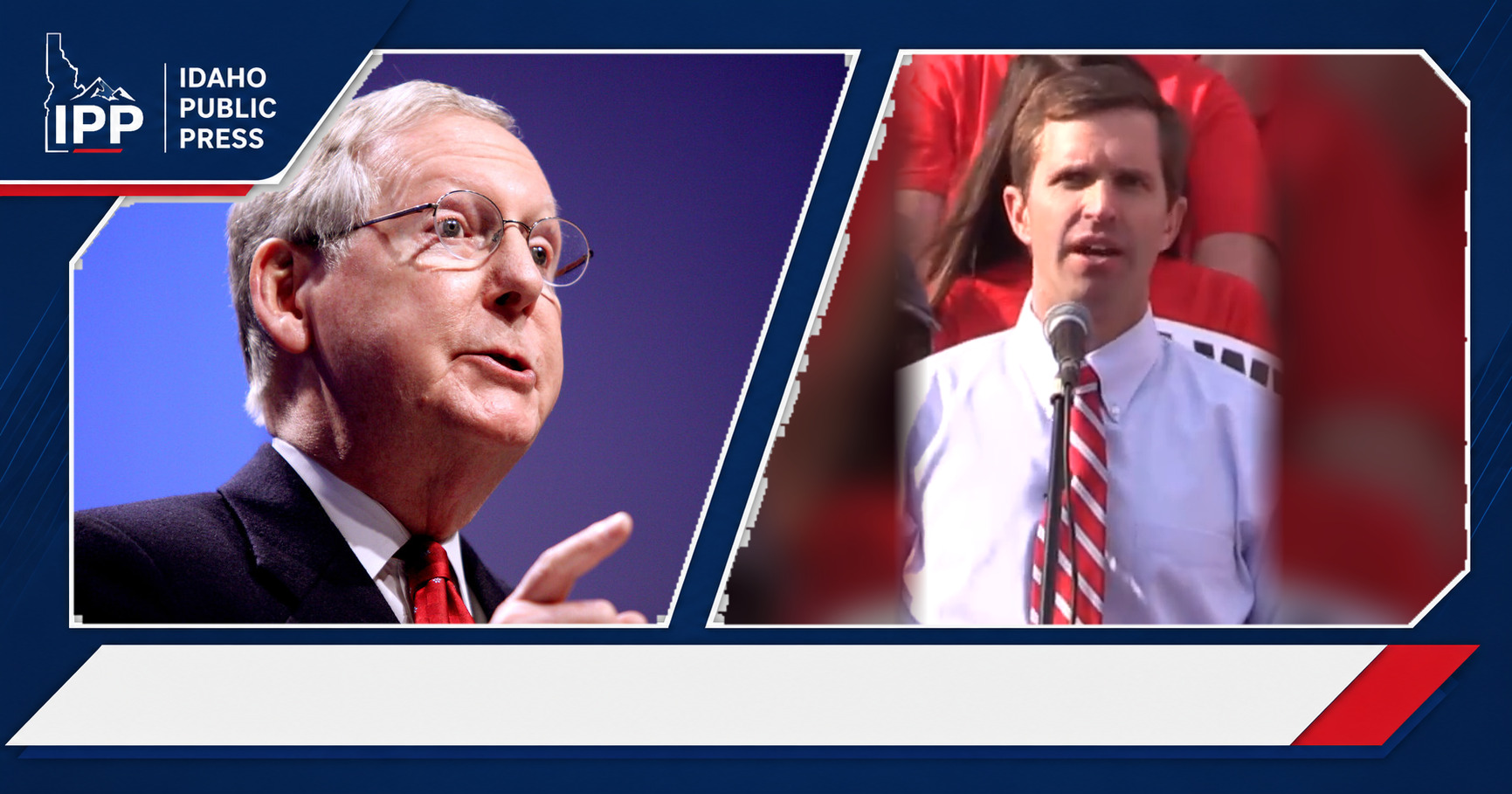
The clash puts a familiar Washington question in sharper Kentucky terms: how much should voters know when an elected official’s health may affect the job?
Kentucky Gov. Andy Beshear is urging Sen. Mitch McConnell to disclose more about his health or resign, sharpening criticism of McConnell’s ability to continue serving after weeks of limited public information. The pressure matters now because Kentuckians are being asked to trust that one of their two U.S. senators can do the job while McConnell’s office says he wants to get back out in Kentucky but is not yet medically cleared to leave rehab.
Beshear’s push follows his July 8 request for an update on McConnell’s health and well-being after reports that the senator was admitted to a hospital on June 14. What began as a call for transparency has become a demand that McConnell show he is fit for office or step aside.
Beshear turns up pressure
The governor’s office said on July 8 that Beshear sent a letter to McConnell’s office requesting an update “amid growing concerns around the Senator’s ability to serve.” In that statement, Beshear said Kentuckians had grown increasingly concerned over several weeks and that continued speculation was “not fair to the Senator or to Kentuckians.”
That language left room for McConnell to respond on his own terms. The newer message is sharper. According to AP, Beshear is now calling on McConnell to prove he is fit to keep serving after a lengthy hospital stay or resign from office.
The shift matters because Beshear is not merely asking for a personal health update. He is tying disclosure directly to representation. For voters, the practical question is whether McConnell can carry out the public duties of a U.S. senator while his office has provided limited detail about his condition and timetable.
Beshear has also tried to frame the request as a way to reduce rumor rather than feed it. His office said the governor was reaching out directly instead of contributing to speculation in the media and public space.
What McConnell’s office has said
McConnell’s office has released a statement, CNN reported. The senator says he wants to get back out in Kentucky, but he has not yet been medically cleared to leave rehab.
That statement confirms two important things without answering everything. McConnell remains away from normal public activity, and his return depends on medical clearance. It does not provide a detailed account of his condition, his day-to-day capacity, or when he may resume a fuller public schedule.
For any public official, especially one representing an entire state in the Senate, that gap can quickly become a political issue. Constituents do not need access to every private medical detail. But they do have a stake in knowing whether their elected official can vote, meet constituents, manage staff, and respond to state needs.
The line between privacy and public accountability is exactly where this dispute sits.
Why Kentucky voters care
Kentuckians are represented in Washington by two senators, and each seat carries real power over legislation, confirmations, federal spending fights and constituent services. If one senator is sidelined for an extended period, the impact is not abstract.
Beshear’s argument is that uncertainty itself has become a problem. His July 8 statement said his administration had seen a rise in inquiries about McConnell’s health status. That suggests the question had already moved beyond Washington gossip and into the everyday expectations voters have of their elected officials.
There is also a basic transparency issue. Elected officials routinely ask the public for trust. When health concerns affect visibility or participation, voters often want enough information to judge whether that trust is still warranted.
At the same time, health disclosure can become politically charged fast. A public figure may be recovering, working remotely, or following medical advice without being unable to serve. That is why specifics matter more than innuendo.
Privacy meets public duty
There is no simple rule for how much a senator must reveal about personal health. American politics has long depended on a mix of voluntary disclosure, statements from offices, doctor summaries and visible performance.
That system often works until it does not. When official updates are sparse, opponents can demand more, allies can accuse them of exploiting a medical issue, and voters are left trying to sort out what is relevant from what is merely personal.
Beshear’s position is that more disclosure would help McConnell as well as the public. In his July 8 statement, the governor said allowing speculation to continue was unfair to both the senator and Kentuckians, and that McConnell should be able to share information transparently and “direct from the source.”
That is the strongest version of the transparency argument: not that the public is entitled to every diagnosis or test result, but that a clear update could quiet speculation and establish whether McConnell is able to perform the job.
The politics are impossible to ignore
Beshear is a Democratic governor challenging a Republican senator who has long been one of Kentucky’s most powerful political figures. AP described Beshear as a rising national figure in the Democratic Party, which means his words will be read through a partisan lens even if the underlying question is about capacity to serve.
That does not make the question illegitimate. It does mean the demand will be judged differently depending on who is listening. McConnell’s supporters may see Beshear’s call as an opportunistic escalation. Critics of McConnell may see it as overdue accountability.
The timing also gives the story a sharper edge. Beshear first requested an update after reports that McConnell had been admitted to a hospital on June 14. Weeks later, the senator’s office is still describing a recovery process in which he wants to return to Kentucky but lacks medical clearance to leave rehab.
That leaves Beshear arguing that patience has limits when the office belongs to the public.
What remains unanswered
The central unknown is not whether McConnell has a right to medical privacy. He does. The unanswered question is what level of disclosure is sufficient when questions have been raised about his ability to continue serving.
Several practical details remain unclear from the public information available: whether McConnell is performing the full duties of the office, when doctors expect him to resume public travel, what accommodations are in place, and whether his staff or colleagues consider his Senate work uninterrupted.
Beshear’s demand raises the stakes, but it does not resolve them. The next move belongs largely to McConnell and his office: provide a fuller update, maintain the current level of disclosure, or push back against the premise that more information is owed.
For Kentuckians, the clean takeaway is that this is no longer just a story about a senator’s recovery. It is a test of how much clarity voters should expect when an elected official’s health, visibility and ability to serve are all under public scrutiny.










Leave a Reply