
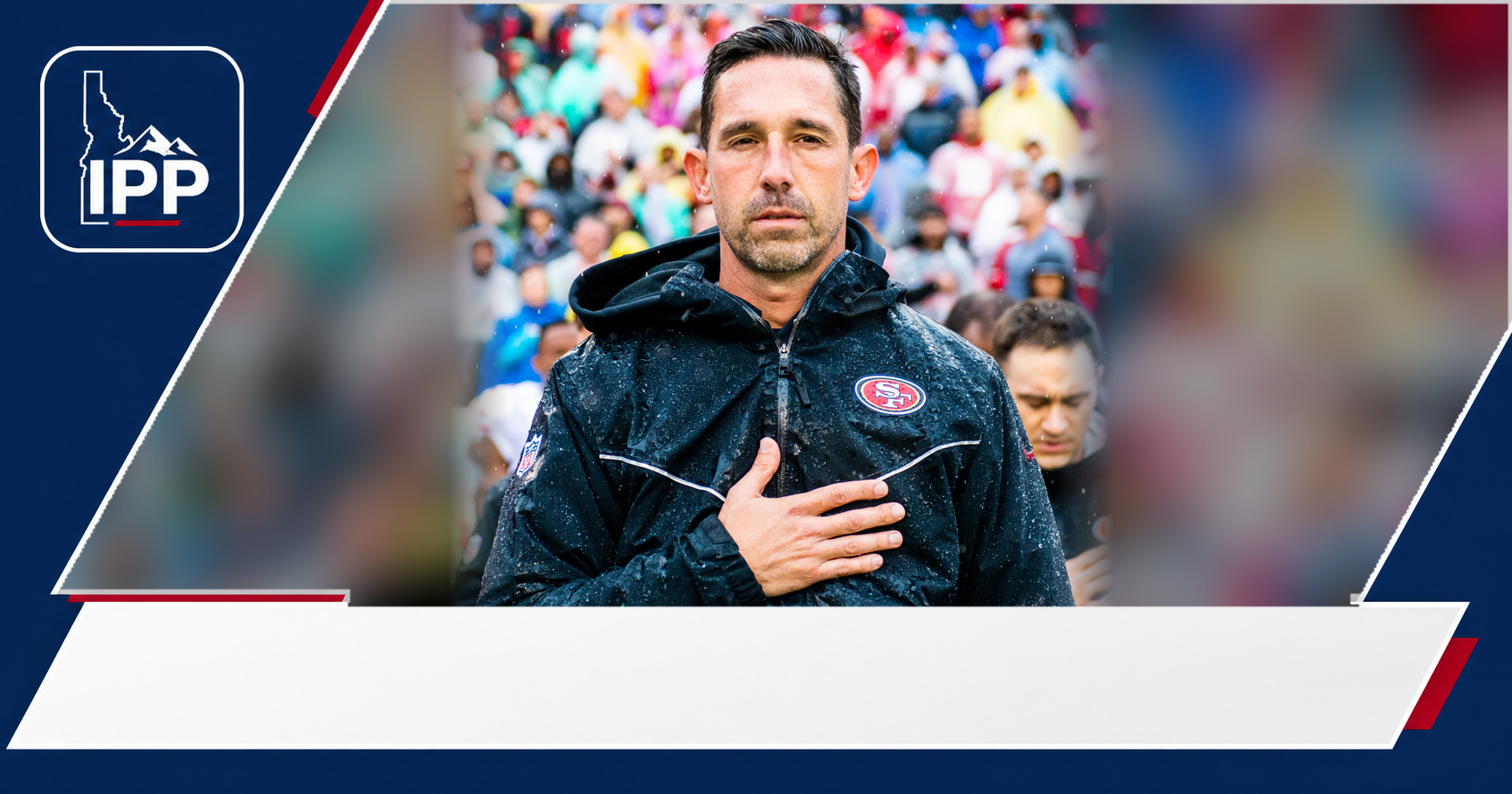
The 49ers coach said a dropped phone led him to take his eyes off the road before the collision. His explanation matters because an official database had wrongly indicated the 21-year-old other driver was at fault.
Kyle Shanahan said he was at fault in the July 14 crash, the accident happened in Palo Alto, and he clarified conflicting details about the crash on Tuesday after reports wrongly pointed blame at the other driver, a 21-year-old woman. The San Francisco 49ers head coach said a dropped phone caused him to look away before his vehicle crossed lanes and hit hers.
The clarification matters because the initial public confusion came from a state collision database, not just rumor. Shanahan’s account, later backed by Palo Alto police, shifted the story from an unclear accident report to a direct admission of responsibility.
Shanahan corrects the record
Speaking to a small group of reporters at the 49ers’ facility, Shanahan said he wanted to address the July 14 wreck because he was troubled that the other driver had been blamed publicly. The San Francisco Chronicle reported that Shanahan became emotional while discussing the crash and the woman involved.
His core explanation was direct: he said he caused the collision. Shanahan said he dropped his phone between the seats of his 2023 Tesla, looked down briefly, and swerved into a northbound lane on Alma Street in Palo Alto.
That is where his vehicle struck a 2025 Mercedes SUV driven by the 21-year-old woman, according to the Chronicle’s account. Shanahan said he was not using the phone at the time, but that the momentary distraction was enough.
“I hit her,” Shanahan said, according to the Chronicle. He also said he did not understand why the crash had been reported in a way that blamed the other driver.
A database error created confusion
The conflicting details appear to have started with the California Crash Reporting System, a statewide database of collisions. According to the Chronicle, that database had indicated the other driver was believed to be at fault.
The 49ers’ vice president of security, Jeremy Jones, told the Chronicle he was informed by Palo Alto Lt. Nicholas Martinez that a clerical error had been made when crash information was entered into the database. Palo Alto police later confirmed the error in a statement.
The department said Shanahan’s version of events was accurate and that he was found at fault for the collision. Police also said the report transmitted to the state database contained a clerical mistake that was being corrected.
That distinction is important. A mistaken database entry can travel quickly, especially when a public figure is involved. In this case, it briefly created the appearance that the younger driver caused a head-on collision before Shanahan and police said otherwise.
No citation, no preferential treatment
One detail likely to draw attention is that Shanahan was not cited in the July 14 crash. Palo Alto police addressed that point directly, saying neither party received preferential treatment.
The department said it is up to an officer at the scene whether to issue a citation in a collision. Police added that it is not unusual for officers to decide not to cite either driver after a crash.
That explanation does not erase every question readers may have, especially because Shanahan is a well-known NFL head coach and the collision caused serious injuries. But the official statement from police was clear on two points: Shanahan was at fault, and the absence of a citation was not described as special treatment.
The Chronicle also reported that state DMV records showed Shanahan had a clean driving record over a seven-year period, with no accidents before this crash.
The crash left serious injuries
Shanahan’s injuries were significant. He required 40 stitches for a laceration above and around his right eye, suffered three broken ribs, a broken left hand and a broken nose, and has continued to deal with concussion symptoms, according to the Chronicle.
He said the airbags hit his face as he looked up after taking his eyes off the road. The crash sent him to Stanford Hospital, where he spent about 10 hours the day of the collision.
The other driver suffered minor injuries, according to the Chronicle. Shanahan said hearing that she had been blamed for the crash “crushed” him, and he linked his decision to speak publicly to that misimpression.
His emotional response also puts the incident in a different light than a routine training-camp injury update. This was not only about whether the 49ers’ coach would be back on the field. It was also about correcting the public record for someone else involved in the crash.
Why the timing hit training camp
The crash happened before the 49ers moved fully into training camp, but its effects are still showing up in Shanahan’s work schedule. He has not returned to full-time coaching duties, according to the Chronicle.
Assistant head coach Chris Foerster and the team’s coordinators have taken on larger roles while Shanahan recovers. Shanahan has watched parts of practice from a distance, including standing behind the defense near general manager John Lynch.
That creates a practical football layer to a personal incident. Training camp is when teams install systems, evaluate depth and set the tone for a season. Shanahan’s offensive fingerprints are central to the 49ers, so even a temporary reduction in his workload is notable.
Still, the team appears to be operating with a built-in support structure. The more uncertain question is not whether the 49ers can hold practice without Shanahan fully engaged, but how quickly he can return without concussion symptoms becoming a setback.
What remains unresolved
Shanahan said he has been encouraged by recent progress, but he also acknowledged fatigue and headaches. He described noise and multiple people speaking at once as bothersome while he continues to recover.
There are also administrative loose ends. Police said the database error was being corrected, but public-facing mistakes can linger even after an agency fixes the record. The damage from an incorrect fault entry is often reputational before it is procedural.
What is clear now is the central fact Shanahan wanted known: he says he was responsible for the crash, and Palo Alto police say that account is correct. The other driver was wrongly identified in the state database as being at fault, according to police, and that error helped turn a private crash into a public clarification.
For Shanahan and the 49ers, the next step is recovery and a gradual return to his normal role. For the public record, the key update is simpler: the coach says the July 14 Palo Alto collision was his fault, not the 21-year-old woman’s.






Leave a Reply