
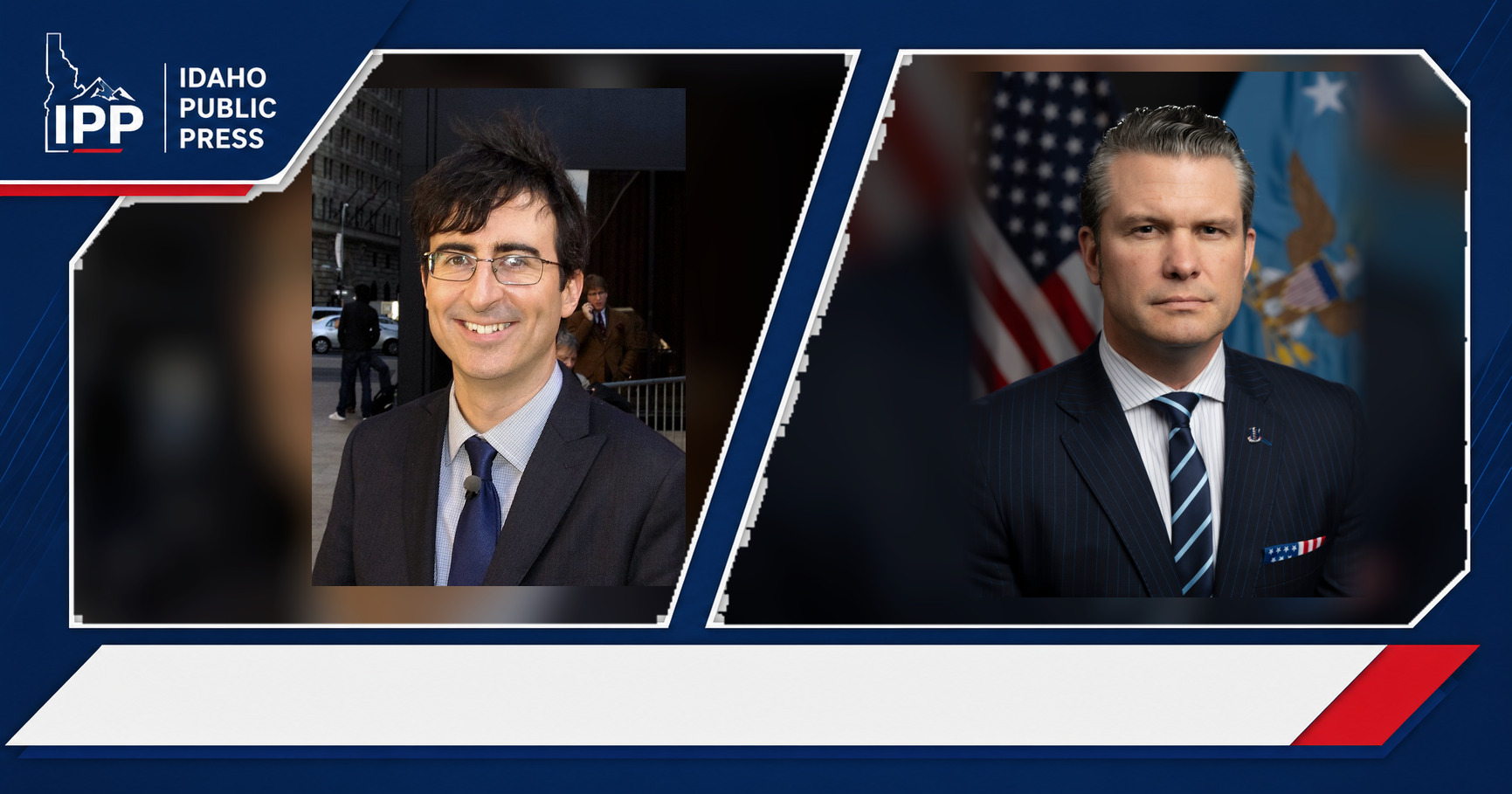
The supported record confirms Oliver’s Hegseth criticism and the carrier’s Navy history, but not the detailed conditions behind the “American horror story” framing.
A report from The Independent says John Oliver criticized Pete Hegseth in connection with the USS Abraham Lincoln and used the phrase “American horror story.” That is the core supported claim available here.
What the supplied material does not provide is just as important: it does not include a transcript of Oliver’s segment, a detailed account of the alleged conditions aboard the ship, a Navy response, or a response from Hegseth.
That leaves a narrower story than the headline language may suggest. Oliver’s criticism is documented by the report’s framing, while the factual basis behind the phrase remains unresolved in the material provided for this article.
What is actually supported
The available entertainment report identifies Oliver as criticizing Hegseth over the USS Abraham Lincoln. It also ties the “American horror story” wording to that criticism.
Those points can be reported with attribution. They establish that a high-profile television host made the carrier and Hegseth part of a public critique.
They do not, by themselves, establish what happened aboard the ship, who knew what, when any problem began, or what official action followed.
- Supported: The Independent reported that Oliver criticized Hegseth in connection with the USS Abraham Lincoln.
- Supported: The same report’s headline used the “American horror story” framing.
- Not established here: The specific onboard conditions Oliver was discussing.
- Not established here: Any response from Hegseth or the Navy to Oliver’s criticism.
What remains outside the available record
The supplied source material does not document detailed allegations about food, supplies, sanitation, maintenance, mental-health incidents, deployment length, or operational decisions affecting the carrier.
Because those details are not established in the evidence provided here, they should not be treated as verified facts in this article.
The same caution applies to responsibility. The available material does not identify a particular Hegseth decision, policy, denial, or directive tied to the USS Abraham Lincoln.
That does not prove Oliver’s criticism was misplaced. It means the evidence available for this write-up supports only a limited conclusion: Oliver publicly criticized Hegseth over the carrier, but the record here does not supply the underlying factual detail needed to judge the dispute fully.
The USS Abraham Lincoln has a long Navy record
Authoritative Navy history provides firmer ground on the ship itself. The Naval Air Force, U.S. Pacific Fleet says the USS Abraham Lincoln’s keel was laid on Nov. 3, 1984, at Newport News, Virginia.
The ship was commissioned on Nov. 11, 1989, in Norfolk, Virginia, according to that Navy history. After shakedown and acceptance trials, it departed Norfolk in September 1990 and later arrived in Alameda, California.
The Navy says the Lincoln’s May 1991 deployment was initially in response to Iraq’s annexation of Kuwait. The carrier was diverted instead to support evacuation operations after the eruption of Mount Pinatubo on Luzon Island in the Philippines.
That mission, Operation Fiery Vigil, became the largest recorded peacetime evacuation of active-duty military personnel and family members, according to the Navy. The Lincoln led a 23-ship armada that moved nearly 45,000 people from Subic Bay Naval Station to Cebu.
Why the ship context matters
The Lincoln’s history does not verify any present-day allegation referenced by Oliver. It does explain why comments involving the carrier can draw attention quickly.
An aircraft carrier is not an ordinary workplace or a symbolic backdrop. It is a major military platform with a large institutional history and a direct connection to service members, families and Navy readiness.
That makes precision especially important. Strong commentary can draw attention to a possible public-interest issue, but independently supported facts are still needed to establish scope, cause and accountability.
How to read the Hegseth angle
The available material supports saying that Oliver’s criticism was aimed at Hegseth in connection with the USS Abraham Lincoln. It does not show what Hegseth said in response, whether he addressed the matter, or what specific action Oliver attributed to him.
Without those details, the Hegseth angle should be treated as part of Oliver’s critique rather than as an independently verified account of official conduct.
A fuller account would require direct sourcing: the segment itself, the reporting Oliver relied on, any official Navy statement, and any response from Hegseth or the Defense Department.
The cautious takeaway
Oliver’s “American horror story” framing is memorable, and the report connecting that phrase to Hegseth and the USS Abraham Lincoln is the news hook.
But the supported record here is narrow. It verifies the existence of the reported criticism and provides established Navy history about the carrier. It does not verify the detailed conditions or official responses that would be needed to turn Oliver’s critique into a complete factual account.
For now, the most accurate reading is a cautious one: Oliver’s criticism has put the USS Abraham Lincoln back in public view, while the key facts behind the phrase still require stronger sourcing.





Leave a Reply