

The Eagles are locking up one of the NFL’s best young defensive tackles. The catch is that record NFL money is never as simple as the number in the headline.
Jalen Carter signed a record-breaking new NFL contract with the Philadelphia Eagles on Tuesday, July 28, 2026, and he could lose at least $50 million once the financial consequences of the deal are counted. The NFL deal, announced by Carter and the Eagles, is a four-year extension through 2031; The Associated Press reported a person with knowledge said it includes $106 million guaranteed, making the two-time Pro Bowl defensive tackle the league’s highest-paid at his position.
So when Carter faces losing a huge chunk of that headline money, the point is not that Philadelphia suddenly soured on him. It is that record NFL contracts come with a hard split between public value, guaranteed money and what a player ultimately keeps.
The record is the easy part
Carter’s extension lands at the center of the Eagles’ long-term roster plan. AP reported that the Eagles and Carter agreed to terms on a four-year extension through the 2031 season, after the team had already picked up his fifth-year option for 2027.
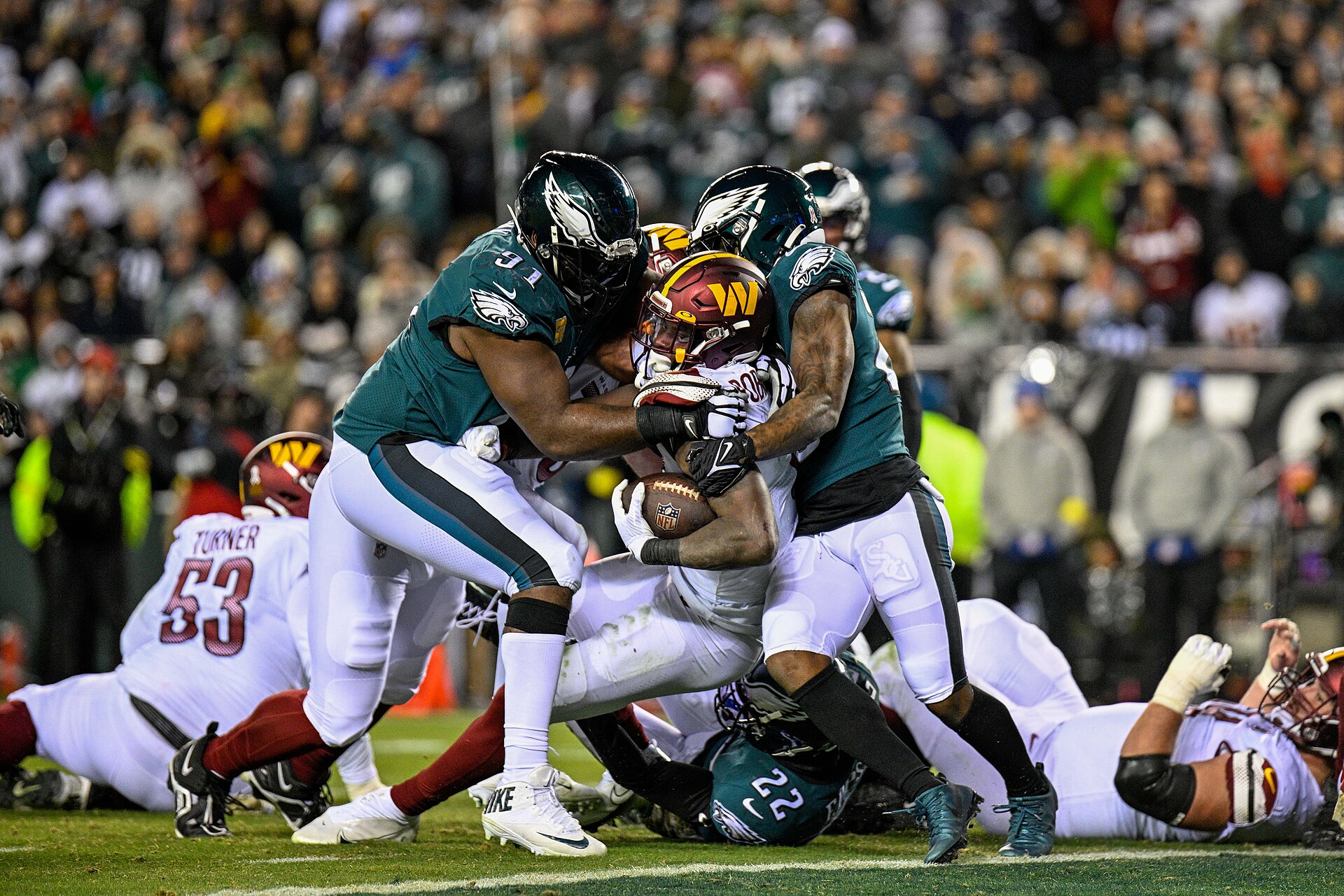
That timing matters. Philadelphia opened training camp this week with one of its most important young players no longer looming as a contract distraction. For a contender, paying early can be a football decision as much as a financial one.
Carter, the ninth pick in the 2023 NFL Draft, has built the résumé for that kind of deal quickly. He was runner-up for AP Defensive Rookie of the Year in 2023, has 13 1/2 sacks in 43 career games, earned Pro Bowl selections for the 2024 and 2025 seasons and played a key role when Philadelphia won the Super Bowl for the 2024 season.
The phrase record-breaking is not just agent spin here. AP reported the extension is set to make Carter the highest-paid defensive tackle in NFL history, with $106 million guaranteed according to a person familiar with the terms.
Where $50 million can go
The uncomfortable number is the potential gap between Carter’s contract headlines and his real net pay. A player can be guaranteed nine figures and still see tens of millions shaved off before money reaches long-term savings or investment accounts.
That is because NFL contract money is gross income. Federal taxes, state and local taxes, so-called jock taxes in cities and states where games are played, agent fees, union-related costs and financial management expenses can all reduce the take-home amount.
On a deal with $106 million guaranteed, the math does not need to get exotic for deductions to approach half of the guaranteed figure over time. If the total value of the contract is higher than the guaranteed portion, the amount redirected before Carter keeps it can pass $50 million even more easily.
That framing is important because lose can sound like a punishment. In this context, much of the potential $50 million hit is the cost of being a high-income professional athlete in a heavily taxed, heavily negotiated business.
Guaranteed does not mean simple
NFL guarantees are also more complicated than most headlines suggest. A fully guaranteed salary, a signing bonus, an injury guarantee and a guarantee that can void under certain conditions are not the same thing.
AP reported the contract includes $106 million guaranteed, but the public report did not lay out the full structure. Without the exact signing bonus, annual cash flow, roster bonuses, offsets and void language, nobody outside the deal can say precisely how much is locked beyond reach.
That is why the public number and the practical number can diverge. Teams often protect themselves with language tied to suspensions, failure to report, retirement, major breaches or other events. Players and agents push for guarantees that are harder to void and cash that arrives earlier.
Carter’s deal, then, is both a massive win and a reminder that NFL wealth is conditional in ways NBA and MLB fans may not expect. Football contracts are shaped by injury risk, roster churn and a salary-cap system that rewards teams for managing future obligations aggressively.
Why Philadelphia paid now
The Eagles are not acting like a team unsure about its defensive core. Carter’s extension follows another major investment inside the defensive line: AP reported Philadelphia agreed in March to a three-year extension with Jordan Davis that included $65 million guaranteed.
That is a clear roster-building choice. Instead of waiting until Carter’s leverage grew closer to free agency, the Eagles locked in a premium position while they still had the fifth-year option in hand. The club gets cost certainty; Carter gets life-changing security earlier than most players do.
There is a football logic to that. Interior defenders who collapse the pocket are hard to find, and Philadelphia’s recent identity has been built around waves of defensive line talent. Carter is not just a productive player; he changes what opposing offenses can call.
The risk cuts both ways. If Carter keeps ascending, the Eagles may look smart for paying before the market rises again. If injuries or discipline issues interfere, the team will be carrying one of the sport’s largest defensive contracts.
Carter’s past adds scrutiny
Carter’s talent has never been the only part of his story. AP noted that he won two national championships at Georgia and was involved in a crash that killed a teammate and a recruiting staffer; he was given probation and a fine.
AP also reported he was fined the equivalent of his Week 1 game check in 2025 after spitting on Dallas Cowboys quarterback Dak Prescott. Carter was ejected for unsportsmanlike conduct six seconds into that game.
Those facts do not mean Carter’s new contract contains unusual penalty language. The reported terms do not show that. But they do explain why any discussion of a possible financial loss around his deal draws extra attention.
For the Eagles, the bet is that Carter’s prime years will outweigh the volatility. For Carter, the deal is both reward and responsibility: the larger the guarantee, the more every future decision carries financial weight.
What remains unknown
The biggest missing piece is the full contract. The Eagles and Carter announced the agreement, and AP reported the guaranteed amount, but the public still lacks the detailed breakdown needed to calculate the exact take-home hit.
Key unknowns include:
- The total contract value beyond the $106 million guaranteed.
- The size and timing of any signing bonus.
- How much money is fully guaranteed at signing versus guaranteed later.
- Whether standard void or forfeiture clauses carry unusual triggers.
- Carter’s precise tax exposure across residency, home games and road games.
That is why the cleanest read is also the least sensational one. Carter has landed a historic Eagles extension, and he is positioned to become the highest-paid defensive tackle the NFL has seen. But the amount he actually keeps will be far below the headline number.
For fans, the takeaway is simple: a record contract is not a record paycheck. Carter’s new deal is a major win, yet the reported $50 million-plus financial drag shows why modern NFL contracts are as much about structure as status.









Leave a Reply