
The sharp exchange was not just about affirmative action. It exposed a larger fight over whether ignoring race in law can actually undo racial inequality.
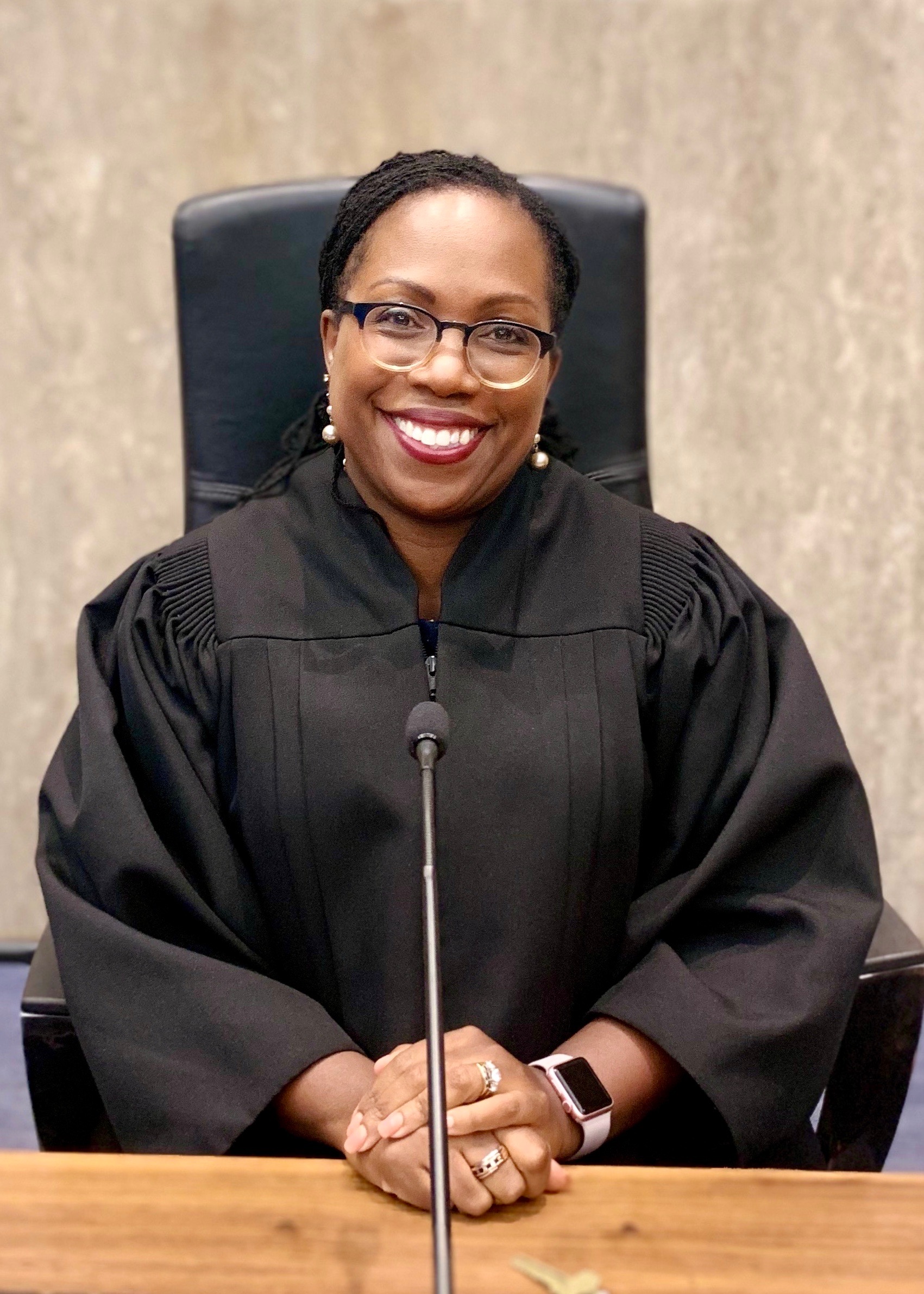
Justice Ketanji Brown Jackson did more than disagree with Justice Clarence Thomas over affirmative action. She attacked the core promise behind his “colorblind Constitution” argument: that the law can cure racial inequality by refusing to see race at all.
That clash, captured in the Supreme Court’s 2023 college admissions decision, still matters because it sits under many of the country’s biggest legal fights. The question is simple to state and hard to resolve: when race has shaped opportunity for generations, is neutrality enough?
A fight over one word
The word was colorblind. For Thomas, it describes a constitutional rule: government should not sort people by race, even for remedial reasons. In his concurring opinion in Students for Fair Admissions v. Harvard and Students for Fair Admissions v. University of North Carolina, Thomas wrote what he called a “defense of the colorblind Constitution.”
The court’s conservative majority, led by Chief Justice John Roberts, ruled that race-conscious admissions programs at Harvard and the University of North Carolina violated constitutional and statutory limits. Roberts wrote that universities may consider an applicant’s discussion of how race affected their life, but they may not use race as a plus factor in the admissions system itself.
Jackson, who recused herself from the Harvard case but dissented in the UNC case, saw something more sweeping. She argued that the majority’s version of colorblindness treated racial inequality as if it could be ordered out of existence by judicial command.
Her most quoted line was blunt: “Deeming race irrelevant in law does not make it so in life.” That sentence is the heart of the disagreement.
Thomas’s case for strict neutrality
Thomas’s view did not begin with the affirmative action ruling. He has long argued that the Constitution forbids government racial classifications because they are inherently dangerous, even when framed as help for historically excluded groups.
In the admissions case, Thomas wrote that all forms of racial discrimination, including what supporters call affirmative action, are prohibited. His opinion linked that position to the Equal Protection Clause and to his own experience, arguing that racial preferences can stigmatize beneficiaries and reinforce assumptions about group identity.
NBC News, covering the decision at the time, noted that Thomas laid out a vision in which the law must apply equally to everyone, including when a policy is aimed at remedying historical discrimination. Conservative legal advocates saw the ruling as a major step toward a clearer race-neutral standard in education.
That is why the phrase “colorblind Constitution” has such power on the right. It sounds like fairness. It promises one rule for everyone. It also gives courts a tool to strike down policies that explicitly consider race, no matter the policy’s stated goal.
Jackson’s answer was about reality
Jackson’s dissent did not defend every possible race-conscious program. It challenged the idea that a society shaped by race can become equal through legal silence about race.
She accused the majority of “let-them-eat-cake obliviousness” and wrote that it had announced “colorblindness for all” by legal fiat. She also described the majority’s view as “ostrich-like,” saying it rested on the hope that preventing consideration of race would end racism.
That language landed because it was unusually direct for a Supreme Court opinion. But the substance was more important than the sting. Jackson argued that race can affect wealth, schooling, health, neighborhood conditions, family opportunity and access to elite institutions. If those effects are real, she reasoned, admissions officials should not be forced to pretend they are not.
Her point was not that race explains everything about any applicant. It was that race can be part of an applicant’s lived experience, and a legal rule that strips it from view may protect the appearance of neutrality while leaving older inequalities untouched.
The clash exposed a deeper split
The Thomas-Jackson exchange was striking for another reason: both justices are Black, and both drew on the meaning of race in American life. Their disagreement showed that representation on the court does not produce one shared constitutional answer.
Thomas’s argument is grounded in suspicion of racial categories themselves. He sees government use of race as a threat to individual dignity and equal citizenship. In that framework, the cure for racial sorting is to stop sorting.
Jackson’s argument is grounded in the persistence of racial effects. She sees a ban on race-conscious remedies as potentially locking in advantages and disadvantages that were produced by earlier discrimination. In that framework, formal neutrality can become a shield for unequal outcomes.
This is why the debate is so heated. Each side claims the language of equality. One side defines equality as equal treatment without racial classification. The other asks whether equal treatment is meaningful when the starting lines are not equal.
Why it reaches beyond admissions
The affirmative action decision was the most visible race case of that Supreme Court term, but it was not the only one. The court also considered major disputes involving the Voting Rights Act and the Indian Child Welfare Act.
In the Alabama redistricting case, the court unexpectedly rejected an argument that would have weakened a key part of the Voting Rights Act. Roberts joined the majority, and the ruling required Alabama to confront whether its congressional map diluted Black voting power. That outcome showed that the court was not ready to apply the most aggressive version of race neutrality everywhere.
In the Native American adoption case, the court mostly upheld the Indian Child Welfare Act, though some justices left open future constitutional questions. Justice Brett Kavanaugh, in a concurrence, called the race-discrimination issue “serious,” signaling that another challenge could return.
That mixed record matters. The court embraced colorblind reasoning powerfully in higher education, but it did not fully transplant that logic into every race-related area of law. Civil rights lawyers took relief from that. Conservative lawyers saw unfinished business.
The next cases will test the line
The practical question now is where the court draws the boundary. If a policy mentions race, is it automatically suspect? What if it tries to enforce a civil rights law? What if it addresses voting discrimination? What if it responds to documented disparities without using individual racial preferences?
Universities have already had to rethink admissions. The majority opinion left room for applicants to write about race in personal essays, but warned schools not to use essays as a back door for the same racial preferences the court rejected. That creates a narrow path and plenty of room for litigation.
Employers, school districts and government agencies are watching the same debate. Programs that were once defended as diversity efforts or remedial measures may face sharper challenges if they use racial categories. At the same time, longstanding civil rights laws still require institutions to address discrimination in certain contexts.
That tension is why Jackson’s dissent continues to echo. It was not only a response to Thomas. It was a warning that a Constitution declared colorblind by courts may still operate in a country where race has never been invisible.






Leave a Reply