
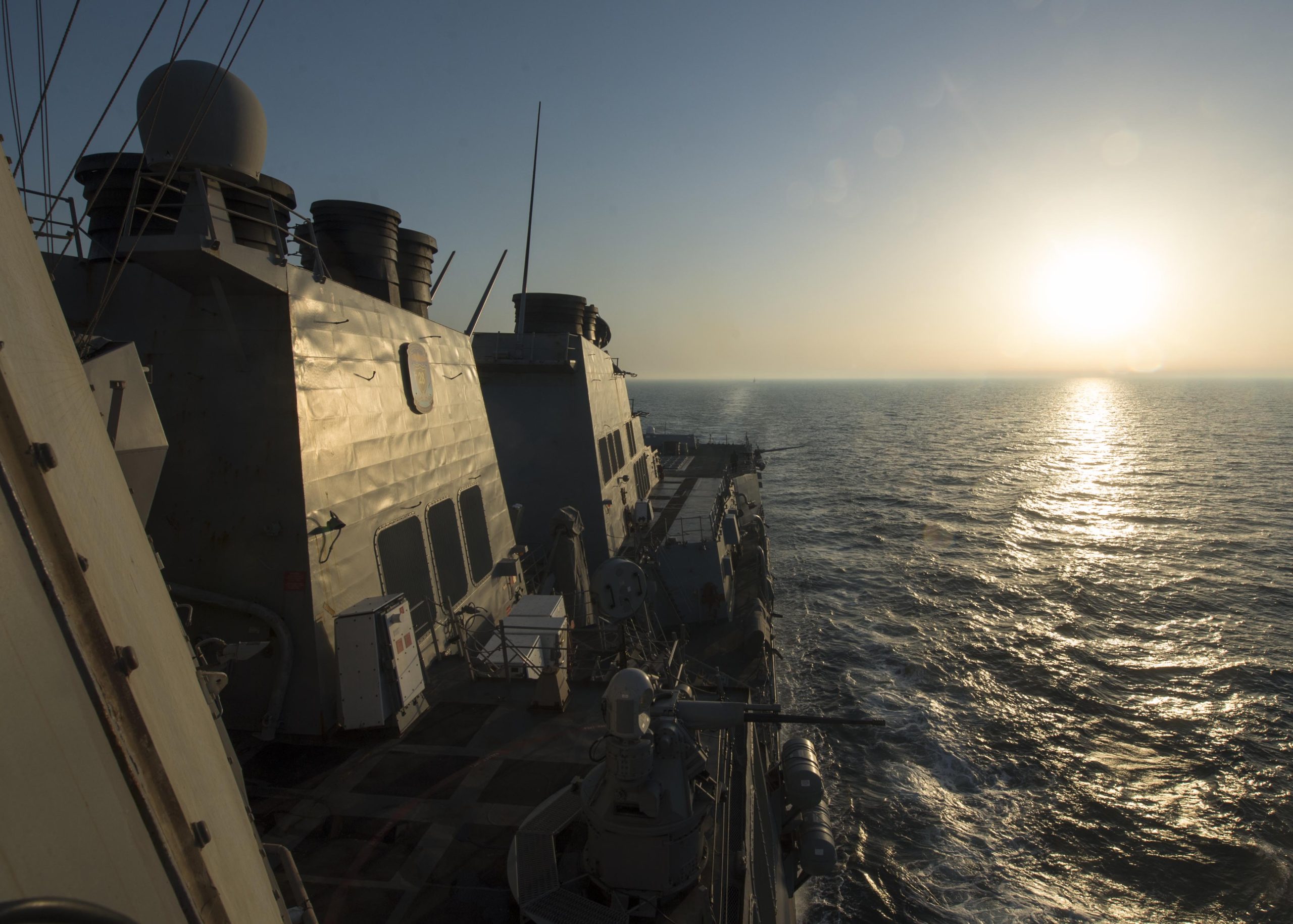
The confrontation is about more than a diplomatic breakdown: it puts commercial shipping, oil markets and the risk of direct military escalation in the Strait of Hormuz at the center of the dispute.
Iran has threatened Donald Trump over the naval blockade, warning that Tehran could use military action to break it unless U.S. conditions are met. The dispute between Iran and the Trump administration centers on maritime access in the Strait of Hormuz, where Washington is seeking the reopening of the waterway and an end to attacks on ships.
Reports from Reuters, The Wall Street Journal and NBC News describe a high-risk standoff after negotiations failed to produce an agreement. Iran says U.S. demands are excessive; the Trump administration has tied any easing of the blockade to safer shipping access, raising the possibility that a confrontation at sea could widen.
Two sides, incompatible demands
The immediate disagreement appears to be over who controls access to one of the world’s most strategically important shipping lanes. According to reporting cited by the source material, senior Trump administration officials said Iran must open the Strait of Hormuz and stop firing on ships.

Iranian officials, meanwhile, have framed the U.S. position as coercive. NBC News reported that Iranian state media said “excessive demands” had derailed the possibility of an agreement, while Iranian President Masoud Pezeshkian said a deal would require the United States to respect Iranian rights.
That leaves little shared ground. Washington’s stated position treats safe navigation as a condition for reducing pressure. Tehran’s warning treats the blockade as an unacceptable use of pressure that must itself end.
What the blockade changes
A blockade is more consequential than a routine round of sanctions. Sanctions can limit trade through financial restrictions, export controls or penalties on companies. A maritime blockade involves using naval power to prevent vessels from reaching or leaving designated areas.
Reuters reported that the United States began a blockade of Iranian ports after talks failed to yield a deal, and that Iran warned of a harsh response. The report also said oil prices moved above $100, underscoring how quickly a military dispute around Gulf shipping can affect markets far beyond the region.
The practical question is not only whether ships can move, but under whose terms. If U.S. forces stop or divert commercial vessels, Iran may see that as an attack on its economic lifeline. If Iran threatens ships or keeps the strait inaccessible, the U.S. can argue that a security response is necessary.
The Strait of Hormuz is the pressure point
The Strait of Hormuz is a narrow waterway connecting the Persian Gulf to the Gulf of Oman. It is a major route for oil and gas exports, meaning disruption there can ripple through energy markets, shipping insurance costs and fuel prices.
For Iran, the strait is also a powerful source of leverage. Its geography gives Tehran the ability to threaten maritime traffic even when it faces overwhelming U.S. naval power. That does not mean Iran can easily close the waterway indefinitely, but even limited attacks, mines, drone activity or threats can make commercial shipping more dangerous and expensive.
For the Trump administration, securing transit through Hormuz would be a visible test of its broader regional strategy. A stated U.S. objective of reopening the strait puts pressure on Washington to show that its naval presence can protect shipping without turning every encounter into a larger war.
Why military threats carry weight
Iran’s threat to use military action to break a naval blockade is significant because it creates a direct challenge to U.S. enforcement. A blockade can work only if the enforcing force is prepared to stop vessels and respond when that enforcement is challenged.
Yet military action does not have to mean an immediate large-scale naval battle. Escalation could begin with attempts to escort ships, confrontations involving Iranian fast boats, attacks on military assets, missile launches, drones or actions against commercial tankers.
Each option carries risks for both sides. Iran could seek to demonstrate it cannot be economically isolated without imposing costs on the United States and global commerce. The U.S. could seek to demonstrate that threatening international shipping will not force Washington to retreat.
Neither calculation guarantees control. The most dangerous moments in maritime conflicts often involve misidentification, rapid decisions by commanders and pressure to respond before facts are fully established.
Diplomacy has not disappeared
The reported breakdown in talks does not necessarily mean negotiations are over. NBC News reported that U.S.-Iran talks in Islamabad failed to resolve multiple points, including the reopening of the Strait of Hormuz. Publicly, however, the sides have continued to describe the dispute in fundamentally different terms.
Trump has signaled limited interest in waiting indefinitely for Iran to return to negotiations, according to NBC’s live reporting. Tehran, in turn, has indicated that it will not accept terms it portrays as dictation.
A workable agreement would likely need to address several linked issues at once: safe transit for commercial shipping, rules governing military activity near the strait, Iran’s economic access and a mechanism to prevent incidents at sea from becoming retaliatory strikes.
The unanswered question is enforcement
What remains unclear is how the blockade is being applied in practice, which vessels are affected, what legal rationale the United States is using, and whether neutral commercial ships can pass without disruption. Those details matter because they shape both the economic consequences and the chances of a direct clash.
There is also a sharp divide over the underlying principle. Supporters of the U.S. approach can argue that pressure is justified if it restores safe passage and deters attacks on shipping. Critics can argue that a blockade can deepen the crisis, raise civilian and economic costs, and make military escalation more likely.
For now, the central fact is the one both sides cannot avoid: the Strait of Hormuz is too important for either Washington or Tehran to treat as a symbolic dispute. Iran’s threat and the Trump administration’s demands have turned maritime access into the immediate test of whether this conflict can be contained.






Leave a Reply