
The reported video names the first lady and the president’s son at a tense moment in U.S.-Iran relations. The biggest question is what officials can confirm publicly while protective agencies assess threats privately.
Melania Trump and Barron Trump were targeted with assassination threats in an Iran-linked propaganda video, according to reports from KEYE/The National News Desk citing the New York Post. The video, reportedly published by Tasnim News Agency, names Melania Trump and son Barron and appears to encourage attacks, raising immediate concern because they are protected members of the president’s family.
The U.S. Secret Service has not publicly addressed a specific review, but the agency is responsible for protective security for Melania Trump and her family and would be aware of threats involving protectees. The White House had not issued a public response in the cited report.
The video’s reported claims
The reported propaganda video is described as coming from Tasnim News Agency, an Iranian outlet that Western reports frequently describe as having close ties to Iran’s Islamic Revolutionary Guard Corps. According to KEYE/The National News Desk, the video used publicly available information, AI-generated imagery and English subtitles.
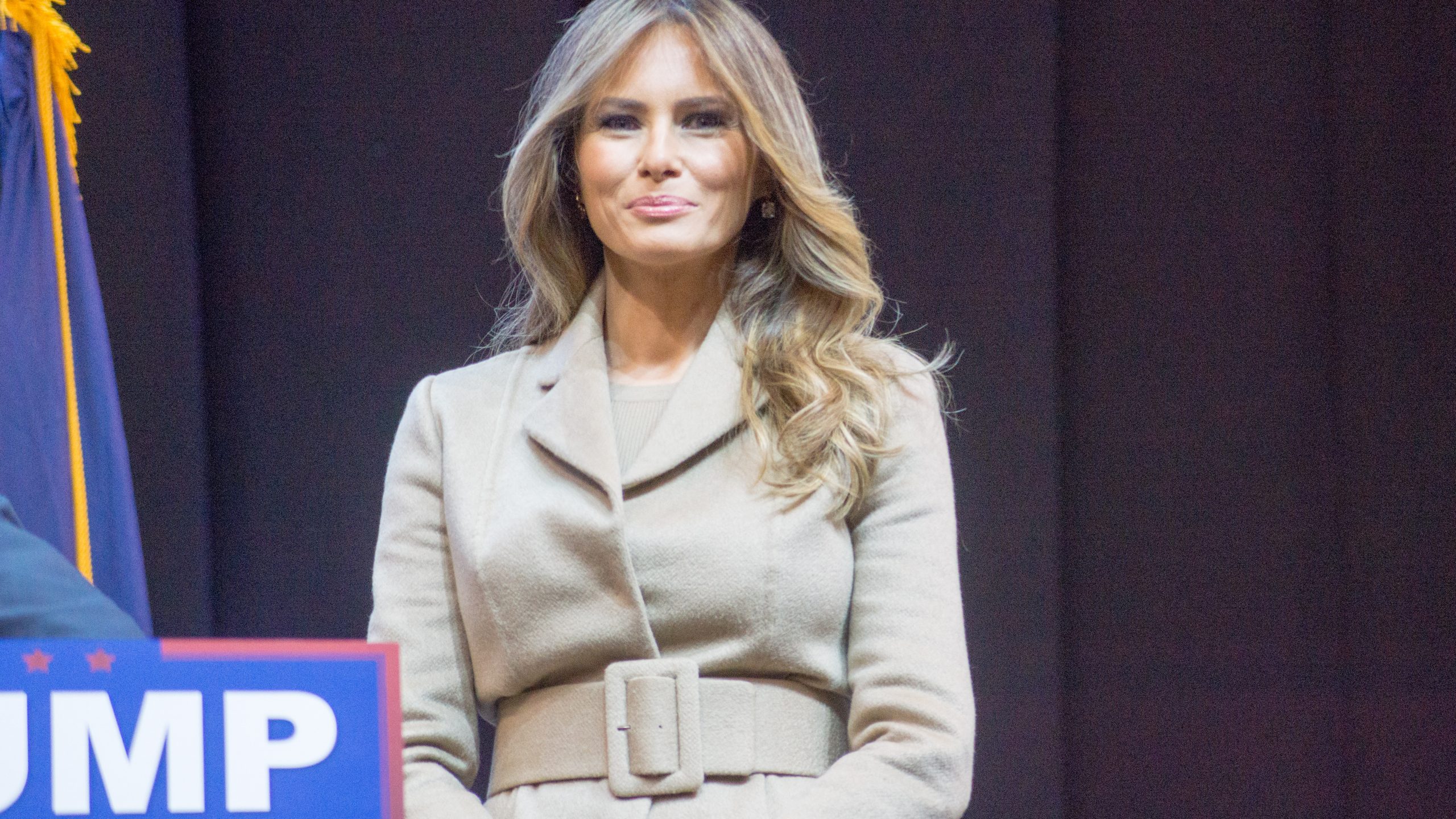
The New York Post, cited in the report, said the video carried a title asking where Melania Trump could be killed. It reportedly identified locations in New York City that she has been known to visit and framed those details as potential vulnerabilities.
The report also said the video shifted from Melania Trump to Barron Trump near the end, including a direct threat aimed at the president’s son. That is why the story has drawn attention beyond ordinary hostile rhetoric: it names family members and appears to gesture toward real-world movements and protective routines.
TrendWire is not reproducing the video’s alleged tactical language. The central fact is that the reported material appears to threaten the first lady and Barron Trump while presenting itself as propaganda tied to Iran.
Official response remains narrow
KEYE/The National News Desk said it contacted the White House for comment and was awaiting a reply. The same report said the U.S. Secret Service had not publicly addressed the specific threats.
That does not mean nothing is happening. Protective agencies often do not discuss how they assess threats, especially when a threat involves a protected person’s routines, locations or family members. Public silence can reflect caution rather than indifference.
Melania Trump and members of the president’s immediate family receive continuous protective security. Any public threat involving them would typically be evaluated in terms of credibility, source, distribution, intent and whether it contains actionable information.
The unanswered question is whether U.S. officials view the video as propaganda meant to intimidate, a direct operational threat, or both. Those categories can overlap, but they are not the same.
Why the Iran link matters
The Iran connection is what turns this from a celebrity-security story into a national security story. A hostile foreign media outlet amplifying threats against a U.S. president’s family carries different implications than an anonymous social media post.
Reports identify Tasnim as close to the Islamic Revolutionary Guard Corps, but that does not by itself prove the Iranian government ordered or authorized the video. That distinction matters. Governments, state-linked media, proxy networks and online supporters can all push messages that serve the same political goal while leaving room for denial.
At the same time, U.S.-Iran tensions have been high, with the two governments trading threats amid sanctions, military pressure and regional conflict. In that environment, propaganda aimed at the president’s family can function as psychological pressure even if it never becomes an operational plan.
President Donald Trump has previously said he believes he is Iran’s top target and has warned of severe retaliation if Iran were to attack him or his family, according to the same report. That history gives the new allegations a sharper edge.
Propaganda can still create risk
One reason security officials take propaganda seriously is that it can inspire people who are not formally connected to the source. A video does not need to be an official command to increase risk for the people it names.
There are two competing ways to read a production like this. One view is that it is primarily intimidation: a crude message designed to show reach, provoke fear and generate headlines in the United States. Another view is that naming locations and routines crosses into incitement, especially when paired with violent language.
Both interpretations can be true at once. Propaganda often works by blurring the line between political theater and threat. The ambiguity is part of its power.
That is also why responsible coverage should avoid amplifying operational details. The public can understand the seriousness of the alleged threat without turning a propaganda script into a wider distribution channel.
What is still unverified
Several key points remain unclear from the available reporting. U.S. officials have not publicly confirmed the authenticity of the video, the level of official Iranian involvement, or whether any specific protective changes were made after it circulated.
It is also unclear how widely the video spread before U.S. outlets reported on it. A propaganda clip can be more dangerous when mainstream attention dramatically expands its audience, but suppressing discussion can also leave readers without context.
The use of AI-generated imagery, if accurately reported, adds another complication. Synthetic visuals can make threats look more elaborate or realistic than they are, while also making attribution harder for ordinary viewers.
For readers, the safest interpretation is measured: the reported video is serious because it names Melania Trump and Barron Trump and appears to encourage violence, but public reporting has not established that it represents an active plot.
The security takeaway
The practical stakes are straightforward. A threat against a protected family member triggers concern even when officials say little publicly. Security teams are built to evaluate both credible plots and inflammatory content that could motivate lone actors.
For Melania Trump and Barron Trump, the risk is not only what one video says. It is how that video circulates, who sees it, whether it encourages copycats and whether it reveals or exaggerates personal routines.
For the White House and the Secret Service, the challenge is balancing transparency with protection. Confirming too much about a threat can expose methods and movements; saying too little can leave the public guessing about whether the danger is being taken seriously.
Based on current reporting, the core facts are limited but significant: an Iran-linked outlet reportedly published a threatening propaganda video naming Melania Trump and Barron Trump; the White House had not commented in the cited report; and the Secret Service had not publicly addressed the specific threats while continuing its protective role.



Leave a Reply