
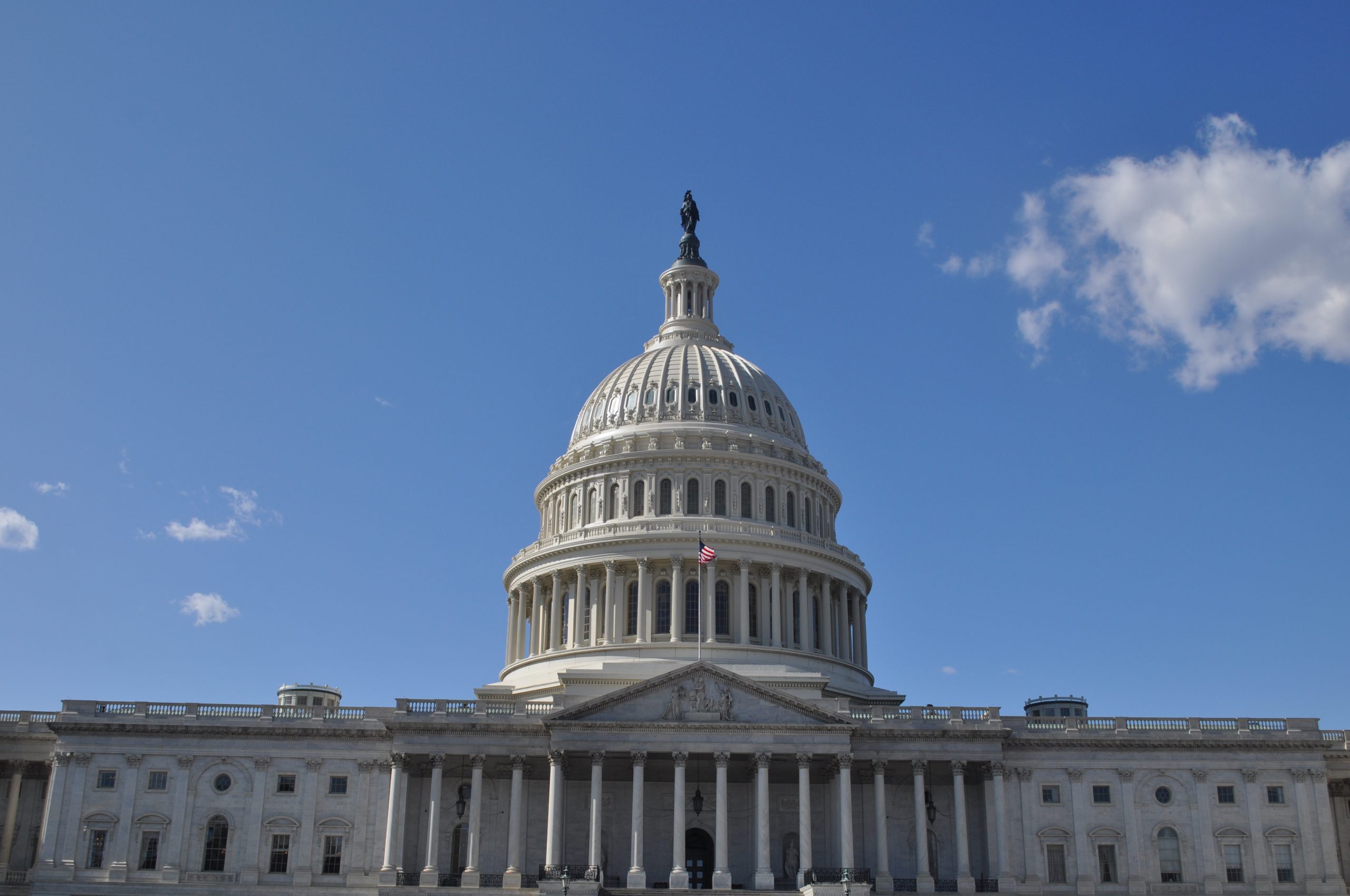
The recess gives GOP lawmakers a chance to sell their agenda back home. It also freezes unresolved fights over Iran, voting rules and government funding until September.
Republicans in Congress are heading home for the summer recess from Washington after they suffered a string of losses in Congress, and the article explains why those setbacks matter. House Republicans are leaving with a record they want to sell — new defense and budget votes — but also with fresh evidence that their narrow majority, Senate Republicans and the politics of the Iran conflict are pulling in different directions.
The result is an awkward summer split-screen: Speaker Mike Johnson is arguing that his conference proved it can legislate in an election year, while Democrats are betting GOP lawmakers will face angry questions at home about war spending, health costs and whether Congress is focused on voters’ daily problems.
Recess begins with unfinished business
The final week before recess was supposed to give House Republicans a clean message. They passed a $95 billion budget blueprint tied to the war with Iran, approved a large Pentagon policy bill and pushed again for new national voting restrictions, according to The Guardian’s account of the week’s votes.

Johnson presented the flurry of activity as a rebuttal to the idea that Congress stalls out in a campaign year. “Many of you like to say that major legislating can’t happen in an election year. We just proved you wrong,” he told reporters Wednesday, as quoted by The Guardian.
But activity is not the same as momentum. Within a day, four Republicans joined Democrats to pass a symbolic war powers resolution aimed at requiring President Donald Trump to withdraw troops from combat against Iran. For a speaker managing what The Guardian described as a historically small House GOP majority, even a symbolic defeat carries a practical warning: the margin for error is tiny.
That is the core political problem heading into the break. Republicans can point to bills they passed. Democrats can point to the fights those bills created, the votes that embarrassed GOP leaders and the unresolved decisions that now wait for September.
Iran spending is the pressure point
The Iran conflict sits at the center of the summer fight. The $95 billion budget blueprint was promoted by Republican budget chair Jodey Arrington as funding for “baseline battlefield readiness,” including “bullets and bombs to finish the job,” The Guardian reported.
That phrasing underscored the GOP’s balancing act. Republicans are trying to defend military spending and support Trump’s posture toward Iran without handing Democrats an easy attack line about another costly foreign conflict at a time when many households still feel squeezed.
Democrats are already making that case. Rep. Jason Crow of Colorado argued that members going home will hear from constituents losing health care, homes, farms and small businesses, and he questioned why Congress would support about $100 billion for what he called “another endless war in Iran,” according to The Guardian.
Republicans do not all sound the same on the issue. Ralph Norman of South Carolina, a right-wing Trump ally running for Senate, predicted Trump was “at the cusp” of ending the Iran conflict and said the president was “doing the right thing.” Nebraska Rep. Don Bacon, a Republican from a district won by Kamala Harris in 2024 and not seeking reelection, offered a different warning: “The go-it-alone approach fails us in the end.”
Senate resistance changed the math
The House’s biggest setback may not have come from Democrats at all. It came from the Senate, where Republican leaders showed little appetite for quickly taking up another House-written budget package.
The Guardian reported that Senate Majority Leader John Thune said he would put the House budget blueprint on “hold.” His stated reason was tactical: he may want to use the measure as leverage in negotiations over government funding before current funding expires after Sept. 30.
That move matters because the House blueprint was written to fit the reconciliation process, which can allow legislation to pass the Senate with a simple majority and avoid a Democratic filibuster. If Senate Republicans are unwilling to move it now, House Republicans lose the ability to claim a straightforward path from their vote to a final law.
It also pushes the Iran spending question into the fall, closer to the midterms and directly into the next government funding fight. For members in competitive districts, that timing is risky. A vote that looked like a show of strength in July could become a campaign liability in September.
Defense bill carries voting baggage
House passage of the National Defense Authorization Act is usually one of Congress’s more reliable bipartisan achievements. This year, the politics are more complicated.
The House-approved defense bill carried a price tag of $1.15 trillion, according to The Guardian. Democrats have objected to that cost and, earlier this month, halted advancement of the Senate’s version in protest of renewed hostilities with Iran.
Johnson also made the defense package harder to move by combining it with the Save America Act, a Trump-backed voting measure. The legislation would ban mail-in ballots and impose new identification requirements when voters register and cast ballots, The Guardian reported.
To conservatives, the voting proposal can be presented as an election-integrity measure. To Democrats and voting-rights advocates, it is a national restriction on ballot access. By attaching that fight to a defense bill, House Republicans strengthened their appeal to Trump-aligned lawmakers but may have weakened the bill’s chances in a Senate that still needs to function.
Republicans still see a campaign message
GOP leaders are not heading into recess without a pitch. Richard Hudson, chair of the National Republican Congressional Committee, argued that Republicans have “a great story to tell to the voters,” saying Democrats “ran this country into the ditch” and Republicans are on “a rescue mission,” The Guardian reported.
Hudson also pointed to redistricting and the map, arguing that many vulnerable seats are held by Democrats in Trump-friendly areas. His view is simple: even if House Republicans have had a messy governing stretch, Democrats still face a difficult path to winning enough districts for a majority.
That argument should not be dismissed. Midterms are nationalized, but House control is won district by district. A party can have a weak week in Washington and still benefit from favorable lines, candidate quality and voter dissatisfaction with the opposition.
There is another Republican advantage: passing bills, even partisan ones, gives lawmakers something concrete to describe at town halls and local events. The harder question is whether voters hear those votes as evidence of action or as proof that Congress is prioritizing war spending and voting restrictions over affordability.
Democrats have openings, not guarantees
Democrats see opportunity in the GOP’s pre-recess record, especially on cost-of-living issues. Crow’s critique reflects the broader Democratic bet: connect Republican votes on Iran and defense spending to pocketbook anxiety at home.
But the opposition has its own problems. The Guardian noted that Democratic supporters remain frustrated after Harris’s 2024 defeat. It also cited a Washington Post-Ipsos poll finding that highly motivated voters are eager to back Democrats in the midterms, while the party’s advantage over Republicans in the broader electorate remains thin.
That leaves both parties with imperfect summer assignments. Republicans must defend votes that energized parts of their base but exposed divisions and Senate roadblocks. Democrats must turn GOP discomfort into a disciplined message that reaches beyond already motivated voters.
The recess does not end the fight. It moves it from Capitol Hill to districts across the country, where lawmakers will test whether Washington’s legislative drama matches what constituents actually care about. When Congress returns, the Iran spending dispute, the defense bill, voting restrictions and the Sept. 30 funding deadline will still be waiting.











Leave a Reply