
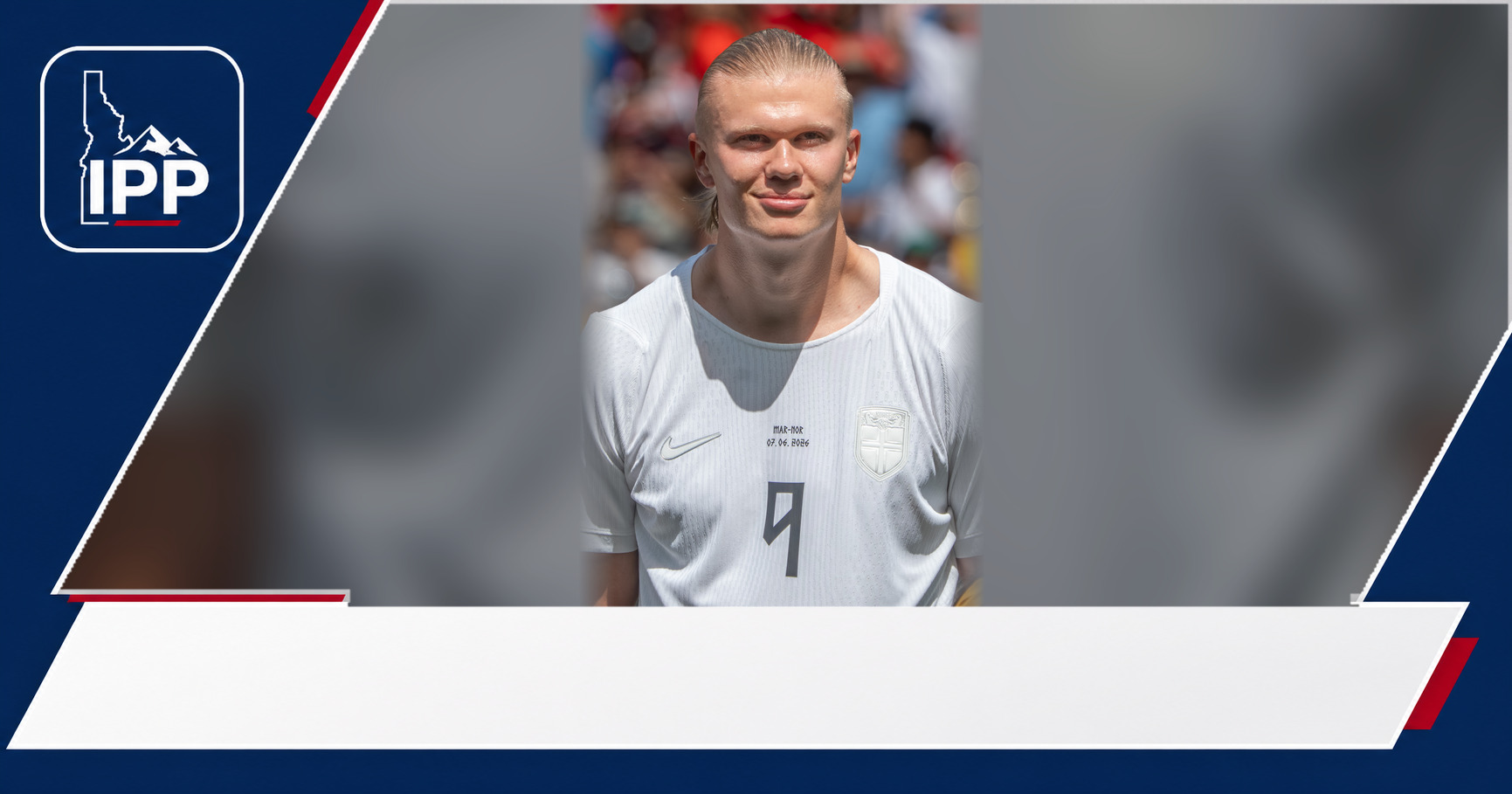
Norway’s World Cup run did more than lift national pride. Payment data suggests Haaland’s star power helped turn match windows, fan travel and merchandise demand into a short-lived consumer boom.
Erling Haaland and Norway’s World Cup run drove a consumer spending surge, and Visa data shows the effect on Norway’s economy. Transaction volume inside Norway nearly doubled in 12-hour windows around kickoff for Norway matches, according to data released by Visa and cited in reports on the Erling Haaland boom.
Put more simply: Norway had a temporary “pop-up economy” during the World Cup. Haaland’s popularity, Norway’s advance and match-day attention appear to have turned ordinary hours into bursts of card spending, travel, food, retail and fan-driven purchases.
Kickoff became a checkout moment
The most striking signal in the Visa data is the timing. Spending did not merely rise across the tournament in a vague national mood. It clustered around Norway’s matches, especially in the 12-hour windows surrounding kickoff.
That is what makes the “pop-up economy” label useful. It suggests a temporary marketplace forming around a shared event: fans gathering before the match, buying food and drinks, paying for transport, ordering merchandise, meeting friends and reacting in real time to a national sports moment.
Visa’s figures, as reported, showed transaction volume inside Norway nearly doubling compared with pre-tournament baselines during those match windows. As Norway advanced, spending tied to the team also showed up beyond Norway, with activity increasing in more than 60 countries when the national team played.
For a country not usually framed as a global football commerce engine, that is the core surprise. The data points to a national-team run becoming a consumer event, with Haaland as the face most able to carry it across borders.
Haaland turned attention into demand
Haaland’s role matters because this was not just about a team winning matches. It was about a player whose club profile at Manchester City, social media reach and instantly recognizable image gave Norway a global commercial signal.
Reports based on the Visa data described Haaland as central to the spending momentum. His performance and celebrity helped create the conditions for a consumer lift that stretched from local match gatherings to international fan purchases.
Some examples were unusually concrete. After Norway’s round-of-16 victory over Brazil, Haaland and teammates reportedly visited Wild Bill’s Western Store in Dallas. Store owner Cody Newport said the shop sold more than 2,000 T-shirts in the weeks after the visit and recorded the highest monthly sales total in its history.
That kind of burst is small compared with national card volume, but it shows how modern sports spending can work. A visit, a photo, a viral moment and a superstar’s presence can redirect demand almost instantly toward a specific merchant.
The boom spread beyond Norway
The World Cup itself created a much wider spending map. The expanded 48-team tournament was staged across 16 cities in the United States, Canada and Mexico, with reports citing nearly 7 million spectators across 39 days and 104 matches.
Visa’s broader tournament data showed cross-border transactions across host cities rising nearly 20% year over year, while tap-to-pay purchases grew almost 12%. Visitors from Colombia, Puerto Rico, the United Kingdom, Argentina and Brazil generated the highest foreign cross-border spending, according to the reported figures.
Host cities did not benefit in the same way. Santa Clara-San Jose, Boston and Miami recorded some of the largest increases in in-person card transactions from domestic and international visitors combined. Boston stood out for dining transactions, Guadalajara for transportation growth, Atlanta for entertainment spending and New York City for retail.
That unevenness is important. A mega-event does not create one economy. It creates many short-lived local economies, each shaped by match schedules, fan bases, hotel capacity, transport networks and the spending habits of visitors who may be in town for only a few days.
Merchandise showed the star effect
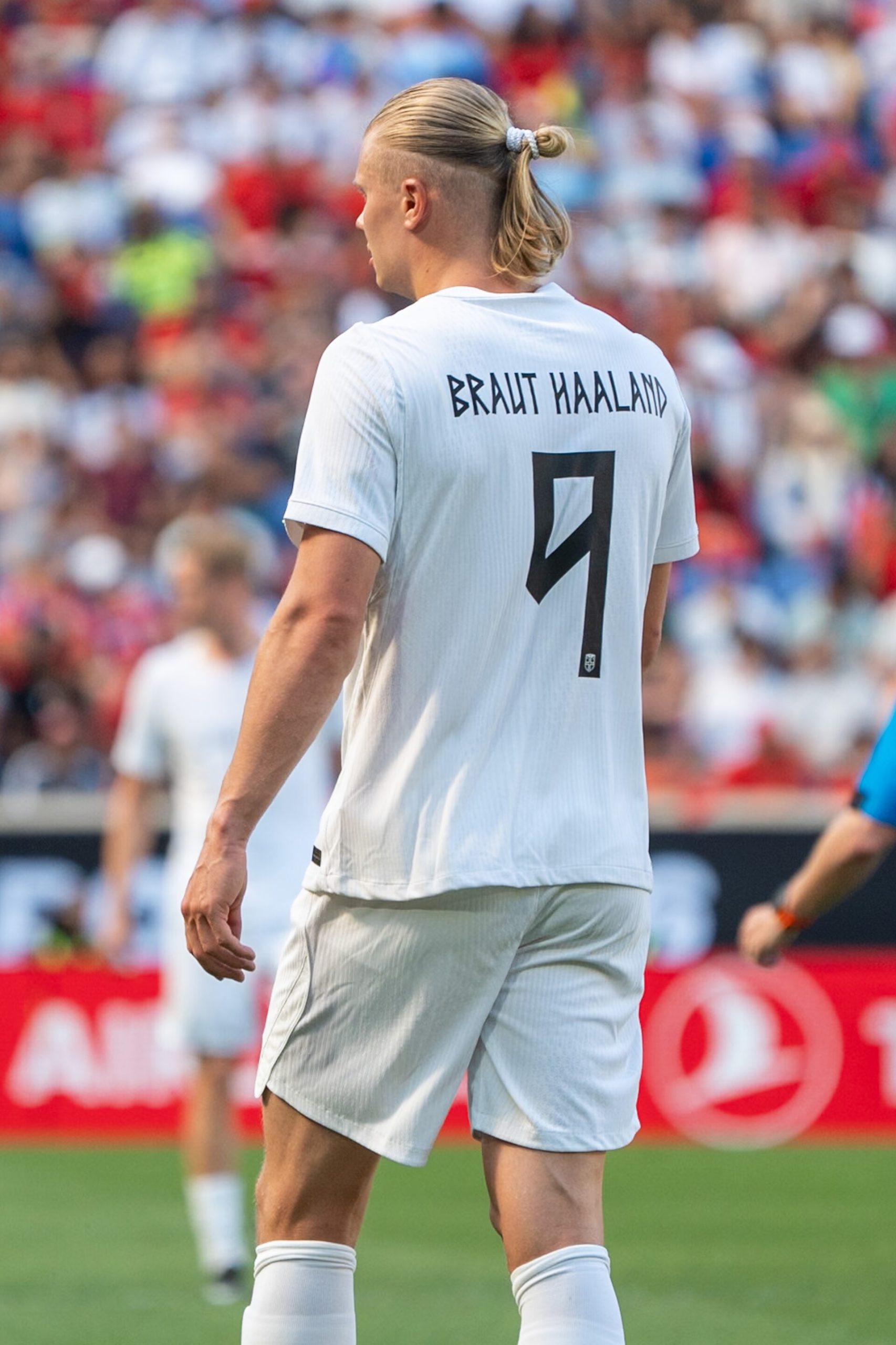
The Haaland effect also appeared in merchandise and brand signals. Official Norway jerseys reportedly sold out through conventional retail channels, then appeared on StockX at prices above $400.
Haaland’s personal style became part of the story, too. Reports noted that photos of him carrying Hermès Haut à Courroies bags, with secondary market valuations between $45,000 and $80,000, drove sharp increases in Google searches. That is not the same as proving sales, but it does show how one athlete’s image can move consumer curiosity.
Even smaller brands were pulled into the surge. Oslo-based accessories brand Kknekki, in which Haaland holds a minority equity stake, reportedly sold out a limited-edition hair tie within weeks. The brand also gained 4,000 Instagram followers in a single day after announcing the partnership.
Those details help explain why the spending story matters beyond football. The modern superstar is not only an athlete. He is a distribution channel for fashion, tourism, retail and national identity, often without a traditional advertising campaign doing the heavy lifting.
What the data cannot prove
Visa data is powerful because it captures real transactions at scale. It is also incomplete. It reflects Visa activity, not all cash, bank transfers, rival card networks or informal spending.
That means the figures are best read as a strong signal, not a complete ledger of Norway’s World Cup economy. A near-doubling in Visa transaction volume around kickoff shows a measurable surge, but it does not prove every krone was new spending that would not have happened otherwise.
Some spending may have shifted rather than expanded. A family that bought dinner during a match window may have skipped another purchase later. A fan who bought a jersey at a premium may have delayed other discretionary spending.
Still, the timing matters. When spending repeatedly rises around Norway matches and follows the team’s progress, it becomes difficult to dismiss the World Cup and Haaland’s popularity as background noise. The safer conclusion is that they helped concentrate and amplify consumer behavior.
A glimpse of sport’s new economy
The Haaland boom is a reminder that the economics of major sporting events no longer stop at tickets, hotels and broadcast rights. The money now moves through contactless payments, social feeds, secondary resale markets, small retailers and sudden brand moments.
For Norway, the World Cup run became a national event with measurable commercial effects. For Visa, it offered a clean demonstration of how payment networks can map fan behavior in near real time. For businesses, it showed how quickly a sports story can become a sales story.
The open question is durability. A pop-up economy, by definition, fades when the event moves on. Merch demand cools, visitors leave host cities and match-day routines disappear.
But the larger lesson may last longer. When a country has a global star like Erling Haaland, a deep tournament run can turn attention into transactions with surprising speed. Norway’s World Cup spending surge was not just about football fever. It was a live test of how fame, national pride and payments infrastructure now combine to move money.








Leave a Reply