

The case is drawing attention because a damage allegation at one of Washington’s most visible landmarks has become a fight over evidence, prosecutorial judgment and grand jury process.
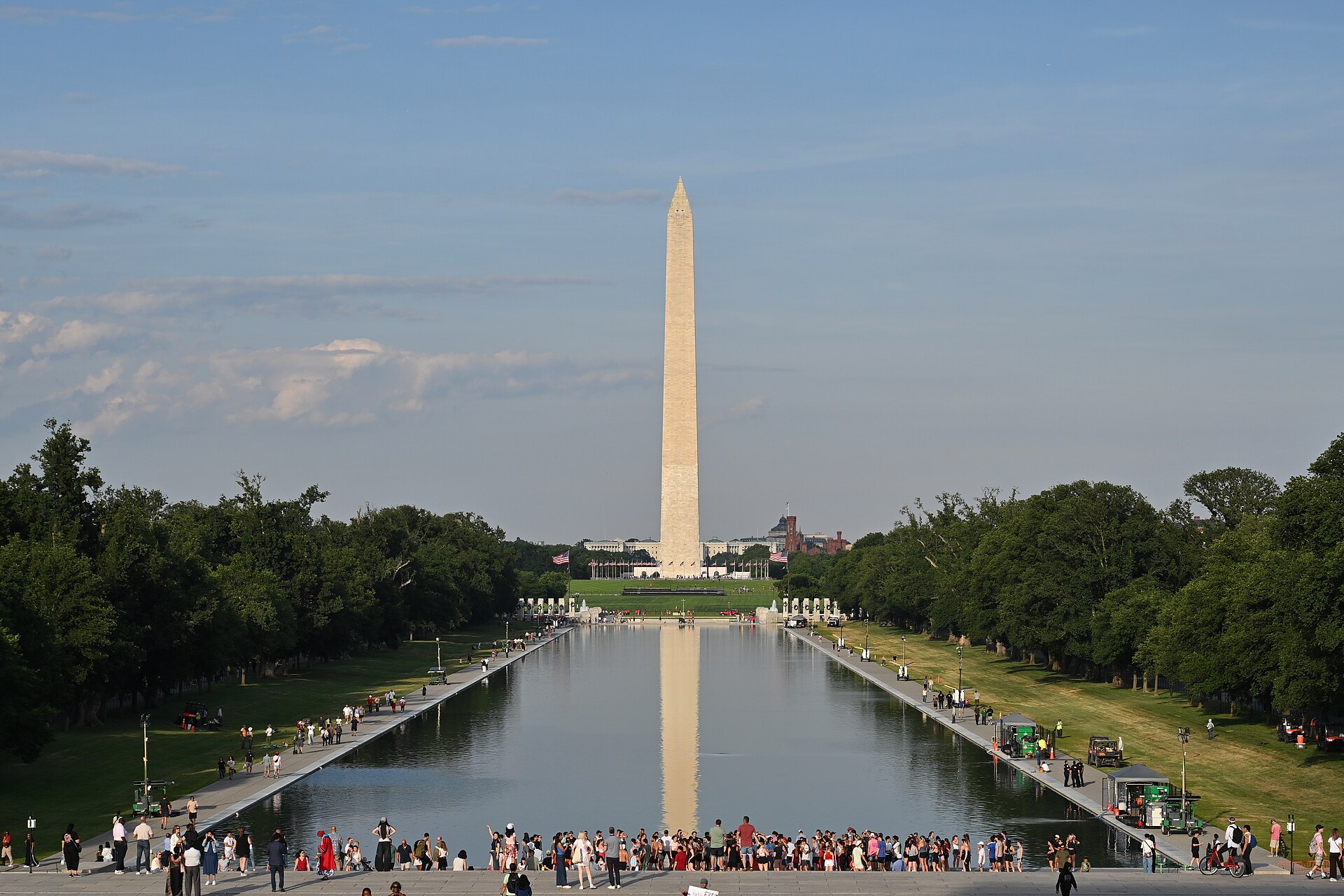
Former Olympian David Hearn is accused in the Reflecting Pool vandalism case in Washington, D.C., and his defense is now raising allegations of grand jury irregularities around the criminal charge. The case centers on alleged damage to the Lincoln Memorial Reflecting Pool, a national landmark recently tied to a high-profile renovation push.
Hearn, a three-time U.S. Olympic canoe racer, has pleaded not guilty to a felony property destruction charge. The dispute matters now because defense lawyers are challenging not only the evidence, but also the way the case reached court.
A felony over pool damage
The charge against Hearn stems from alleged damage to the Lincoln Memorial Reflecting Pool, one of the most photographed public spaces in Washington. According to the Associated Press, Hearn was indicted on a single felony count of property destruction and is accused of causing more than $1,000 in damage.
Hearn, 67, of Bethesda, Maryland, has denied criminal wrongdoing. AP reported that he entered a not guilty plea through an attorney during an initial appearance in D.C. Superior Court on July 9.
The allegation is unusually loaded for what might otherwise sound like a small property case. The Reflecting Pool had undergone a multimillion-dollar renovation ahead of the country’s 250th independence celebrations, and President Donald Trump had publicly alleged, without providing evidence, that damage to the pool’s new coating was caused by vandals, AP reported.
The grand jury fight
The latest point of contention is the defense claim that there were grand jury “irregularities.” A grand jury does not decide guilt. Its role is to determine whether prosecutors have enough probable cause to bring a charge.
That distinction matters. If a defendant argues that prosecutors misled a grand jury, withheld key context or used flawed procedures, the fight can become less about the underlying conduct and more about whether the indictment itself should stand.
The public reporting available so far does not show that a judge has found misconduct in Hearn’s case. For now, the “irregularities” claim appears to be a defense challenge, not a court ruling. Hearn remains presumed innocent unless proven guilty.
Still, the issue gives the case a second track. Prosecutors must defend the charge, while the defense can press for scrutiny of how the indictment was obtained.
Hearn’s account is different
Hearn has described the incident as curiosity, not vandalism. He previously told AP that he had stopped by the pool during a 64-mile bike ride on June 19, reached in to examine newly peeled coating and briefly touched a chunk that was attached to the side of the pool.
He said he let go when a park worker told him to do so. Hearn also told AP he was detained for five hours by National Guard troops and U.S. Park Police after the encounter.
That account is central to the defense argument. If Hearn merely touched loose or peeled material and complied when told to stop, his lawyers are likely to argue that prosecutors have overcharged the case or failed to prove intent.
Property destruction cases often turn on intent and damage. The difference between examining a damaged surface and deliberately damaging a public landmark could become the core factual battle if the case moves toward trial.
Defense calls evidence weak
Hearn’s lawyers have framed the prosecution as excessive. “Every American should be alarmed about this prosecution,” defense attorney Norm Eisen said after the July hearing, according to AP. “It is not a crime to touch the Reflecting Pool.”
Another defense attorney, Mary Dohrmann, called Hearn an “upstanding citizen and member of the community” and said the government’s evidence was “weak,” AP reported.
Supporters outside the courthouse echoed that view. AP reported that dozens gathered with homemade signs and chanted for Hearn after the hearing. Adam Van Grack, who chaired the U.S. Olympic national governing body for canoe and kayak sports, said Hearn had spent decades voluntarily maintaining National Park Service property used by canoeists along the Potomac River.
That biography is not a legal defense by itself. But it has helped shape the public narrative: a former athlete with a long record around public waterways facing a felony over alleged damage at a monument.
Prosecutors stress public landmarks
Federal prosecutors in Washington have defended the broader principle behind the case. U.S. Attorney Jeanine Pirro, the top federal prosecutor for the District of Columbia, said vandalizing national monuments and public spaces is “an affront to our shared history,” according to AP.
“The law applies equally to everyone, and when it is broken, there are consequences,” Pirro said in a statement reported by AP.
That is the competing view: the Reflecting Pool is not just a decorative basin, but a symbolic and costly public asset. Prosecutors may argue that visible enforcement is needed when federal property is damaged, especially after a major renovation.
The tension is familiar in high-visibility cases. The government says public spaces must be protected. The defense says prosecutors are turning a contested, low-level encounter into an outsized felony case.
Why the politics are unavoidable
The case has drawn political attention in part because Trump had personally amplified the vandalism claim around the Reflecting Pool renovation. AP described the case as politically charged and noted that Trump alleged vandalism without providing evidence.
That does not mean the charge against Hearn is political by definition. Prosecutors can pursue a property case even when elected officials have commented on the same subject. But political pressure can change how a routine case is perceived, especially when the defendant claims the evidence is thin.
The grand jury dispute may sharpen that perception. Grand jury proceedings are typically secret, and defendants often have limited visibility into what prosecutors presented. When defense lawyers allege irregularities, readers should separate three things: the accusation, any evidence later filed in court and any ruling from a judge.
At this stage, the known record supports caution rather than certainty. Hearn has pleaded not guilty. Prosecutors say vandalism has consequences. The defense says the case is weak and procedurally suspect.
What happens next
AP reported that D.C. Superior Court Judge Carmen McLean did not require Hearn to be supervised by the court while he remains free awaiting trial. A prosecutor said the government was not seeking court supervision, only a “stay-away order,” though AP noted the prosecutor did not specify in court where Hearn should stay away from.
A status hearing was scheduled for Aug. 5. That hearing could clarify whether the defense will formally seek relief tied to the alleged grand jury irregularities, such as additional records, dismissal arguments or other procedural challenges.
The unanswered questions are straightforward: what exactly prosecutors presented to the grand jury, what the defense says was irregular, whether a judge sees any legal problem and whether the government can prove intentional property destruction beyond a reasonable doubt.
Until then, the Reflecting Pool case is more than a dispute over peeled coating. It is a test of how far prosecutors should go when alleged damage to a symbolic public space collides with contested facts, political attention and the opaque machinery of the grand jury system.











Leave a Reply