
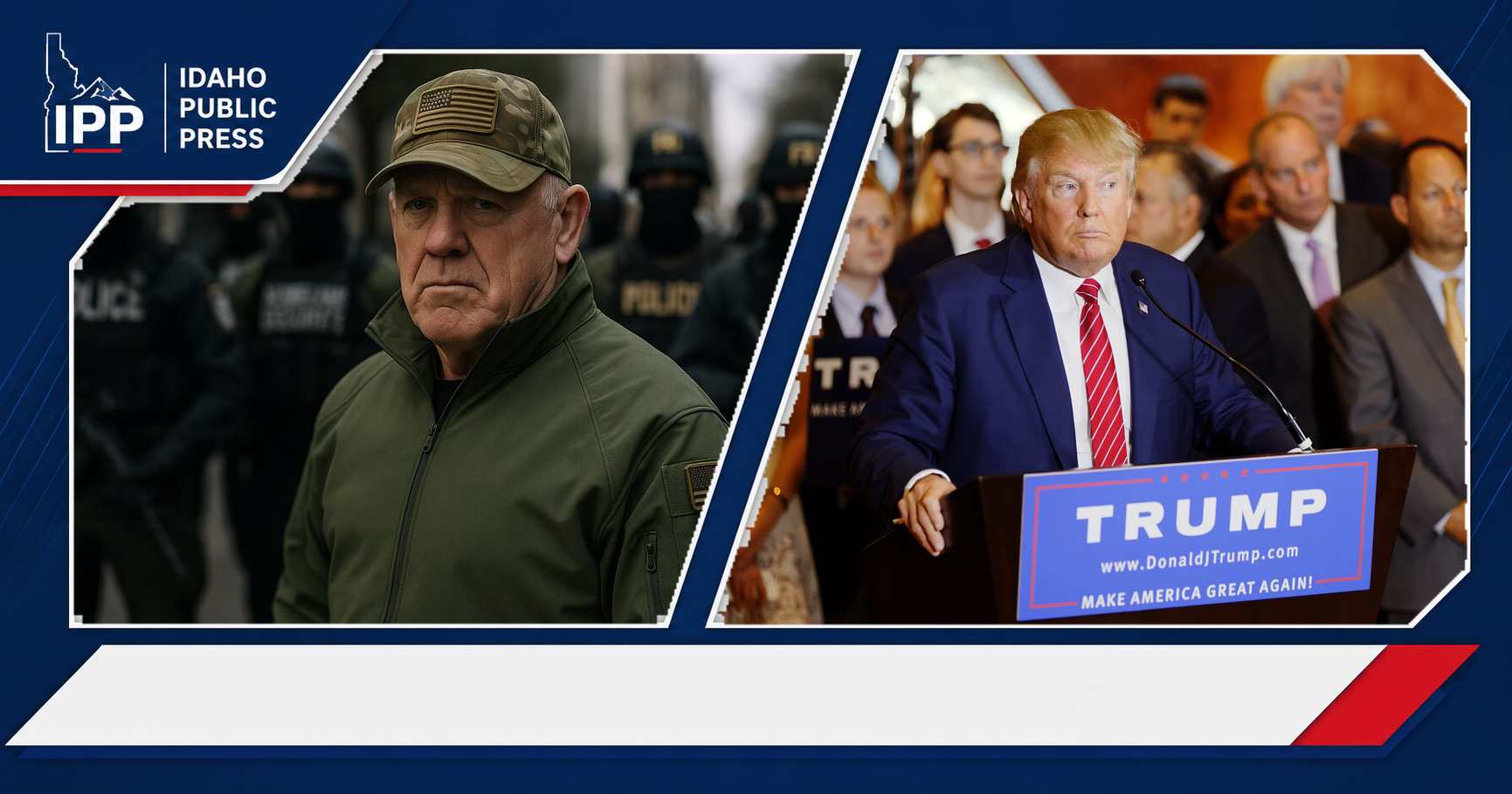
The Maine case has turned one deadly vehicle-stop encounter into a broader test of how ICE screens, trains and equips officers during the Trump administration’s immigration crackdown.
Tom Homan says ICE agent vetting is under review after a fatal shooting in Maine, putting ICE, the Trump administration and DHS under scrutiny over the officer involved in the shooting. Homan, President Donald Trump’s border czar, told CNN that internal affairs is reviewing how Army veteran David Brouillette cleared vetting before he fatally shot Johan Sebastián Durán Guerrero, a 25-year-old Colombian national, near his home in Biddeford. He said training is also under review.
The review matters because the fatal shooting in Maine is now part of a wider fight over immigration enforcement tactics, officer screening and whether ICE’s rapid expansion has outpaced safeguards.
Homan points to internal review
Homan’s most direct comment was not a defense of the process. According to NBC News, he said that if allegations about Brouillette’s past are true, “I don’t think he should ever have cleared vetting.”
He also said “several things” are being examined, including training and the specific vetting of Brouillette by ICE’s internal affairs section. That puts the agency’s personnel pipeline at the center of the story, not just the split-second circumstances of the shooting itself.
The allegations Homan referred to were reported by The Associated Press, which said relatives had described a history of serious mental health struggles and violent behavior. Those claims are now central to the question facing ICE: whether warning signs existed, whether they were visible to screeners, and whether they should have stopped Brouillette from being deployed.
DHS did not immediately respond to NBC News’ request for comment about the internal review, according to the report. That leaves Homan’s CNN remarks as the clearest public acknowledgment so far that the agency is looking back at its own process.
The Maine shooting at issue
The man killed in Maine was Johan Sebastián Durán Guerrero, identified by NBC News as a Colombian national. He was shot in his car near his home in Biddeford, a coastal city where a memorial was later photographed.
Public reporting so far has focused on the officer’s background, the lack of a body-worn camera in the Maine stop, and the broader context of immigration vehicle stops. Key details about the full encounter, including what happened immediately before the shooting, remain subject to official review and have not been fully laid out publicly.
That uncertainty is part of why the vetting question has taken on so much weight. If the shooting is examined only as an isolated use-of-force incident, the review may stay narrow. If investigators conclude the officer should not have cleared screening, the implications reach into hiring, training and deployment decisions across ICE.
Body cameras become a flashpoint
Homan said acting ICE Director David Venturella has issued a directive requiring at least one body-worn camera at vehicle stops. “Right now, on all vehicle stops, there’s at least one body camera on site to record the entire event,” Homan said, according to NBC News.
That change speaks to one of the most immediate complaints after the Maine shooting: there was no officer-worn camera recording the incident. Republican Sen. Susan Collins of Maine, who chairs the Senate Appropriations Committee, had pushed for body-worn cameras and said it was “extremely unfortunate” that the officer in her home state was not using one.
Body cameras do not prevent every disputed encounter. They can fail, miss angles or become another source of disagreement over interpretation. But in fatal encounters, they often provide the only shared record for investigators, families, courts and the public.
The new directive may also be a recognition that ICE’s enforcement role has changed in the public eye. Vehicle stops are no longer seen as routine administrative encounters by critics of the agency. They are increasingly treated as high-risk moments where a civil immigration operation can turn deadly.
Pressure meets rapid expansion
The Maine shooting landed amid questions about DHS’s push to hire, train and deploy thousands of new ICE officers as the Trump administration pursues an aggressive deportation agenda. Supporters of the crackdown argue the agency needs manpower and flexibility to enforce immigration law. Critics argue speed can erode screening and training standards.
NBC News reported that Homeland Security Secretary Markwayne Mullin ordered a pause in vehicle stops after the Maine shooting, but Trump quickly reversed course and insisted the stops resume. That sequence captures the tension inside the policy: safety concerns on one side, political demand for visible enforcement on the other.
Homan’s comments suggest officials know the agency has to answer operational questions, even as the administration defends the broader mission. The review of vetting and training may become a test of whether ICE can adjust its tactics without signaling retreat from the crackdown.
For immigrant communities, the stakes are more immediate. A vehicle stop can mean detention, deportation proceedings or, in rare but catastrophic cases, death. For ICE officers, clearer procedures and recording requirements may also matter, because they can protect officers from false claims while exposing misconduct when it occurs.
Lawmakers want more answers
Members of Congress from both parties have raised concerns, though not always for the same reasons. Democrats have pressed ICE officials over force, oversight and tactics. Collins has focused in part on body cameras and the absence of recorded footage in the Maine case.
During a closed-door House Homeland Security Committee briefing, lawmakers were told there had been 56 complaints of excessive force against ICE officers, according to NBC News. Of those, 32 were cleared, one was referred for disciplinary action and the rest remained under investigation. Lawmakers were told no discipline had yet been imposed in the referred case.
Those numbers can be read in sharply different ways. ICE defenders may point to cleared complaints as evidence that many allegations do not hold up after review. Skeptics may point to the low discipline rate and unresolved cases as evidence that internal accountability is too slow or too protective of officers.
The review of Brouillette’s vetting is likely to intensify those arguments. If the agency says its process worked, it will need to explain how. If it says the process failed, it will need to say whether the failure was individual, systemic or tied to pressure to staff up quickly.
What remains unclear
The most important unanswered questions are concrete: what ICE knew about Brouillette before he was hired or deployed, what records were checked, whether any red flags were missed, and whether training covered the kind of vehicle stop that ended in Durán Guerrero’s death.
It is also unclear whether the body-camera directive will be enough to quiet concerns. Cameras document encounters, but they do not answer every question about who should be making stops, under what rules, and with what supervision.
The political backdrop makes a quiet internal fix unlikely. The Trump administration continues to argue that expanded immigration enforcement is necessary, while critics say the pursuit of deportation targets has produced dangerous encounters and swept in people beyond the administration’s stated focus on the “worst of the worst.”
For now, Homan’s statement is a notable admission: ICE is not only reviewing a fatal shooting in Maine, it is reviewing the pathway that put the officer there. That distinction is why this case has become bigger than one stop in Biddeford.







Leave a Reply