
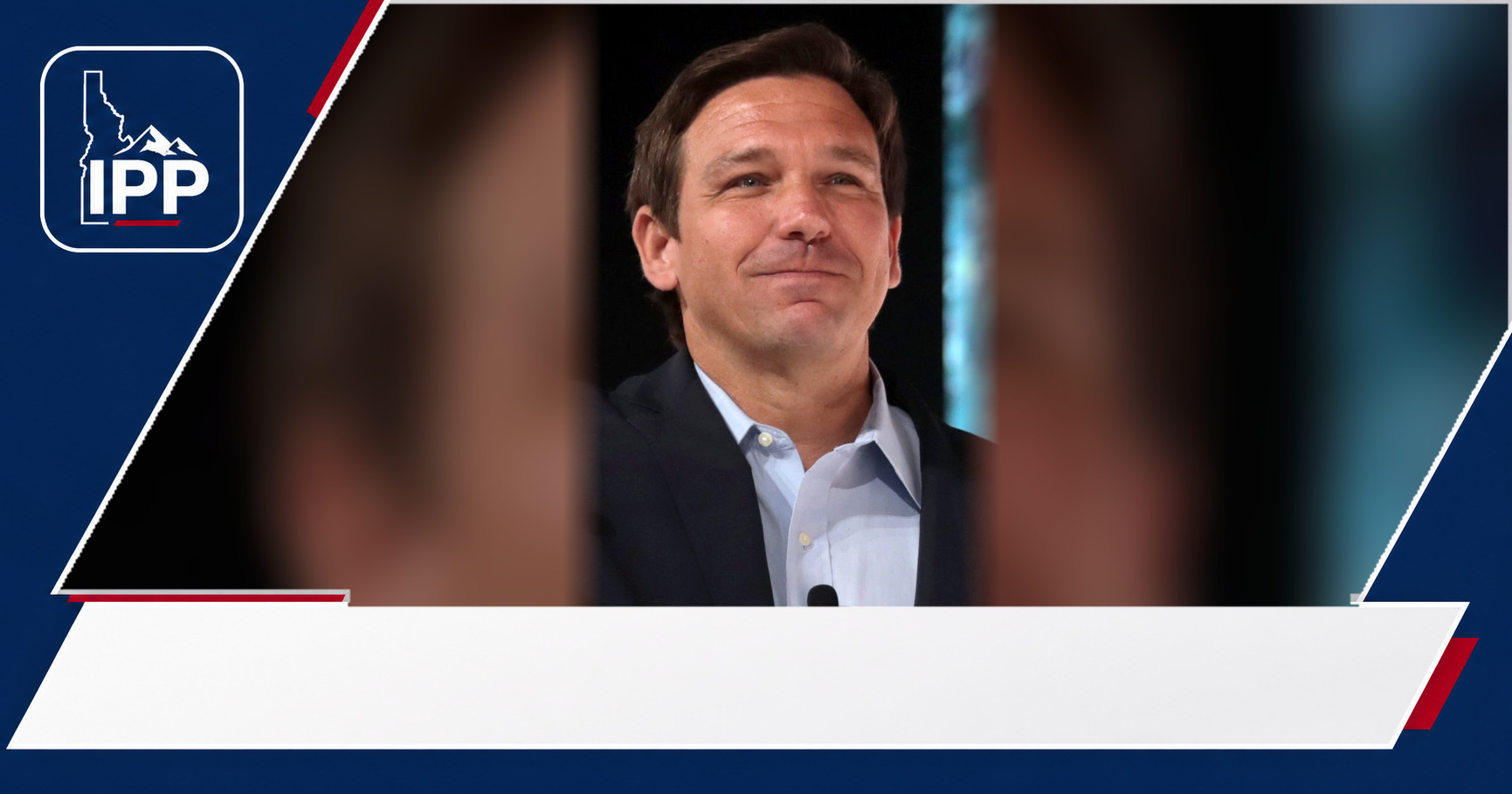
The bill would require documentary proof of U.S. citizenship to register for federal elections. DeSantis’s blunt assessment highlights a familiar problem for GOP election bills: House support does not guarantee Senate passage.
Ron DeSantis criticized Donald Trump’s SAVE America Act and said it has “basically zero” chance of passing now, a blunt assessment of a Trump-backed election bill that would tighten federal voter registration rules. The Florida governor’s comment matters because it turns a Republican priority into a question of congressional math, especially with Congress and Senate Republicans facing procedural limits.
The article explains why the bill’s prospects are so poor: the SAVE America Act would require documentary proof of U.S. citizenship to register to vote in federal elections, but moving that kind of election legislation through Congress is far harder than rallying conservative support behind the idea.
DeSantis undercuts Trump’s bill
DeSantis’s “basically zero” line, reported by Mediaite, lands because it is not coming from a Democratic critic of Trump’s election agenda. It is coming from a Republican governor who has built his own national brand around aggressive election-law changes in Florida.

That makes the criticism more politically useful to Trump’s opponents and more awkward for Republicans who support the bill’s goals. DeSantis is not necessarily rejecting the policy premise. He is saying the legislative vehicle is close to dead, at least for now.
The distinction matters. A proposal can be popular inside a party and still fail if it cannot clear committee hurdles, floor timing, Senate rules or a presidential-signature strategy. In Washington, “support” and “passage” are often very different things.
What the SAVE America Act does
Congress.gov identifies H.R. 7296 in the 119th Congress as the “Safeguard American Voter Eligibility Act,” or “SAVE America Act.” The bill was introduced on Jan. 30, 2026, by Rep. Roy and referred to the House Committee on House Administration.
The core change is simple but sweeping: it would amend the National Voter Registration Act of 1993 to require documentary proof of U.S. citizenship before a state may accept and process an application to register to vote in a federal election.
The bill text lists several forms of proof that could satisfy the requirement, including a U.S. passport, certain REAL ID-compliant identification that indicates citizenship, specific military records, a government-issued photo ID showing a U.S. place of birth, a birth certificate paired with other identification, naturalization documents, a certificate of citizenship and other federal proof of citizenship.
It also reaches voter registration through motor vehicle offices and the national mail voter registration form. That is important because the National Voter Registration Act was designed in part to make registration more accessible through routine government interactions, including driver’s license applications.
Why passage looks so difficult
DeSantis’s pessimism is rooted in the way Congress works. Even if a Republican-led House could move the SAVE America Act, Senate passage is the harder test. Most major legislation in the Senate needs 60 votes to overcome a filibuster unless it qualifies for a special process or is folded into a must-pass bill.
That is where Senate Republicans face a strategic problem. Election integrity measures are a strong talking point with the GOP base, but Democrats have generally opposed federal proof-of-citizenship registration requirements, arguing they risk blocking eligible voters who do not have ready access to the required documents.
If the bill cannot draw Democratic votes, Republican leaders would need another route. They could try to attach it to a broader package, use it as a messaging vote, revise the language, or make it part of a larger negotiation. Each path carries political costs.
That is the practical meaning of “basically zero.” It is not a formal vote count. It is a warning that the current version may be better suited to campaign messaging than to enactment.
The fight behind the paperwork
Supporters of the SAVE America Act frame it as a safeguard for election integrity. Their argument is that federal law should require proof up front, rather than relying mainly on attestations and after-the-fact enforcement, because only U.S. citizens are eligible to vote in federal elections.
Opponents counter that noncitizen voting in federal elections is already illegal and that documentary proof rules can create barriers for eligible citizens. Voters who are elderly, low-income, naturalized, married with name changes, born at home, living far from records offices or lacking passports may face extra hurdles.
The bill tries to define acceptable proof broadly, but the administrative burden would still fall heavily on states and local election offices. They would have to verify documents, train staff, update forms and decide how to handle applicants who swear they are eligible but do not have the required paperwork at the moment of registration.
That is why the debate is not only about fraud. It is also about access, cost and the risk of errors in a system where registration deadlines can determine whether a person can vote in the next election.
Trump’s setback is procedural
For Trump, the SAVE America Act fits into a larger political message about tightening election rules and restoring confidence among Republican voters who remain skeptical of election administration. A public dismissal from DeSantis complicates that message because it shifts attention from the policy to the odds of failure.
That does not mean the issue disappears. Election bills often serve two purposes: they attempt to change law, and they draw bright lines between the parties. Even a doomed bill can become a campaign tool, especially if Republicans use a blocked vote to argue Democrats oppose voter eligibility checks.
Democrats are likely to frame the same fight differently. They can argue that Republicans are pushing a solution that could make registration harder for eligible voters while doing little to address the real problems facing election administrators, such as staffing, threats, outdated systems and inconsistent state rules.
Both sides see political value in the clash. The trouble for Trump’s bill is that political value is not the same as a path through the Senate.
What remains unclear
The next question is whether Republican leaders treat the SAVE America Act as a serious legislative priority or as a marker bill meant to define the party’s position. Its referral to the House Administration Committee is only the start of the process, not evidence that it is close to becoming law.
It is also unclear whether Trump or congressional allies will push for changes to make the bill more passable. A narrower version, a delayed effective date, funding for state implementation, or a different proof standard could alter the debate, though any compromise might anger hard-liners who want a firm documentary requirement.
States may continue moving on their own election rules regardless of what Congress does. That could leave the country with the same patchwork that already defines much of American voting: federal eligibility rules, state registration systems and court fights when those systems collide.
DeSantis’s comment cuts through the noise because it says the quiet part out loud. Trump’s SAVE America Act may be a potent Republican message, but without a workable Senate strategy, it remains a bill with a steep climb and a very uncertain future.









Leave a Reply