
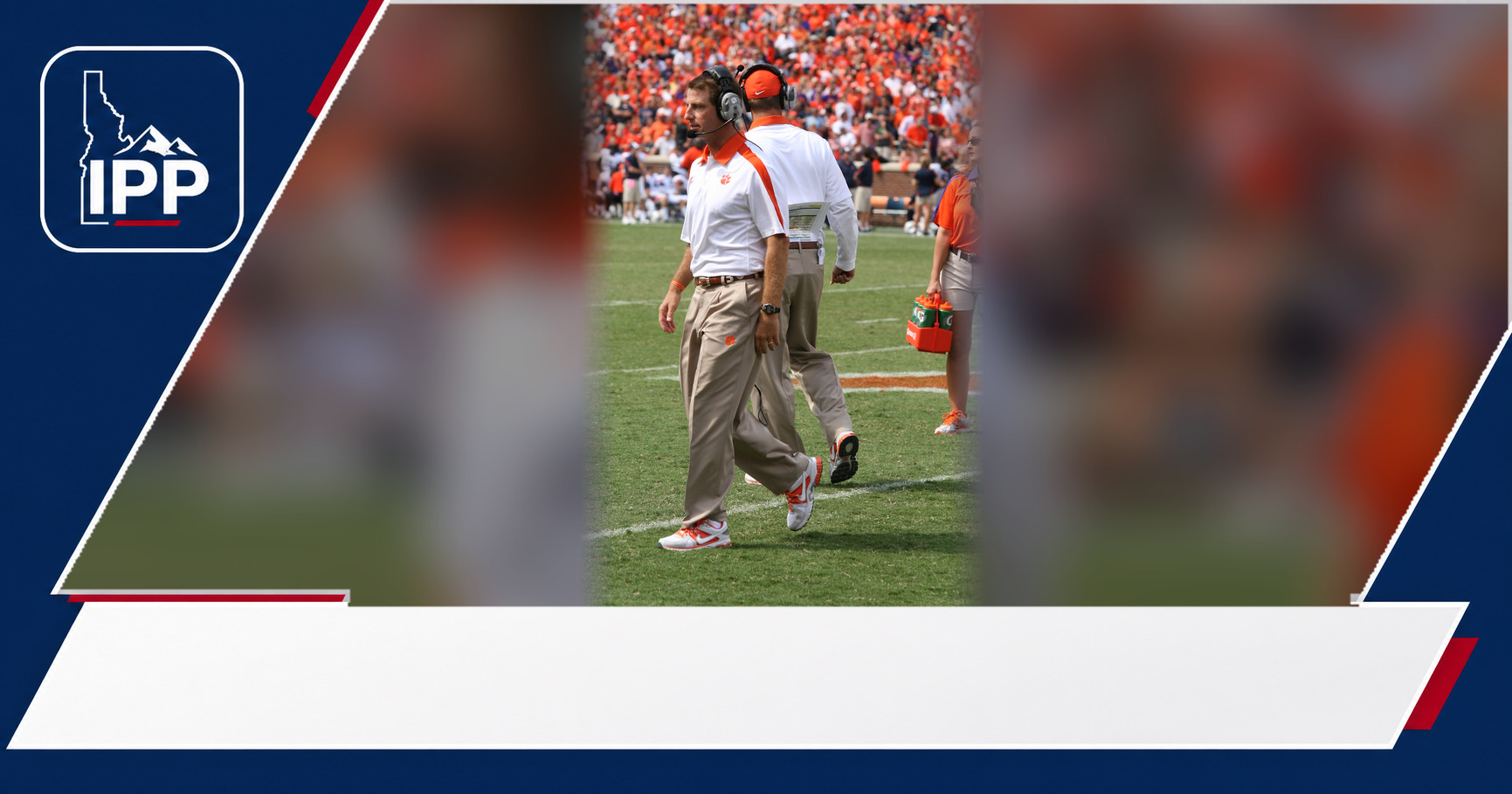
The comparison lands because Clemson’s recent years have not matched its championship peak. It also has limits: Swinney’s critics are questioning results and messaging, not equating his record or conduct with Freeze’s.
Dabo Swinney is being compared to Hugh Freeze, and for Clemson the comparison is not flattering. USA TODAY Sports college football analyst Blake Toppmeyer said Tuesday that Clemson’s coach is giving “serious Hugh Freeze vibes,” invoking the former Ole Miss and Auburn coach Hugh Freeze, who was fired from Auburn during the 2025 season after a 15-19 run on The Plains.
The point is not that Swinney shares Freeze’s off-field baggage. It is that Swinney’s defense of Clemson’s past dominance now risks sounding, to critics, like a coach asking voters to judge 2026 by older trophies.
The comparison cuts two ways
Toppmeyer’s critique, as covered by Clemson Wire, centers on tone and trajectory. Swinney has been reminding people of what Clemson has accomplished under him: 15 winning seasons, 13 seasons with at least 10 wins, 14 with at least nine wins, and 11 conference or national championships across 15 years.
Those numbers are real. They are also the kind of numbers coaches reach for when the present has become less convincing than the résumé.
That is where the Freeze comparison comes in. Freeze’s pitch at Auburn leaned heavily on what he had done before, especially his Ole Miss success and wins over Alabama. Toppmeyer argued that Swinney’s current Clemson program looks closer to Auburn’s 2020-25 stretch than Clemson’s 2015-19 peak.
That is a harsh frame. Clemson Wire pushed back strongly, calling the comparison a false equivalence and noting that Swinney’s record, reputation and accomplishments are far beyond Freeze’s.
Why Freeze is a loaded name
Hugh Freeze is not just a shorthand for a coach who talked about past wins. He carries a much heavier history.
Freeze went 39-25 in five seasons at Ole Miss, then resigned in 2017. At the time, then-Mississippi athletic director Ross Bjork cited a “pattern of personal misconduct inconsistent with the standards we expect from the leader of our football team,” according to Clemson Wire’s recap.
Freeze later resurfaced at Liberty and then Auburn. His Auburn tenure ended during the 2025 season after a 15-19 record in 34 games.
That history is why the comparison can feel inflammatory beyond the football argument. Swinney has not been accused of anything comparable in the material cited. Clemson Wire made that distinction plainly: whatever criticisms Swinney faces, they are not the same as Freeze’s off-field baggage.
Swinney is defending a dynasty
Swinney’s side of the argument is straightforward: Clemson’s dip should be weighed against a long run of elite performance, not treated as if the past never happened.
At ACC Kickoff in Charlotte, he pointed to Clemson’s sustained winning record. Clemson Wire quoted him saying, “We’ve had 15 winning seasons. Thirteen 10-plus win seasons, 14 nine-plus win seasons… and then you have a season like last year, and that’s kind of what everybody wants to focus on, and I get that.”
He also told The Athletic that Clemson had won 11 conference and national championships in the previous 15 years, adding that the next closest coach had six. That is not a small boast. It is also not an invented one.
The tension is whether those reminders reassure fans or irritate them. For supporters, Swinney is pointing to proof that his method works. For skeptics, he sounds too eager to relitigate the golden years while college football keeps moving.
Clemson’s standard changed everything
The problem with building a monster is that nine wins can start to feel like slippage.
Swinney won two national championships at Clemson and made the Tigers one of the sport’s defining programs of the playoff era. Those peaks changed the program’s internal math. Clemson is not judged like a school hoping to be ranked in November. It is judged against the version of itself that beat Alabama on the biggest stage.
That is why 16 losses over five seasons, a figure cited by Clemson Wire, can fuel outsized criticism. For many programs, that span would not trigger existential debate. At Clemson, it becomes evidence in a trial over whether the program’s best days are gone.
The Freeze comparison stings because it suggests a coach leaning on yesterday’s proof while the roster, staff, schedule and sport evolve around him. Even if that comparison is unfair, the anxiety behind it is not imaginary.
The fair critique is narrower
The strongest version of the criticism is not that Swinney is Freeze. It is that Clemson’s current case for national relevance needs more than a history lesson.
Swinney has been famously confident in his program-building approach. He has also been scrutinized for how Clemson has handled the transfer portal era compared with other powers. The extracted source material does not make the portal the center of Toppmeyer’s argument, but it is part of the broader context around any modern Clemson debate: college football’s roster economy has changed, and coaches are judged by how quickly they adapt.
The counterpoint is just as strong. Swinney’s accomplishments are not ancient history in program terms, and very few active coaches can match his championship résumé. Clemson Wire’s rebuttal rests on that basic idea: Swinney may repeat his résumé too often for some tastes, but the résumé itself is not hollow.
There is also a difference between a coach explaining a standard and hiding behind it. Swinney’s challenge is making sure the first does not look like the second.
The season will decide the tone
This kind of July argument has a short shelf life once games begin. Clemson’s 2026 schedule includes a Sept. 5 opener at LSU, followed by Georgia Southern, North Carolina, a late-night trip to California, Miami, Florida State, Duke and South Carolina among the listed opponents.
That slate gives Swinney a cleaner answer than any media-day quote: win enough big games, and the reminders of past championships sound like confidence. Lose the wrong ones, and those same reminders become material for more unfavorable comparisons.
What remains unclear is how much patience Clemson’s audience has for the in-between. Swinney’s legacy is secure. His current approval rating is more conditional.
The Freeze comparison is probably too broad if it implies shared conduct, résumé or career standing. As a warning about how a once-dominant coach can start sounding when the present gets less dominant, it explains why the comment traveled. Clemson does not need Swinney to prove he once built a giant. It needs him to show the giant is still awake.








Leave a Reply