
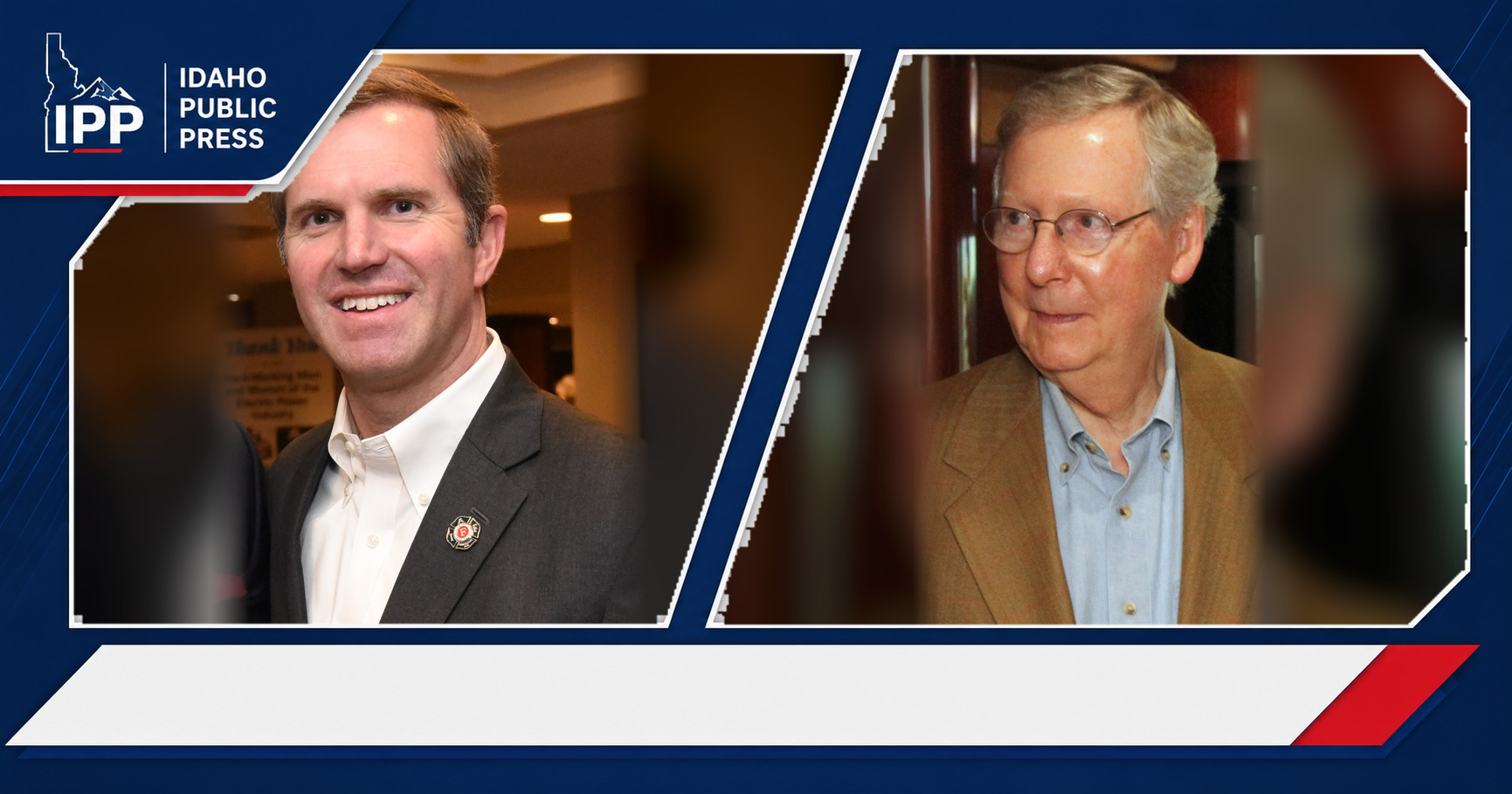
The demand puts McConnell’s health, Kentucky’s representation and Senate transparency rules under new scrutiny. It also exposes how quickly a medical absence can become a political fight.
Andy Beshear is demanding that Mitch McConnell prove he can still serve in the U.S. Senate or resign. The Kentucky governor’s Wednesday challenge to the 84-year-old Republican senator centers on McConnell’s health and ability to hold office after a June 14 hospitalization in Washington and a long public absence from Senate votes.
Beshear says Kentucky voters deserve a direct update; McConnell’s office has described a fall but has offered limited detail. The fight now sits at the uneasy intersection of medical privacy, public accountability and raw Senate politics.
Beshear turns absence into ultimatum
In a letter to McConnell, Beshear wrote that, as governor of the state McConnell serves, he was calling on the senator to “directly and verbally address the people of Kentucky” and provide proof of his “capacity to serve, or resign,” according to NBC News.

Beshear also wrote separately to Senate Majority Leader John Thune, R-S.D., saying that if McConnell did not provide proof, Thune should investigate McConnell’s condition and “begin the process if warranted” of replacing him in the Senate.
The governor’s case is built around time and visibility. Beshear wrote that it had been 43 days since news of McConnell’s hospitalization, during which McConnell had cast no votes, engaged in no official activities and communicated only through two photos and written statements.
Beshear argued that even the attending physician’s written statement did not answer whether McConnell could speak, reason or carry out his duties as a senator. That is the heart of the dispute: not simply whether McConnell was injured, but whether Kentucky’s representation in Washington is functioning.
Photos have not settled questions
McConnell was hospitalized in Washington on June 14. His office has said he fell, and it has released two photos and written statements amid growing public pressure for more information.
McConnell’s office declined to comment on Beshear’s letter, NBC News reported. That silence leaves the public record thin: a reported fall, statements from the office, images meant to reassure and no public appearance that fully resolves the questions Beshear is raising.
There is a real distinction between demanding a full medical file and asking whether an elected official can do the job. Beshear is trying to frame his request as the latter: a basic showing that one of Kentucky’s two senators can communicate with constituents and participate in Senate work.
McConnell’s defenders can fairly argue that medical details are personal and that not every health setback should become a public spectacle. But a prolonged absence from votes changes the equation because the job itself is public, measurable and tied to representation.
Senate leaders avoid taking charge
Thune did not embrace Beshear’s request. Asked about the governor’s call for an investigation, he said the issue was “between Sen. McConnell and the people of Kentucky,” according to NBC News.
That answer exposes a gap in Senate norms. Senators have missed time before because of illness, injury or recovery, and the chamber does not have a clear public transparency rule for members in that position.
Without a neutral standard, the question quickly becomes political. One side can say voters deserve proof that a senator is able to serve. The other can say the demand is opportunistic, invasive or designed to embarrass someone during a health crisis.
That tension is why the McConnell case has moved beyond a single office statement. It raises a broader question for an aging Senate: when does a private medical matter become a public capacity issue?
Kentucky law limits Beshear’s power
The succession politics are unusual in Kentucky. In many states, a governor appoints a temporary replacement when a U.S. Senate seat becomes vacant. Kentucky law instead requires a special election.
That matters because Beshear, a Democrat, would not simply get to name McConnell’s replacement if the seat opened. The dispute is still political, but it is not a straightforward fight over who gets an appointment.
McConnell has already said he intends to retire at the end of his term, which expires at the end of 2026. Rep. Andy Barr won the Republican primary to succeed him and is favored in heavily Republican Kentucky, according to NBC News.
So the immediate stakes are narrower and sharper: whether McConnell can finish the term, whether Kentucky voters receive more information before then and whether Senate leaders are willing to act if a member’s capacity is questioned.
Politics circles the health question
Sen. Rand Paul, R-Ky., defended McConnell despite his own frosty relationship with the senior senator. Paul called Beshear’s letter “a campaign ploy” meant to make the governor “look relevant,” NBC News reported.
That critique will land with voters who see Beshear as a national Democrat raising his profile. Beshear has been discussed as a potential 2028 presidential candidate, and a confrontation with McConnell guarantees attention far beyond Kentucky.
Still, dismissing the letter as ambition does not answer the underlying representational question. If a senator has missed votes and has not appeared publicly for weeks after a hospitalization, voters may reasonably want more than office statements.
Beshear made that argument directly to reporters, saying rampant speculation could be avoided if McConnell addressed the public. “But because he won’t do that, the fact is that we don’t know,” he said, according to NBC News.
What voters still don’t know
The unanswered questions are practical: Can McConnell speak publicly? Can he reason through Senate business? When, if at all, will he return to votes? What official work, if any, has he been able to perform since the hospitalization?
McConnell could quiet much of the uproar with a direct appearance or a fuller medical update. But any disclosure also sets a precedent for how much health information senators are expected to provide during an absence.
If McConnell’s office continues to offer only limited updates, pressure is likely to grow from both critics and constituents who want certainty. Thune’s reluctance to intervene leaves the matter largely with McConnell, his staff and Kentucky voters.
The takeaway is not only about McConnell’s health. It is about what the public should expect when an elected official’s absence is counted in missed votes, limited statements and weeks without direct communication.







Leave a Reply