
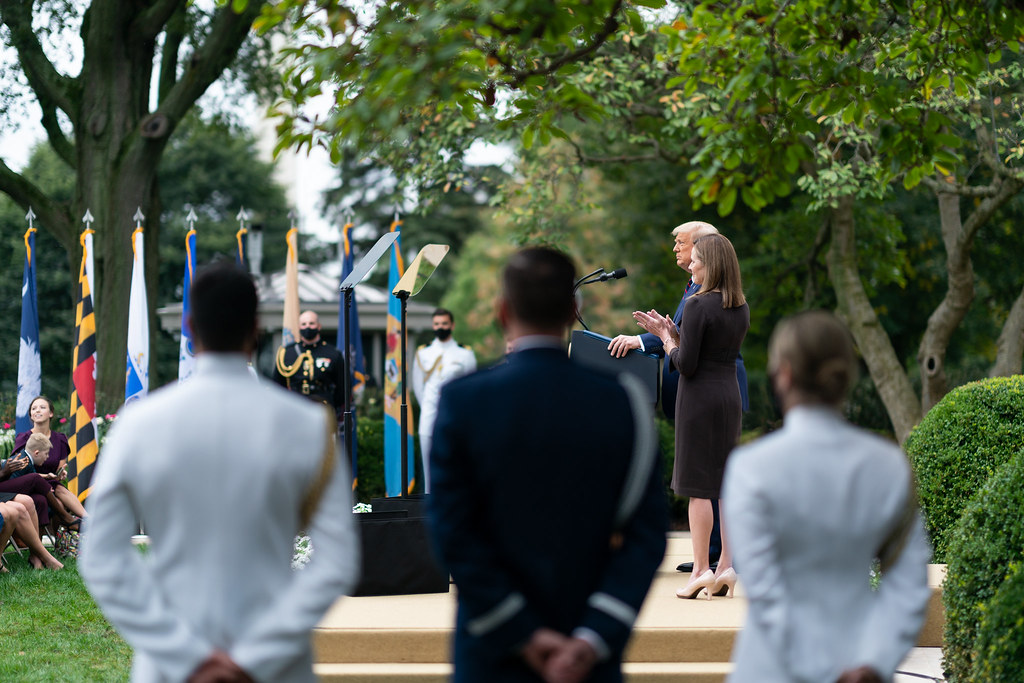
The outrage around Barrett’s vote points to a bigger problem: many Americans are reacting to the stakes of the case, while the Court is fighting over the machinery that could decide it.
Amy Coney Barrett has become the face of a Supreme Court fight that is both narrower and bigger than many of the reactions suggest.
The birthright citizenship case did not produce a final ruling on whether the Constitution protects citizenship for children born in the United States to undocumented or temporary-status parents. But Barrett’s vote still mattered, because the Court’s procedural decision could shape how quickly — and how widely — a president can act while constitutional challenges are still moving through the courts.
The vote was not the final word
The case at the center of the backlash is tied to President Donald Trump’s attempt to limit birthright citizenship by executive order. The order targeted U.S.-born children whose parents are not citizens or lawful permanent residents, a direct challenge to the long-dominant understanding of the 14th Amendment.
Barrett joined the Court’s conservative majority in a ruling that focused on nationwide injunctions. Those are court orders that can block a policy across the country, not just for the people or groups who sued.
That distinction is important. The majority did not say Trump’s birthright citizenship order is constitutional. It said lower courts likely went too far when they blocked the order nationwide.
For critics, that sounded like a green light. For the Court’s majority, it was framed as a limit on judicial power. The gap between those two readings is where much of the outrage is living.
Why Barrett drew the fire
Barrett’s name is attached to the decision in a way that made her an obvious target. She was not just another vote in the majority; she wrote the opinion for the Court.
That made the backlash personal fast. Some criticism focused on the legal consequences of the ruling. Some treated the decision as if Barrett had personally approved ending birthright citizenship altogether.
That is not what the opinion did. But the anger is not hard to understand. Birthright citizenship is not an abstract procedural issue for families who could be affected. It is the difference between a child being recognized as American at birth or being thrown into a legal fight before they can walk.
The reaction also reflects a broader frustration with the Court. When a decision clears a path for a controversial policy to take effect, even temporarily or partially, many people do not experience that as procedural housekeeping. They experience it as power being moved from judges to the executive branch.
The Constitution is the core fight
The legal fight turns on the first sentence of the 14th Amendment’s citizenship clause: all persons born or naturalized in the United States, and subject to its jurisdiction, are citizens of the United States and of the state where they reside.
For more than a century, the standard reading has been broad. The 1898 Supreme Court case United States v. Wong Kim Ark held that a child born in San Francisco to Chinese parents was a U.S. citizen under the 14th Amendment. That case has long been treated as a cornerstone of birthright citizenship.
The Trump administration’s argument is that some children born on U.S. soil are not fully subject to U.S. jurisdiction if their parents are unlawfully present or in the country temporarily. Opponents say that reading would carve a major new exception into the Constitution and upend settled law.
Barrett’s earlier questioning during oral arguments showed why the administration’s theory is difficult to administer. Accounts of the argument noted that she pressed the government on how officials would determine a parent’s allegiance, intent to remain, or legal relationship to the United States in real time.
Procedure can still change lives
The Court’s majority treated the case as a dispute about remedies. In plain English: even if a policy is unlawful, what can a lower-court judge do about it while the case is being litigated?
That sounds technical. It is not small.
If lower courts cannot issue broad nationwide injunctions as easily, a president may be able to enforce a contested policy against people who are not directly covered by a lawsuit. That can create a patchwork system where some families are protected and others are left exposed.
In a birthright citizenship case, that patchwork is especially destabilizing. Citizenship is supposed to be a clear legal status, not a benefit that depends on geography, litigation timing, or whether a family is connected to the right plaintiff group.
The backlash misses one danger
The easiest version of the backlash is to say Barrett voted to end birthright citizenship. That is too blunt, and it lets the harder issue slip away.
The harder issue is that the Court may be making it more difficult to stop sweeping executive actions before they cause harm. That matters beyond this one case. The same logic can affect immigration, student loans, federal benefits, environmental rules, health policy and other disputes where one administration tries to move fast.
Supporters of limiting nationwide injunctions argue that no single district judge should be able to freeze a federal policy for the entire country. That argument has force, especially when different courts are issuing conflicting orders.
Critics answer that without broad injunctions, unlawful policies can be enforced against thousands or millions of people while only named plaintiffs receive protection. In high-stakes constitutional cases, that can make the eventual victory feel hollow.
What happens next matters more
The merits fight over birthright citizenship is not over. Lower courts still have to address whether Trump’s order can survive the 14th Amendment and Supreme Court precedent.
Those courts may also have to decide how to tailor relief. They could protect specific plaintiffs, members of organizations, certified classes or broader groups if the legal requirements are met.
That means the next stage may be less dramatic than the online reaction, but more important for families. Watch for whether challengers seek class-action relief, how quickly lower courts move, and whether the administration tries to enforce the order against people outside existing court protections.
The clean takeaway is this: Barrett’s vote did not settle birthright citizenship. It did, however, shift the battlefield. And in a case about who counts as American from the moment of birth, the battlefield itself can be everything.




Leave a Reply