
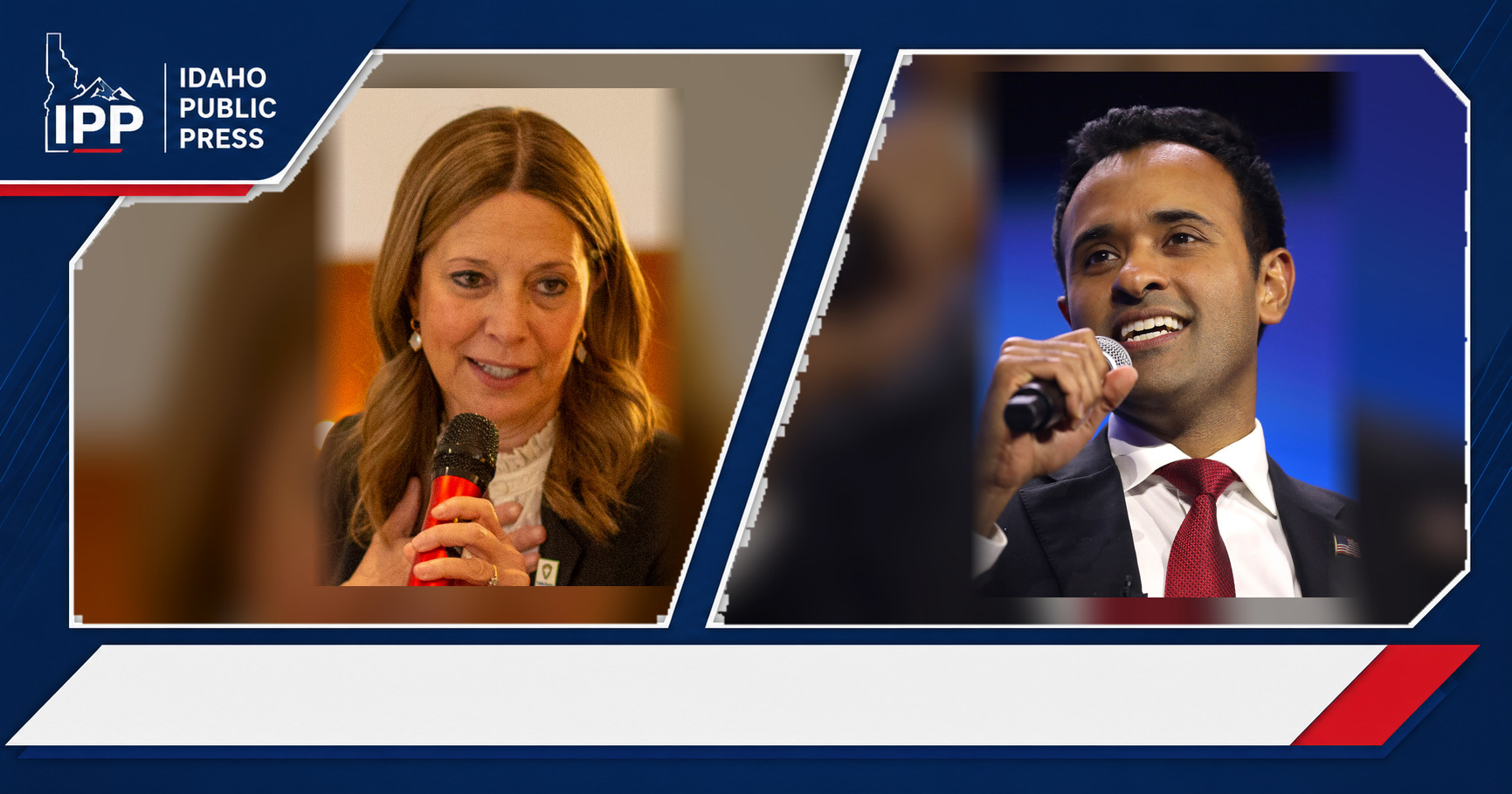
Amy Acton's slim lead is the latest sign that Ohio's open governor's race could be competitive. The survey is not a prediction, but it adds to a growing body of evidence that neither campaign can treat the state as safely won.
Vivek Ramaswamy trails Amy Acton in a new Tulchin Research poll of the Ohio governor’s race, with Acton leading 46% to 44%. The survey, conducted July 29 through August 4, offers a fresh measure of Ramaswamy’s chances of losing to Acton in Ohio — and it points to a genuinely close contest rather than a decisive shift.
The two-point margin is inside the poll’s plus-or-minus 4-point margin of error. That means the result is meaningful as part of a broader pattern, but it does not establish that Acton has a durable statewide lead.
Acton holds a slim poll lead
The Tulchin survey was sponsored by Democratic attorney general candidate John Kulewicz. It found 5% of respondents backing another candidate and 6% undecided, leaving a meaningful pool of voters still available to both major-party contenders.
For Acton, a former director of the Ohio Department of Health who became widely known during the COVID-19 pandemic, the number supplies evidence that a Democrat can compete statewide. For Ramaswamy, the entrepreneur and former 2024 presidential candidate, it is a warning that name recognition and Ohio’s recent GOP record will not automatically settle an open-seat race.
Most importantly, the poll describes a snapshot, not an election result. With the candidates separated by two points and the survey’s stated error range at four points in either direction, the underlying race could be tied or tilted narrowly toward either campaign.
Other surveys show the same tension
The Tulchin result does not stand alone. Several other polls cited in recent coverage have also placed the candidates within only a few points of each other, though they do not all show the same leader.
- A Times/Siena University poll of 601 likely voters, conducted June 15 to 28, had the race tied at 47% apiece. Its margin of error was plus or minus 4.7 points.
- An AARP survey of 800 likely voters, conducted June 14 to 16, showed Acton ahead 47% to 44%, with a plus-or-minus 3.5-point margin of error.
- A Fox News poll of 1,015 registered voters, conducted May 28 to June 1, put Acton ahead 50% to 49%, within a 3-point margin of error.
- A YouGov and Bowling Green State University poll of 1,000 registered voters, conducted April 7 to 14, gave Ramaswamy a 48% to 47% advantage. Its margin of error was 3.9 points.
That sequence is more revealing than any individual top-line number. It suggests a race in which both candidates have a plausible route to victory and neither has opened a commanding advantage.
Why Ohio makes this surprising
Ohio was once central to presidential campaigns, but its voting pattern has become more reliably Republican over the past decade. Donald Trump carried the state by about 11 percentage points in 2024, after winning it by roughly 8 points in both 2016 and 2020.
That history gives Ramaswamy a structural argument: Republicans have recently done especially well in rural areas and among many white working-class voters, including in regions where Democratic support was once stronger. Ohio also has a long-running Republican grip on the governor’s office.
Ohio last elected a Democratic governor in 2006, when Ted Strickland won. Republican John Kasich defeated Strickland in 2010, and Republican Mike DeWine has held the office since 2019. DeWine cannot seek a third consecutive term, making this an open race rather than a contest against an incumbent.
Acton’s case rests on the possibility that an open-seat election, a close national midterm environment and gains in places such as Columbus and Cincinnati’s suburbs can create a different coalition. The polling indicates that argument deserves attention, even if Ohio’s recent statewide results still favor the GOP.
Both candidates face coalition tests
Ramaswamy’s national profile is an asset and a complication. It gives him a built-in audience after his presidential campaign, but it also ensures that the contest will be viewed through national political debates. In late July, he was booed and heckled during a Young Americans for Liberty gathering in Cincinnati, including over his positions related to Israel.
Whether that episode has a lasting effect on turnout or persuasion is unclear. A moment at an ideological event is not a statewide electorate. Still, close races magnify questions about enthusiasm, party unity and whether a candidate can hold support among voters who may agree on broad partisan goals but object to particular messages or priorities.
Acton has her own balancing act. She has drawn criticism from some LGBTQ+ activists over remarks that she does not support boys playing in girls’ sports. She has also said she supports Ohio’s Issue 3 voter-ID amendment, a position that separates her from some Democrats.
Those positions may create friction with parts of the Democratic coalition while potentially helping Acton present herself as less doctrinaire to persuadable voters. The electoral value of that approach remains unproven; it could broaden her appeal, suppress activist energy or produce both effects at once.
Prediction markets offer no clarity
Political prediction markets are also treating the race as extremely close. As cited in the source reporting, Kalshi gave Ramaswamy a 51% chance of victory, while Polymarket gave Acton a 52% chance at the time those figures were reported.
Those numbers should be read carefully. Markets reflect the prices traders are willing to pay for outcome contracts, and prices can move rapidly after polls, fundraising reports, debates or national events. They are a measure of market sentiment, not a scientific survey of Ohio voters.
Still, the markets and public polling tell a similar high-level story: the race currently looks competitive enough that a small change in turnout, undecided voters or the political climate could matter.
The unanswered question is turnout
The Tulchin poll’s 6% undecided share is small enough that neither candidate can rely on a late wave of uncommitted voters to rescue a weak campaign, yet large enough to be decisive in a two-point contest. The 5% choosing another candidate could matter as well, depending on whether those voters ultimately consolidate behind a major-party nominee.
Poll methodology also matters. Some surveys question likely voters, while others question registered voters; field dates differ; and the wording and order of questions can influence the final picture. Comparing polls is useful, but treating their precise margins as interchangeable can overstate what the data can prove.
The clearest takeaway is that Acton’s 46% to 44% edge gives Democrats a credible reason to invest heavily in Ohio, while Ramaswamy retains a strong case that the state’s Republican lean and a razor-thin polling gap can still carry him to victory. At this stage, the new poll raises the stakes without resolving the race.







Leave a Reply