
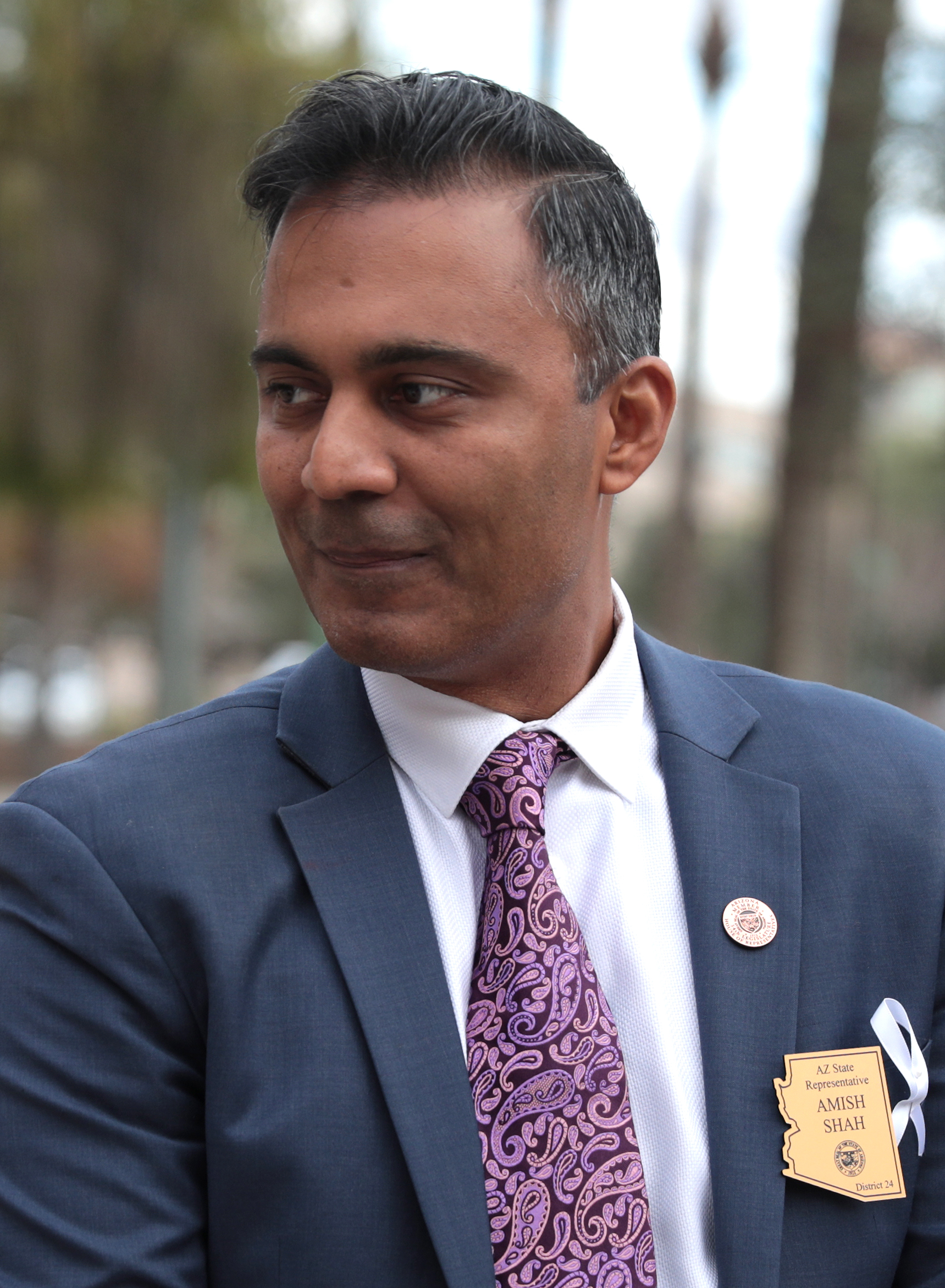
The result puts Shah on a November path against Republican Jay Feely and adds to Democrats’ debate over how much national leaders should shape primaries.
Amish Shah won the Democratic House primary in Arizona on Wednesday, July 22, 2026, after Tuesday’s vote in Arizona’s 1st Congressional District, defeating the Democratic establishment-backed candidate Marlene Galán-Woods. In plain terms, Amish Shah beats Democratic establishment pick is the result Democrats now have to absorb: the Democratic Party’s national campaign arm backed Galán-Woods, while voters chose Shah for a competitive open House seat.
The article explains why this result matters for the party establishment because it adds another test of whether Washington can still steer primaries in battleground districts. Shah, a physician and former state legislator, is now set to face Republican nominee Jay Feely in November, according to CBS News, which cited an Associated Press projection.
A rebuke with local roots
Shah’s victory lands as more than a routine primary result because of who lined up on the other side. The Democratic Congressional Campaign Committee, the party’s House campaign arm, backed Galán-Woods, a Republican-turned-Democrat and former broadcast journalist.
National committees often intervene in primaries when they believe one candidate is better positioned for a general election. That is especially true in districts that could help decide control of the House. But those endorsements can also make a race feel less like a local choice and more like a test of whether voters will accept Washington’s judgment.
In Arizona’s 1st District, voters went with a familiar name. Shah was the Democratic nominee in 2024, when he lost to Republican Rep. David Schweikert by nearly 4 percentage points, CBS News reported. Galán-Woods also ran in that 2024 primary and finished third.
That history matters. Shah did not arrive as an unknown insurgent. His win suggests that some Democratic primary voters valued prior campaign experience and local recognition over the national party’s preferred reset.
Why the district matters
Arizona’s 1st Congressional District covers Scottsdale and areas northeast of the city, according to CBS News. It is widely watched because it sits in the kind of suburban political terrain where both parties have fought hard in recent cycles.
The seat is open because Schweikert, an eight-term Republican, chose not to seek reelection to the House and instead ran for governor. CBS News reported that Schweikert lost that Republican gubernatorial primary to Rep. Andy Biggs.
Open seats are valuable because they remove the built-in advantage of an incumbent. For Democrats, that makes Arizona’s 1st a serious pickup opportunity. For Republicans, holding it is a way to prove they can still win in competitive suburban Arizona even without Schweikert on the ballot.
That is why the Democratic establishment had a strong incentive to pick a side early. The party’s national strategists are not just trying to win a primary; they are trying to build a general-election candidate who can survive a costly, closely watched fall campaign.
The national committee’s problem
The DCCC’s role is now under sharper scrutiny because Shah’s win follows other losses for candidates preferred by national Democratic leaders. CBS News noted that the committee’s influence has been tested after defeats for its preferred candidates in Maine’s 2nd District and California’s 22nd District.
That pattern does not mean the national party has no influence. Money, staffing, polling, donor signals and media attention still matter. But it does show that endorsements from Washington can carry a downside when primary voters see them as an attempt to narrow the field before local Democrats have their say.
There are two reasonable ways to read this. One view is that voters are tired of party elites managing nominations and want candidates who have earned local trust. Another is that national committees are making hard choices in difficult districts and sometimes get blamed when the electorate simply chooses a different theory of electability.
Shah’s win sits right in that tension. He is not easily cast as a fringe protest candidate; Reuters described him as a moderate. That makes the result more complicated for the party establishment. It was not only a left-versus-center fight. It was also a fight over credibility, familiarity and who gets to decide what is winnable.
Galán-Woods carried establishment hopes
Galán-Woods brought a profile that national Democrats clearly saw as useful in Arizona. CBS News described her as a former broadcast journalist who had been married to the late Grant Woods, a former Arizona attorney general who left the Republican Party over President Donald Trump.
That biography pointed toward a familiar Democratic strategy in competitive suburbs: appeal to moderates, independents and voters uneasy with the direction of the Republican Party. In a general election, that can be a powerful argument.
But a primary is not a general election. Democratic voters first decide who they trust to carry the party’s banner. Galán-Woods’ establishment support may have helped signal viability to donors and national operatives, but it was not enough to overcome Shah’s appeal among primary voters.
Her campaign also reflected broader Democratic tensions. CBS News reported that she signed a pledge rebuking the party’s left wing after several primary victories by democratic socialists. That move may have been aimed at positioning herself for the center, but it also placed her inside a national argument that may not have been the decisive issue for Arizona Democrats choosing a nominee.
Shah now faces Jay Feely
The primary drama will quickly give way to the general-election campaign. Shah’s Republican opponent is Jay Feely, the former NFL player, who won the GOP primary against former state lawmaker Joseph Chaplik, according to CBS News.
Feely gives Republicans a nominee with name recognition beyond traditional politics. Shah gives Democrats a candidate who has already run districtwide and can argue he knows the electorate. Both parties will now try to define the race before outside spending hardens voter impressions.
The immediate matchup:
- Shah can campaign as a physician, former state legislator and returning nominee with district experience.
- Feely can campaign as a fresh Republican nominee in a seat the GOP currently holds.
- Democrats will try to turn the open seat into a pickup opportunity.
- Republicans will try to frame Shah as a repeat nominee who fell short in 2024.
What remains unclear is how quickly Democratic leaders who backed Galán-Woods will unite behind Shah. In a district expected to draw national money, any delay in party unity could matter.
The takeaway for Democrats
Shah’s win is not just a personal comeback. It is another reminder that primary voters in competitive districts are not passive recipients of national strategy.
For the Democratic establishment, the lesson is uncomfortable but useful. A candidate can check the boxes that Washington values and still lose if voters prefer someone they already know, trust or believe has earned another shot.
For Shah, the challenge now changes. Beating the establishment-backed candidate may energize supporters, but it does not answer the November question. He still has to expand beyond a Democratic primary electorate and win a district Republicans have been holding.
The Arizona result gives Democrats a nominee. It also gives the party a warning: in a year when every competitive House seat carries outsized weight, national influence is powerful, but it is not the same thing as control.




Leave a Reply