
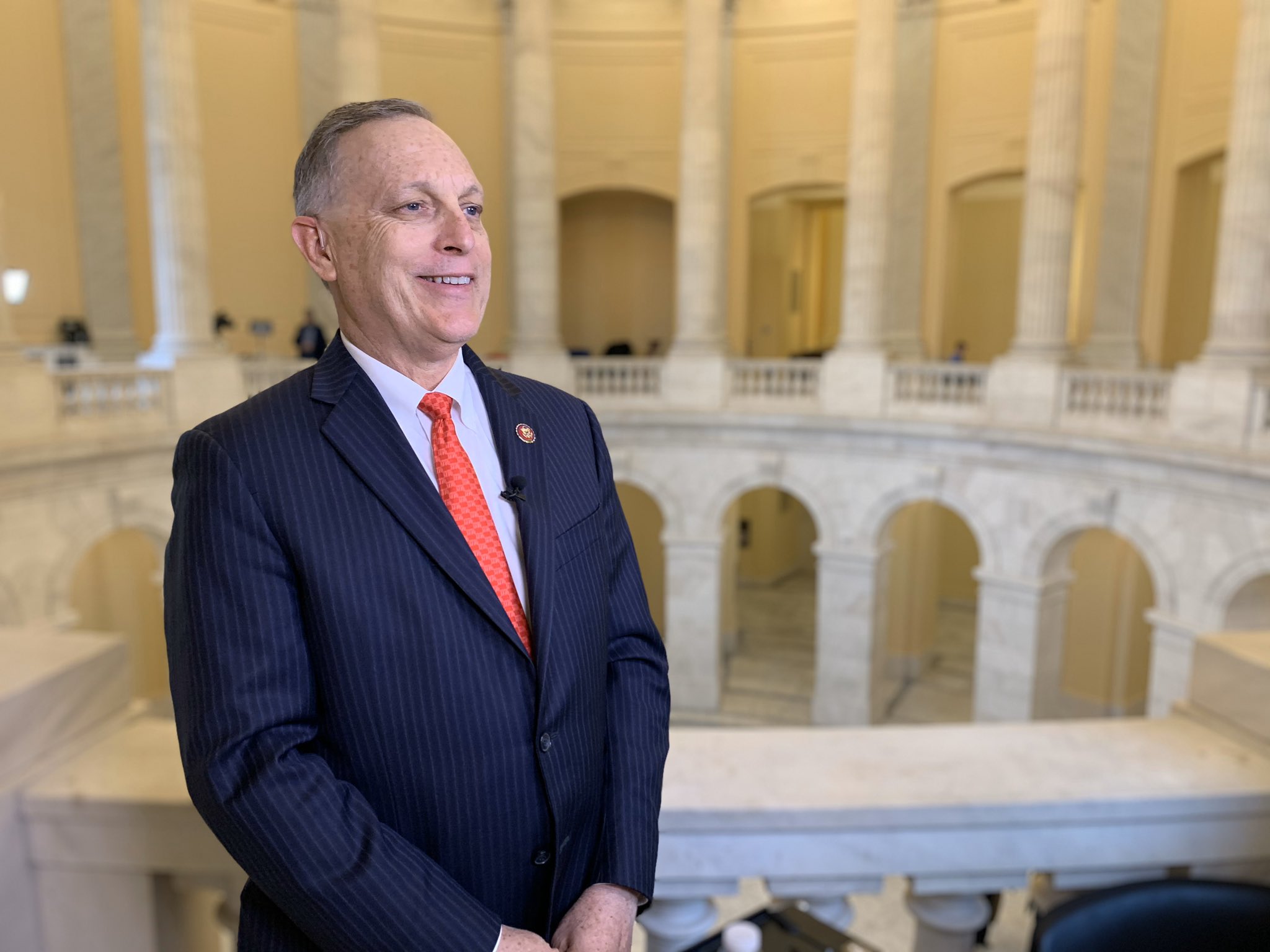
The Arizona primary sharpened a familiar Republican dilemma: nominate the candidate most trusted by the Trump base, then test whether that profile can win a statewide battleground race.
Andy Biggs won the Republican nomination for Arizona governor Tuesday, giving the Arizona Republican Party a Trump-backed nominee for November and a direct fight with Democratic Gov. Katie Hobbs. Donald Trump backed Andy Biggs in the GOP contest, and the result means Trump-backed Andy Biggs will face Hobbs after defeating fellow U.S. Rep. David Schweikert, according to projections reported by CNN and The Associated Press.
The Arizona primary takeaways are bigger than one race. Republican voters chose a hard-line Trump ally in a state where Democrats now hold the governorship, both U.S. Senate seats and other statewide offices, setting up a general election centered on base energy, suburban skepticism and Arizona’s shifting political identity.
A Trump ally clears the field
Biggs’ victory was not framed by the AP as a narrow escape. The wire service reported that he overwhelmingly defeated Schweikert in the Republican primary, giving the GOP a nominee with a long record in the party’s conservative wing.
Biggs is a former chair of the House Freedom Caucus and has built a national profile as one of Trump’s most aggressive defenders in Congress. That profile helped him consolidate support from Trump and from Turning Point Action, the conservative grassroots group based in Arizona.
Schweikert tried to make the primary a question of electability. He argued during the campaign that choosing Biggs would extend what he described as a decade of Republican backsliding in Arizona. But Schweikert struggled to raise money, and AP reported he stayed in Washington on Election Day as the House passed a government funding bill.
The Republican electorate sided with the candidate who most clearly matched the Trump era. That gives Biggs a clean primary mandate, but it also hands Democrats a clear general-election argument.
The electability fight starts now
Biggs will face Hobbs, the Democratic incumbent governor, in what AP described as a race that could be one of the closest governor contests in November. Arizona’s recent statewide results explain why both parties see the contest as a test case.
Republicans once dominated Arizona politics. That is no longer the default. Democrats hold the governor’s office, both U.S. Senate seats and the top three statewide offices, a political map that reflects years of Republican trouble with independents and suburban voters.
Biggs’ record gives Hobbs and Democrats plenty to work with. AP noted that he supported Trump’s failed effort to block certification of the 2020 election results and voted against accepting Electoral College votes from Arizona and other battleground states after the Jan. 6, 2021, riot.
Biggs rejects the idea that he is too far right to win statewide. After his victory speech, he told a reporter, according to AP, that he is a conservative and a principled conservative, but that he works with people who do not agree with him on every issue.
A late speech, a telling image
One of the night’s more memorable details had nothing to do with vote totals. AP reported that Biggs had travel problems after leaving a Republican Governors Association meeting in Colorado and did not arrive at his Scottsdale victory party until more than three hours after the race had been called.
By the time he took the stage, the crowd that had numbered in the hundreds had thinned to dozens. He spoke to a mostly empty room, an odd visual for a candidate who had just won a major nomination.
The image should not be overread. Travel delays are travel delays. But politics runs on images, and Biggs’ campaign will now need to project momentum beyond the most loyal Republican voters who delivered him the nomination.
His message to the remaining crowd was direct: make Arizona red again. That line captures the entire Republican project this fall: prove that a state drifting toward Democrats can be pulled back by a nominee closely identified with Trump.
Down-ballot Republicans chose fighters
The gubernatorial race was not the only Arizona contest pointing toward a combative general election. State Rep. Alexander Kolodin won the Republican nomination for secretary of state and will challenge Democratic Secretary of State Adrian Fontes.
Kolodin defeated Gina Swoboda, the former Arizona Republican Party chair. AP reported that Kolodin, a lawyer, had been sanctioned by the state bar over his involvement in two 2020 election cases that courts found baseless, including one seeking to overturn Joe Biden’s Arizona victory.
That race matters because the secretary of state is central to election administration in Arizona. In a state still defined by fights over the 2020 results, the contest will likely draw national attention well beyond a typical down-ballot campaign.
Republicans also nominated State Senate President Warren Petersen for attorney general. He will face Democratic incumbent Kris Mayes, whose last win was extraordinarily close: AP noted that Mayes prevailed four years ago by just 280 votes out of more than 2.5 million cast.
A House primary showed Democratic strain
The primary night also produced uncertainty for Democrats in a battleground U.S. House race. AP reported early Wednesday that emergency physician Amish Shah was leading Marlene Galán-Woods, the party-backed candidate, for the Democratic nomination.
The winner is set to face Jay Feely, the former Arizona Cardinals kicker who won the Republican nomination with Trump’s endorsement. If Shah’s lead held, AP reported, it would mark another setback for the Democratic Congressional Campaign Committee in a year when some voters have been drawn to antiestablishment candidates.
That Democratic tension is different from the Republican one, but it comes from the same place: voters are not always following institutional cues. Party endorsements, fundraising networks and official campaign committees still matter. They do not always decide primaries.
For Arizona, that means November could feature candidates who are more sharply defined by activist voters than by party strategists. That can energize turnout, but it can also complicate the appeal to independents who often decide close statewide races.
Arizona becomes the stress test
The clearest through-line from Tuesday is that Trump’s influence remains powerful in Arizona Republican primaries. Biggs, Feely and other Trump-aligned candidates emerged from contests that showed the former president’s endorsement still carries real weight with GOP voters.
The unresolved question is whether that power travels cleanly into November. Arizona has repeatedly shown that Republican primary strength and statewide general-election strength are not the same thing.
Biggs’ supporters argue that the state remains fundamentally conservative and that a disciplined campaign can unite Republicans while pulling back voters frustrated with Democratic leadership. His critics argue that Arizona’s independents have already rejected similar political styles in statewide races.
Both arguments now get tested in the most visible race on the ballot. Biggs has the nomination, Trump’s backing and a fired-up conservative base. Hobbs has incumbency and a recent Arizona history that suggests Democrats know how to win statewide. Tuesday settled the primary. It did not settle the bigger question of what kind of Republican can still win Arizona.



Leave a Reply